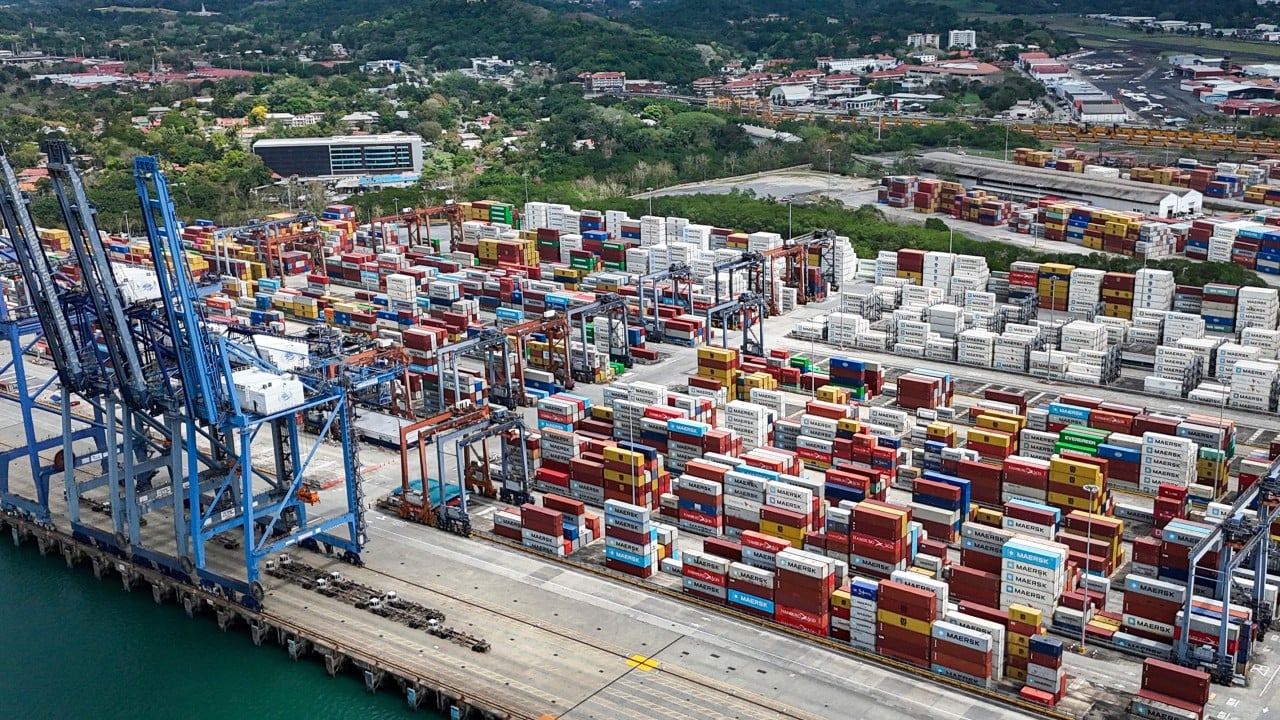
Cross-border infrastructure assets operate under an invisible covenant of state-backed contractual stability. When a sovereign entity unilaterally alters the operational parameters or ownership structures of a concession, the dispute transcends simple contract law and becomes a test of international investment arbitration mechanics. The formal initiation of international arbitration proceedings by CK Hutchison against the Republic of Panama—seeking upwards of HK$11.7 billion for its contested exclusion from strategic canal ports, alongside parallel subsidiary actions pushing total cumulative demands past HK$27.3 billion—offers a textbook study in sovereign asset expropriation risk. Deconstructing this financial and legal confrontation requires stripping away diplomatic rhetoric to analyze the underlying valuation models, jurisdiction clauses, and structural cash flow dependencies that govern modern maritime logistics.
The Cost Function of Expropriation and Capital Recovery
When a multinational conglomerate commits capital expenditure to build, upgrade, or manage terminal assets, its valuation model relies on discounted cash flow projections spanning decades. These calculations factor in predictable throughput volumes, terminal handling charges, and amortized capital costs. Sudden regulatory revocation or forced state takeover disrupts this mathematical equilibrium, transforming expected future earnings into an immediate claim for damages under bilateral investment treaties.
The financial exposure claimed by CK Hutchison breaks down into three distinct economic variables:
- Sunk Capital Expenditures: The physical infrastructure investments, gantry cranes, dredging operations, and terminal management systems deployed over the concession lifecycle that can no longer be depreciated against future revenues.
- Lost Profit Opportunity: The net present value of cash flows forfeited due to premature termination of the operating lease, calculated using historical throughput multiples and regional container volume growth rates.
- Reputational and Operational Disruption Costs: The frictional expenses incurred during emergency asset wind-downs, legal counsel mobilization, and the systemic valuation discount applied by markets when a parent company faces sudden sovereign friction.
In standard corporate finance, asset values are derived from operational control. When that control is stripped via regulatory decree, the valuation methodology shifts from operational earnings multiples to international arbitration claims. The mechanics of these claims depend entirely on whether the host state breached specific protections embedded within trade agreements, such as fair and equitable treatment clauses or prohibitions against indirect expropriation without prompt, adequate, and effective compensation.
The Mechanics of Bilateral Investment Treaties
Arbitration proceedings of this magnitude are rarely resolved through domestic judicial systems, which often suffer from perceived sovereign bias. Instead, multinational entities utilize international legal frameworks—typically bilateral investment treaties signed between the home jurisdiction of the parent company and the host government. These treaties establish an independent tribunal system designed to depoliticize commercial disputes and establish a rules-based assessment of financial harm.
The dual-layered nature of the claims launched by CK Hutchison and its related subsidiaries highlights a calculated legal diversification strategy. By separating the primary conglomerate action from subsidiary-level filings, the legal architecture targets multiple breaches simultaneously. One vector addresses the direct violation of investment protections, while secondary vectors target localized operational interference and the frustration of legitimate expectations. Tribunals evaluate these actions by measuring the delta between the asset value under continuous lawful operation and the actual financial position post-intervention.
This creates a severe secondary pressure point for the host government. Sovereign balance sheets are rarely equipped to absorb multi-billion-dollar liabilities without triggering credit rating downgrades or raising sovereign borrowing costs on international debt capital markets. Consequently, international arbitration functions not merely as a mechanism for asset recovery, but as a financial deterrent designed to impose a quantifiable cost on sovereign opportunism.
The Structural Vulnerability of Global Maritime Nodes
The geopolitical importance of maritime choke points creates a unique valuation anomaly. Ports located at strategic global crossroads possess near-inelastic demand curves; shipping lines cannot easily bypass them without incurring prohibitive transit delays and fuel penalties. This economic inelasticity makes port concessions exceptionally lucrative, drawing intense political scrutiny from domestic factions within the host country who view foreign ownership of critical infrastructure as a vulnerability.
When political leadership shifts, populist incentives frequently override long-term commercial stability. Governments may leverage national security pretexts or regulatory technicalities to re-evaluate foreign-held concessions. However, this dynamic introduces a structural paradox for developing economies relying on foreign direct investment. Attempting to capture short-term political capital by reclaiming a terminal often results in multi-year litigation expenses, frozen asset development, and a broader chill on foreign capital inflows across other vital sectors such as energy, telecommunications, and logistics.
Strategic Forecast for Cross-Border Concessions
International arbitration involving sums exceeding HK$27.3 billion rarely concludes with a rapid, voluntary settlement. The proceedings typically advance through jurisdictional hurdles, document production phases, expert witness valuations on discounted cash flows, and oral hearings lasting several years. During this interim period, institutional investors holding shares in the parent conglomerate must price in prolonged legal uncertainty, treating potential award recoveries as contingent assets with high discount rates.
To insulate operations against similar sovereign interventions, global logistics operators are shifting their risk architecture. Future infrastructure concessions will likely feature mandatory step-in rights backed by multilateral development bank guarantees, tighter stabilization clauses that automatically trigger financial penalties upon regulatory changes, and diversified consortium structures that dilute single-nation political exposure. The resolution of the Panama Canal port dispute will ultimately establish a critical benchmark for how international tribunals value lost sovereign concessions in an era of rising economic nationalism.