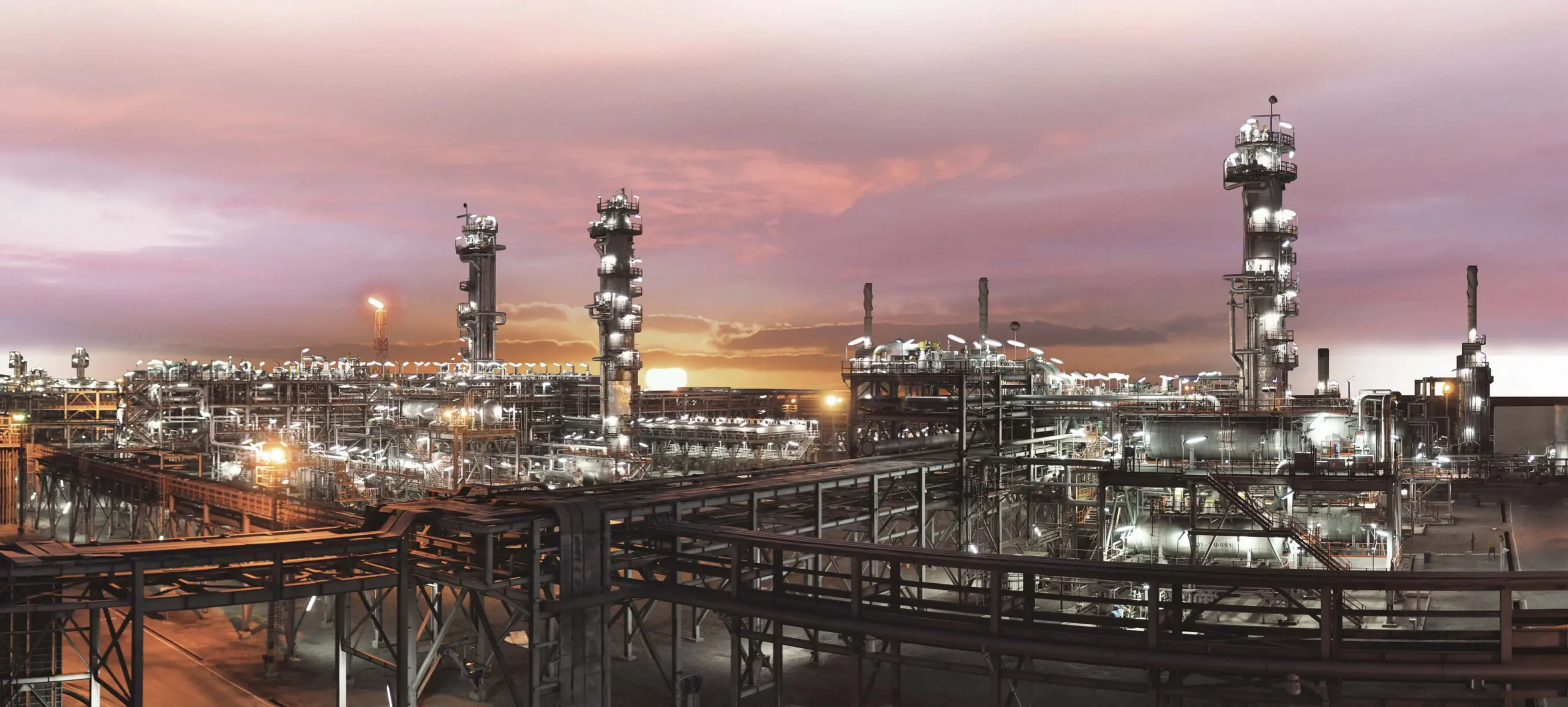
Israel has officially admitted to a unilateral strike against Iran’s South Pars gas field, a move that bypasses Washington’s red lines and threatens to dismantle the fragile energy stability of the entire Persian Gulf. Prime Minister Benjamin Netanyahu confirmed on Thursday that Israeli forces "acted alone" in the operation, effectively seizing control of the war’s escalation ladder from his American counterparts. This wasn't a minor border skirmish or a targeted assassination. It was a direct hit on the jugular of the Iranian economy, a facility that provides 70% of the country’s domestic gas and fuels its industrial heartbeat.
The fallout was immediate and predictable. Within 24 hours of the Israeli strike, Iranian forces launched a retaliatory barrage across the Gulf, hitting the Ras Laffan LNG complex in Qatar, the Habshan facility in the UAE, and targets in Saudi Arabia and Kuwait. This horizontal escalation has sent Brent crude oil prices screaming past $119 a barrel, a 60% increase since the conflict began on February 28. By striking South Pars without U.S. clearance, Israel has not only expanded the physical geography of the war but has also sparked a public rift between Netanyahu and President Donald Trump.
The Strategic Isolation of South Pars
To understand why Israel chose this specific target, one must look at the map of Iranian vulnerability. South Pars is the northern half of the world’s largest natural gas field, shared with Qatar’s North Dome. It is more than just a source of revenue; it is the sole reason the lights stay on in Tehran. While previous strikes in this twenty-day war focused on nuclear enrichment sites and missile silos, the hit on South Pars signals a shift toward total economic attrition.
The Israeli Air Force targeted Phases 3, 4, 5, and 6 of the offshore complex. By disabling these specific units, Israel effectively severed the flow of gas to the Asaluyeh onshore processing hub. This is a surgical attempt to make life inside Iran "intolerable," as described by analysts at the Soufan Center. If the civilian population cannot heat their homes or cook their food, the theory goes, the regime’s grip on power will finally fail. Netanyahu himself alluded to this, stating he sees "cracks" in the Iranian leadership, particularly with the new Supreme Leader, Mojtaba Khamenei, failing to appear in public since his father's death earlier this month.
The Washington Jerusalem Friction
The "acted alone" admission is a rare moment of public divergence in an alliance that usually prizes the appearance of lockstep coordination. President Trump, speaking from the Oval Office, was uncharacteristically blunt: "I told him, 'Don't do that.'" The American administration, while fully committed to the destruction of Iran's nuclear and ballistic capabilities, views the destruction of global energy infrastructure as a step too far.
Washington’s math is simple. A global energy crisis during a domestic election cycle is a political catastrophe. For Netanyahu, the math is different. He views any Iranian asset as a legitimate target and is willing to gamble on U.S. annoyance to achieve a permanent "decimation" of the Islamic Republic. Netanyahu's televised "I am alive" greeting to the press was a defiant signal that he remains the primary architect of the region’s new order, regardless of the view from the White House.
Technical Resilience and the Shadow of Force Majeure
Despite the scale of the strikes, the Iranian energy sector has shown a stubborn, if desperate, resilience. Reports from the Pars Oil and Gas Company (POGC) indicate that local engineering firms have already begun bypass operations. During similar strikes in June 2025, Iranian technicians managed to restore partial flow within days. However, the current damage is more systemic.
The real danger is the "pressure drop" phenomenon. Large gas fields like South Pars require constant, high-tech pressure management to remain viable. With sanctions blocking spare parts from Western majors like Total or Shell, and now with physical damage to the compression platforms, Iran faces a permanent 30% decline in output over the next decade.
This isn't just an Iranian problem. Qatar has already been forced to declare force majeure on several long-term LNG contracts. The "shared" nature of the reservoir means that damage or pressure loss on the Iranian side can physically impact the Qatari side. We are seeing the birth of a regional energy contagion where no one—not the neutrals, not the allies—is safe from the kinetic fallout of the Israel-Iran duel.
The Gulf’s Impossible Choice
The most overlooked factor in this escalation is the predicament of the Abraham Accords partners and Qatar. For years, these nations have tried to balance their security ties with Israel against the reality of being within range of Iranian missiles. That balance is now gone. By striking the shared South Pars field, Israel has essentially forced the Gulf states into the line of fire.
Qatar’s expulsion of Iranian military attaches and its condemnation of the "irresponsible" Israeli strike shows a state trying to scream from both sides of its mouth. They are furious at Israel for the provocation and terrified of Iran for the retaliation. Meanwhile, the Pentagon is reportedly asking for an additional $200 billion to manage the expanding conflict. The cost of "acting alone" is being billed to the entire world, and the invoice is arriving in the form of $5-per-gallon gasoline and a crumbling regional security architecture.
The war has moved past the stage of "Operation Roaring Lion" or simple regime change. It has entered a phase of resource warfare where the goal is the total dismantling of an adversary's industrial capacity. Israel has proven it can strike anywhere, anytime, without permission. What it hasn't proven is that it can manage the global economic firestorm that follows.
Netanyahu has agreed to a temporary "hold" on further gas field strikes at Trump’s request, but the damage is done. The precedent is set. Energy infrastructure is no longer a protected category in the Middle East. If the "cracks" in Tehran don't lead to a total collapse soon, the next target might be the oil terminals at Kharg Island, a move that would make the current $119-per-barrel price look like a bargain.
Would you like me to analyze the specific satellite imagery data regarding the damage to the Asaluyeh processing hub to determine the likely recovery timeline for Iranian domestic gas production?