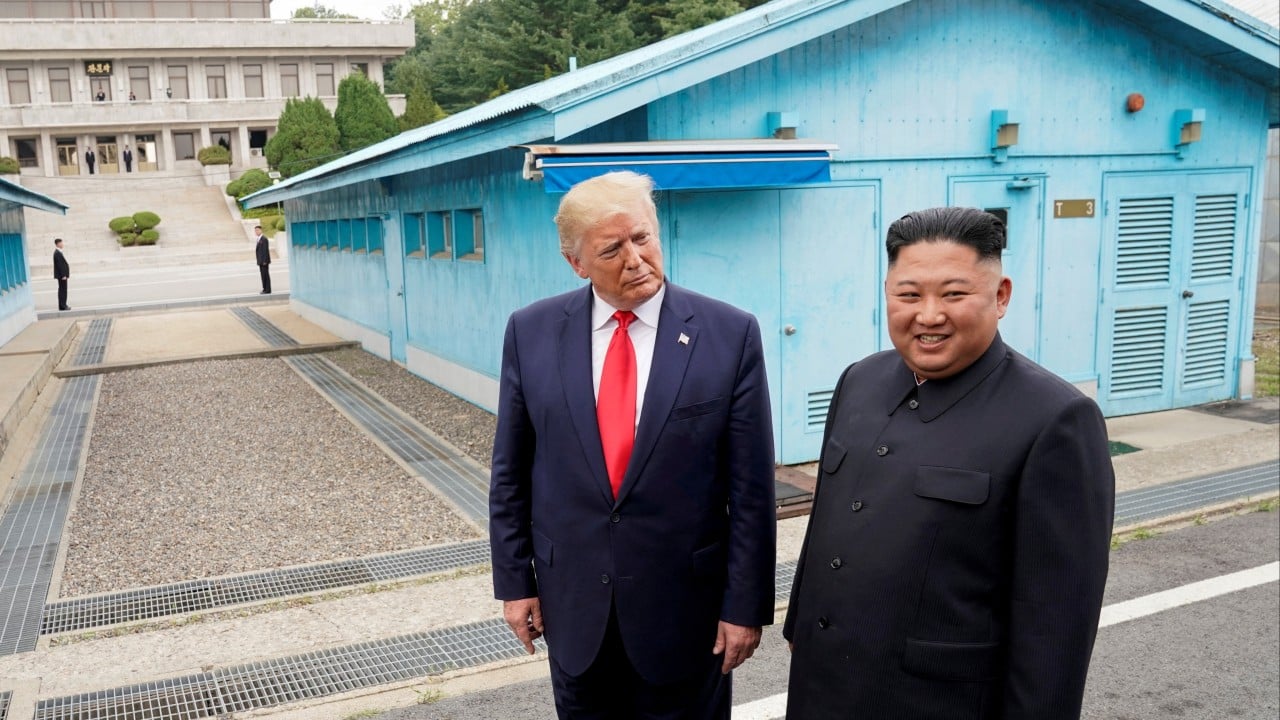
Donald Trump is actively courting Kim Jong Un again. South Korea is officially sweating.
If you read the official press releases, everything sounds perfectly diplomatic. National Security Adviser Wi Sung-lac stood before reporters on August 28, 2026, and announced that Seoul fully supports the US president's efforts to resume dialogue with Pyongyang. He threw in all the right geopolitical buzzwords about "confidence-building measures" and "substantive progress."
But read between the lines, and a massive panic attack is playing out in real time.
South Korea is terrified of being completely sidelined. They fear Washington might cut a rogue deal with North Korea that secures American interests while leaving Seoul staring down the barrel of a fully legitimized nuclear arsenal. This isn't just standard diplomatic anxiety. It is a calculated fear based on very recent, very sudden moves by the White House.
The 57 Nukes Problem
Let's talk about why the panic meter in Seoul just broke.
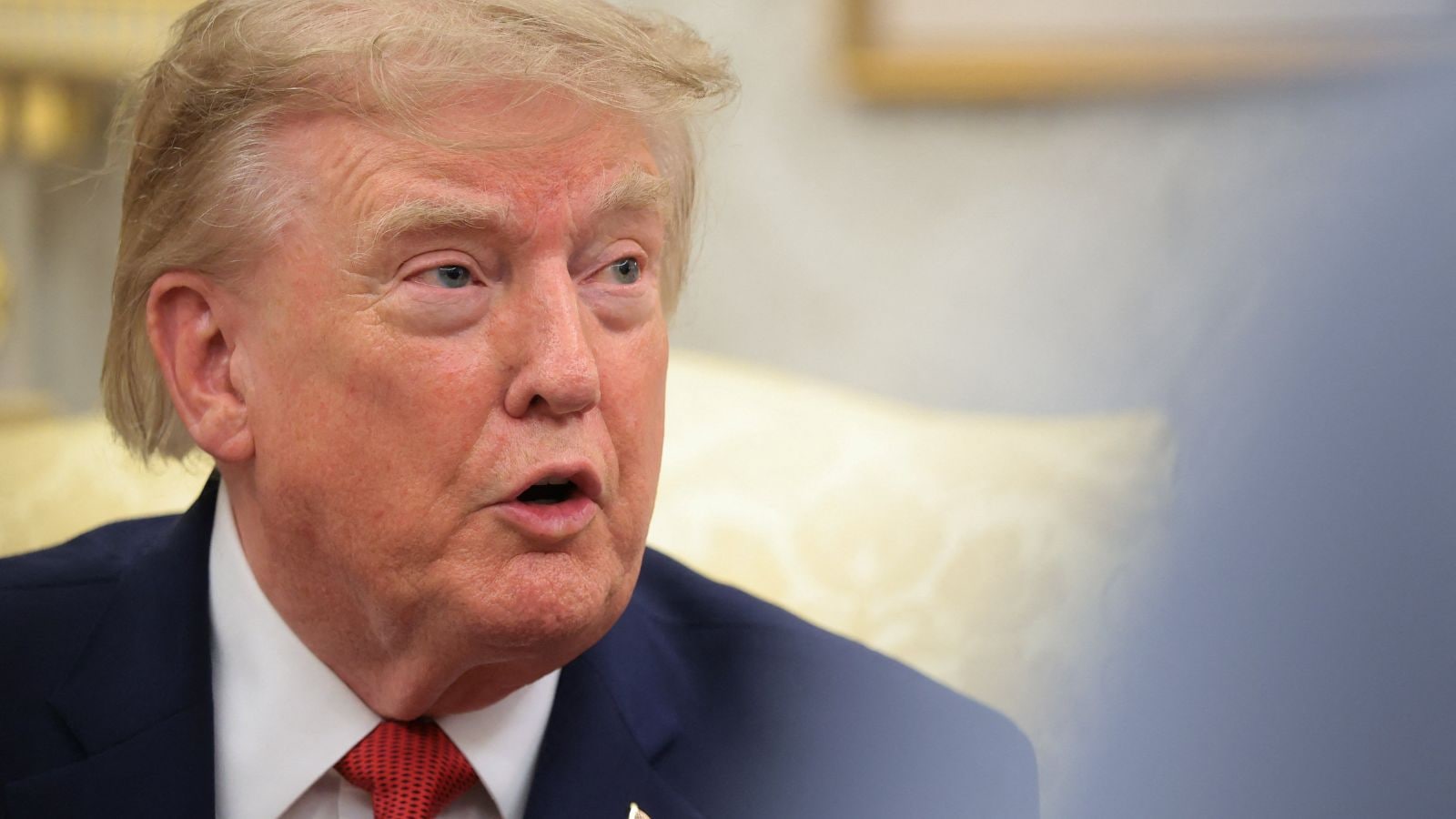
Recently, Trump casually mentioned to reporters that Kim Jong Un possesses "57 very powerful nuclear weapons". That specific number matters less than the phrasing. By treating North Korea's nuclear stockpile as an established, permanent reality, the US administration is signaling a massive shift in foreign policy.
For decades, the official US and South Korean stance has been complete, verifiable, and irreversible denuclearization. You don't negotiate with North Korea as a nuclear state; you negotiate to strip them of that status.
Trump's recent rhetoric suggests Washington might be ready to abandon that fantasy. Security experts like Kim Young-ho at the Korea National Defense University are sounding the alarm that the US might accept North Korea as a de facto nuclear power. If Washington pivots from demanding total disarmament to simply asking for "arms control"—basically saying, "keep what you have, just don't build more"—South Korea becomes a sitting duck.
Imagine living in an apartment where your hostile neighbor builds a bomb. The police tell the neighbor they can keep the bomb as long as they don't build a second one. You still have to sleep next door. That is exactly how Seoul views this shifting strategy.
Sabotaging the Shield
Actions speak louder than social media posts. The US and South Korea recently kicked off the Ulchi Freedom Shield military exercises, a massive annual drill designed to prepare both nations for a North Korean attack.
Trump abruptly ordered the Pentagon to substantially scale back the drills right in the middle of them.
Why? Trump reportedly blamed Seoul's refusal to provide military assistance for an "Iran war". He essentially punished South Korea for staying out of a Middle Eastern conflict by severely weakening their defense readiness against a nuclear-armed neighbor. The move caught South Korea's Foreign Ministry completely off guard. Cho Hyun, the Foreign Minister, had to awkwardly assure lawmakers that the alliance wasn't crumbling.
Gutting a major military exercise sends a loud, clear message to Kim Jong Un. It says the United States is willing to trade away South Korean security guarantees for a diplomatic win. Shin Beom-chul, a former South Korean vice defense minister, rightly points out that Pyongyang will demand permanent suspensions of these drills, and potentially the withdrawal of US troops from the peninsula entirely. Trump has historically questioned the cost of keeping American soldiers in South Korea. Putting troop levels on the negotiating table is South Korea's absolute worst-case scenario.
Kim Jong Un Does Not Care Anymore
Here is the most dangerous reality of 2026. Kim Jong Un doesn't actually need the United States right now.
Back in 2018 and 2019, Kim was desperate for sanctions relief. He needed a lifeline. That desperation drove him to the summits in Singapore and Hanoi.
Today, the map looks completely different. North Korea formally abandoned its decades-old goal of reunifying with South Korea in 2023. They blew up the concept of a shared Korean destiny. More importantly, Kim signed a mutual defense pact with Vladimir Putin. North Korean soldiers and weapons are actively supporting Russia's war in Ukraine. In exchange, Moscow is providing Pyongyang with economic cover, technological assistance, and diplomatic shielding. China is also keeping the backdoor open.
Kim has leverage now. He fired over 10 short-range ballistic missiles into the sea just hours after Trump offered to meet. It was a blatant display of arrogance. North Korea is entirely ignoring Seoul, preferring to deal strictly with Washington. They want to freeze South Korea out of the room. And based on the recent rollback of military drills, they suspect Trump might let them.
Friction Beyond the DMZ
Security isn't the only thing straining the US-South Korea alliance right now. Behind closed doors, diplomatic relations are messy.
When National Security Adviser Wi Sung-lac spoke on August 28, he deliberately mentioned a slew of non-military issues causing friction. South Korea is incredibly frustrated about how its massive financial investments in the US are being treated. Wi specifically called out the regulatory treatment of Coupang, the US-listed e-commerce giant with deep South Korean roots.
We are seeing a transactional approach to diplomacy. Everything is a bargaining chip. Trade deals, military drills, troop deployments, and intelligence sharing are all being thrown into the same chaotic blender. South Korea is desperately trying to untangle its economic investments from its literal survival needs, but Washington keeps tying them together.
The stalled transfer of wartime operational control (OPCON) is another massive sore spot. Currently, if a war breaks out, a US general commands South Korean troops. Seoul has been trying to get that power back for years. With the US suddenly acting unpredictable, South Korea's inability to control its own military during a crisis feels completely unacceptable.
The Nuclear Dilemma for Seoul
Let's look at the brutal math. If America signs a deal that leaves North Korea with 57 nuclear weapons while cutting back US troop presence, South Korea has to make a radical choice.
They can continue relying on an American nuclear umbrella that suddenly looks full of holes. Or they can build their own bomb.
For years, the idea of a nuclear-armed South Korea was fringe politics. It isn't anymore. Polling consistently shows a massive majority of the South Korean public wants their own nuclear weapons. They watch North Korea launch missiles with impunity. They watch the US cancel joint defense drills over an unrelated dispute about Iran. The trust is eroding fast.
Professor Kim Young-ho noted that political, diplomatic, and legal hurdles make South Korean nuclear armament incredibly difficult. But if Washington formally recognizes a nuclear North Korea, those legal hurdles will start looking like minor speed bumps. South Korea cannot exist as a non-nuclear state indefinitely if its northern neighbor is permitted to hold 57 warheads aimed at Seoul.
Seoul is currently playing a dangerous game of appeasement with Washington. They are publicly cheering for Trump's diplomatic outreach because opposing it would invite retaliation. They are smiling for the cameras. They are promising to act as a "pacemaker" for peace.
Watch what the South Korean military actually does next. Pay attention to how aggressively they push for the OPCON transfer this fall. Monitor their domestic defense spending, particularly on independent missile defense systems and submarine capabilities. They are quietly preparing for a future where they stand completely alone.