The afternoon air in the countryside usually smells of dry dust, baked earth, and the faint, sweet scent of wild fennel growing along the stone walls. It is a predictable sort of quiet. Children kick a punctured plastic football against a courtyard gate. Neighbors argue lazily over the price of tomatoes. Then comes the shift. Not a sound, exactly, but a sudden, heavy vacuum that pulls the breath right out of your lungs.
You feel it in the soles of your feet before your ears can translate the geometry of the shockwave.
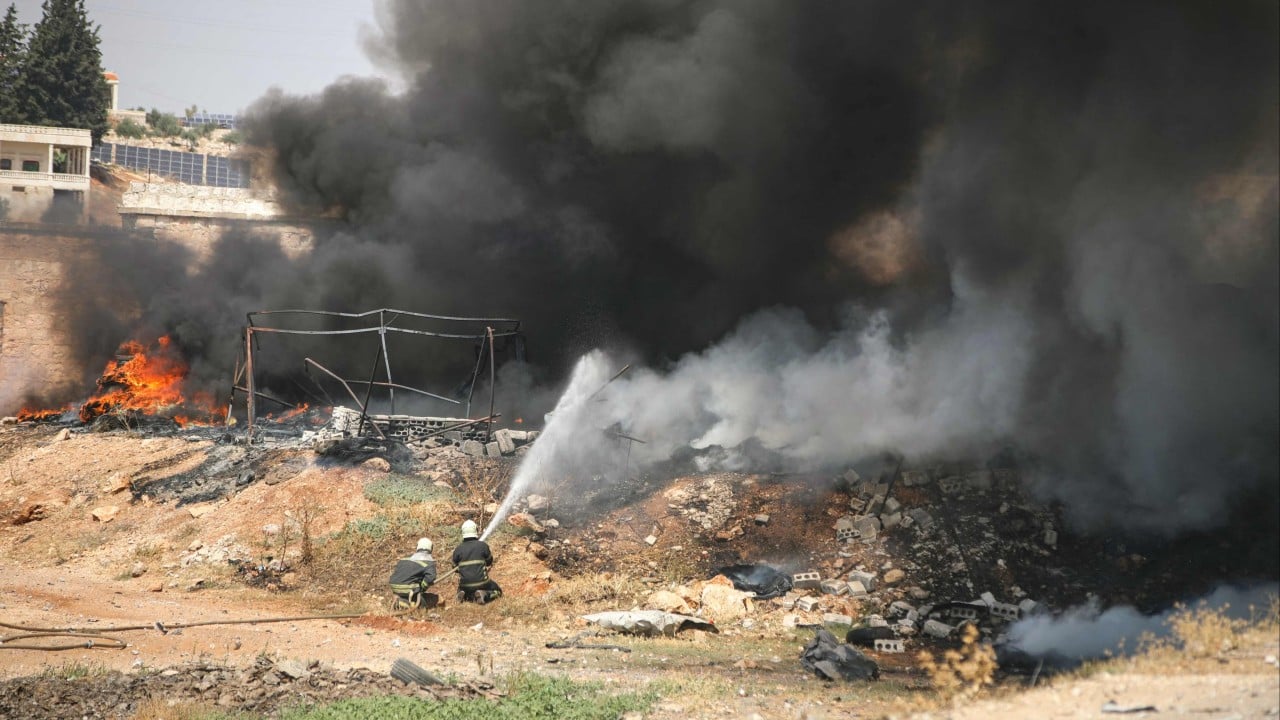
By the time authorities released the numbers, fourteen lives had been permanently erased. Fourteen people who woke up with ordinary plans, minor worries, and morning coffee were reduced to a dry statistical entry in an evening news ticker. A weapons depot, tucked away in the Syrian countryside, had simply ceased to exist in a single, cataclysmic roar.
We read these headlines while scrolling through our phones over lukewarm breakfasts thousands of miles away. We see a number: fourteen. We see a noun: arms depot. We blink, absorb the tragedy as a distant geopolitical abstraction, and swipe to the next screen.
Stop for a moment. Look closer at what those words actually mean.
Consider what happens next in a place where militarized concrete and rusted munitions live cheek by jowl with ordinary human existence. These storage facilities are rarely isolated in deep, empty craters of the desert. They bleed into towns. They sit at the edge of olive groves. They are guarded by young men who are just as tired of the endless friction as the civilians living down the road.
When a facility like this detonates, the physics of destruction are absolute. The blast does not care about borders, factions, or political alignment. It only cares about pressure and heat.
I remember standing three miles away from a secondary detonation years ago, staring at a sky that had turned the color of bruised plums. The concussion hits you like a physical wall, shoving your chest inward. Seconds later, the noise arrives—a deep, subterranean groan that rolls across the hills like thunder, shaking loose roof tiles and shattering every windowpane for blocks.
In the immediate aftermath, there is a terrifying interval of absolute stillness. The smoke billows upward in a thick, greasy mushroom column, blotting out the sun. Dust fills the air, turning every breath into a struggle against grit and ash.
Then the human noise starts.
Sirens wail, their pitch erratic and panicked. Mothers scream names into the choking haze. Ambulances bounce frantically over cratered asphalt, their suspensions groaning under the weight of makeshift stretchers.
Official reports tell us very little about this chaos. They give us the cold anatomy of the event: fourteen killed, dozens wounded, cause currently under investigation. Local authorities confirm the site was active. Emergency responders combed through the rubble until nightfall.
The numbers are safe. They are sterile. They allow us to process catastrophe without feeling the heat of the fire.
But behind every digit in that death toll is a fractured universe.
Imagine a hypothetical father named Tariq, living two hundred meters from the perimeter wall of that depot. For years, Tariq learned to tune out the ambient dread of living near a powder keg. You adapt. You have to. You plant fig trees, you fix the leaky roof, you tell your daughter stories about how things used to be before the world caught fire. You normalize the abnormal because the alternative is madness.
On the day of the blast, Tariq was likely doing something remarkably mundane. Fixing a bicycle chain. Pouring tea. Worrying about the price of flour.
The explosion left behind no room for mundane worries.
When structural concrete weighs tons and is hurled outward at the speed of sound, homes do not merely collapse; they disintegrate. The walls turn to powder. The furniture becomes shrapnel. In an environment like this, survival is entirely a matter of millimeters and milliseconds.
And yet, the world keeps turning. International monitors file their assessments. Strategic analysts debate supply chains and underground logistics networks. Diplomats issue statements expressing deep concern over the stability of the region. The abstract machinery of geopolitics grinds on, entirely detached from the smell of cordite and the sound of a mother weeping over a pair of small, dust-covered shoes.
This is the true cost of neglected violence. It is not just the sudden, blinding flash of a depot going up in smoke. It is the slow, grinding erosion of safety until catastrophe feels like just another season of the year.
The smoke over the Syrian countryside has long since drifted away, scattered by the indifferent wind. The craters have settled. The official reports have been filed away in digital archives, gathering electronic dust.
Yet somewhere in the rubble, a child's blue plastic sandal lies half-buried beneath a slab of gray concrete, waiting for a storm that has already passed, waiting for a morning that will never come again.


