Late at night, in the sterile, hum-filled control rooms of television stations across America, a single red light governs the world. That light signifies "On Air." It is a heavy responsibility, though most of us watching from our couches, bathed in the blue glow of a late-night monologue, rarely think about the fragility of that connection. We assume the airwaves are a permanent fixture of the sky, as reliable as oxygen. They aren’t. They are leased territory, and right now, the Walt Disney Company is finding out just how quickly a landlord can change the locks.
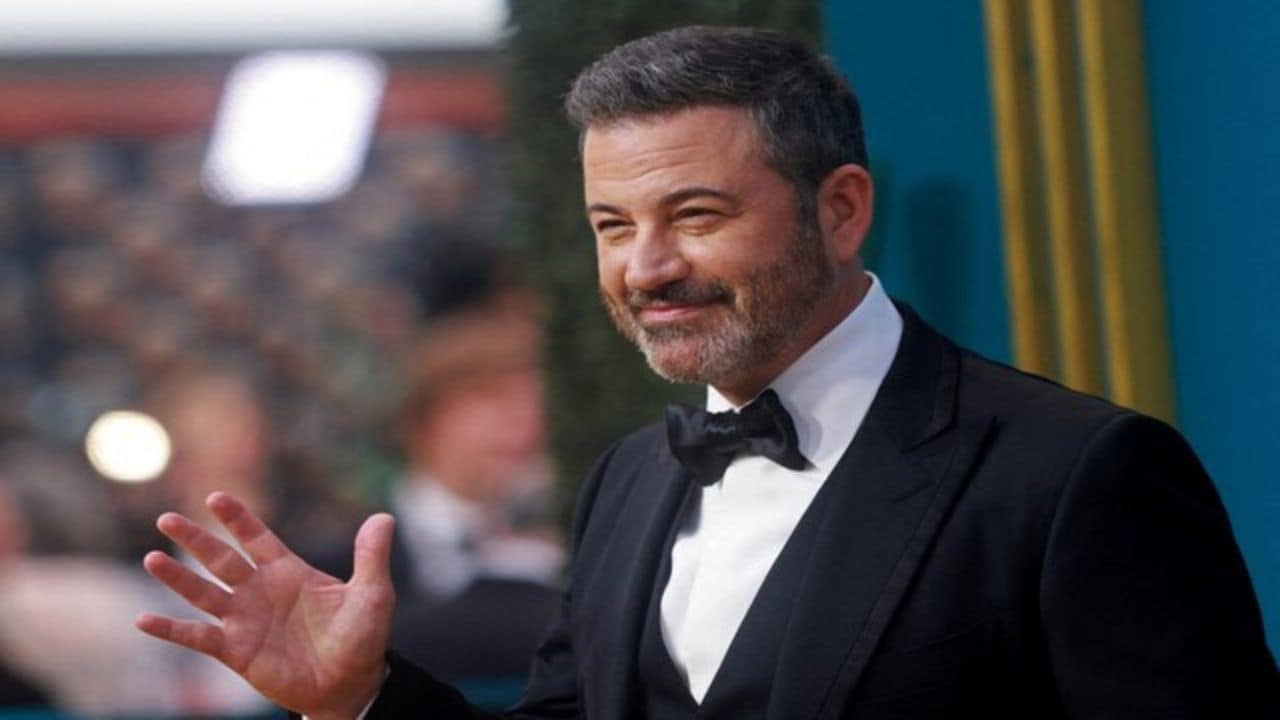
The Federal Communications Commission is currently weighing a challenge that could, in a literal sense, silence some of the most powerful broadcast signals in the country. At the heart of this storm isn't a massive financial fraud or a breach of data privacy. It is a joke. Specifically, a joke told by Jimmy Kimmel involving the Emergency Alert System.
To understand why a few seconds of satire could jeopardize billions of dollars in broadcast licenses, you have to look past the comedy and into the archaic, iron-clad world of spectrum management.
The Ghost in the Signal
Imagine a small-town emergency dispatcher. It’s 2:00 AM. A storm is rolling in, the kind that rips roofs off houses and turns quiet creeks into torrents. That dispatcher relies on a specific set of frequencies to tell people to run, hide, or seek cover. Those frequencies are sacred. They are the nervous system of public safety.
When a comedian uses the specific, jarring "header" tones of the Emergency Alert System for a gag, it isn't just a sound effect. It is a digital command. It’s a false alarm that can trigger automated systems, confuse the public, and—most importantly to the regulators in Washington—desensitize the ears of a nation. If you hear the wolf cry every time a talk show host wants a laugh, you might not move when the wolf actually arrives at your door.
The FCC doesn't have a sense of humor about this. They have a rulebook.
In the case of ABC, the transgression has opened a door that critics have been waiting to kick down for years. A group known as the Media and Democracy Project has filed an informal objection against the license renewals for Disney-owned stations, including the heavyweight KABC-TV in Los Angeles. They aren't just complaining about the joke. They are using the joke as a crowbar to pry into the very soul of the network's right to exist on the public airwaves.
The Price of the Air We Breathe
Broadcasting is a peculiar business. Unlike a bakery or a software firm, a TV station doesn't own its primary raw material. The electromagnetic spectrum belongs to the people of the United States. Stations are merely tenants. Every eight years, they have to prove they are "serving the public interest, convenience, and necessity" to get their lease renewed.
Usually, this is a rubber-stamp affair. A station shows it ran some local news, aired a few educational kids' shows, and didn't broadcast anything "indecent" during the day. But the Kimmel incident has provided a focal point for a much larger, more existential debate about corporate accountability.
The challenge argues that Disney’s "character" is at stake. It’s a heavy word. In the eyes of the FCC, "character" isn't about whether a company is nice; it’s about whether they can be trusted with the keys to the kingdom. The petitioners are pointing to a history of fines—Disney has paid hundreds of thousands of dollars in the past for similar EAS violations—to suggest a pattern of "willful and repeated" disregard for the rules.
Think of it like a driver who keeps getting caught speeding. The first ticket is a nuisance. The fifth ticket suggests you don't actually care about the speed limit. The sixth ticket is when the judge takes your license away.
Disney finds itself in the crosshairs because the "speeding" in this case involves the very system designed to keep citizens alive during a national crisis. The irony is sharp: the more successful and ubiquitous a show like Jimmy Kimmel Live! becomes, the more dangerous its mistakes appear to a regulator tasked with guarding the sanctity of the signal.
A Quiet War in a Loud Room
Inside the halls of the FCC, the atmosphere is rarely cinematic. There are no dramatic gavels or hushed courtrooms. Instead, there are mountains of paperwork, legal briefs, and technical specifications. But the stakes feel like a high-stakes poker game played in slow motion.
If the FCC were to actually deny or even delay these licenses, the financial ripple effects would be catastrophic. We are talking about the potential loss of local news hubs that have existed for generations. We are talking about the disruption of a multi-billion dollar advertising machine.
But there is a human cost that sits beneath the balance sheets.
There is the local reporter in Los Angeles who covers the school board meetings that nobody else attends. There is the cameraman who has spent thirty years filming the aftermath of wildfires. These people are the "public interest" the FCC is supposed to protect. If a corporate parent in a distant office makes a choice that leads to a license challenge, it is these local voices that face the silence.
The debate moves into the murky waters of corporate responsibility versus creative freedom. Should a network be dismantled because a writer’s room thought a sound effect was funny? Or does the repeated nature of the offense suggest a company that feels it is too big to be governed?
The Invisible Stakes
It is easy to dismiss this as "inside baseball" for media nerds and lawyers. It feels distant. Yet, every time you turn on your television, you are participating in this silent contract. You give them your attention; they give you information and entertainment; and the government ensures that the "pipe" used to deliver it remains clean and reliable.
The challenge against Disney’s licenses is a reminder that this contract is fragile. It is a reminder that "the public interest" isn't just a legal phrase—it’s a living requirement.
We live in an era where the lines between news, entertainment, and public safety are increasingly blurred. We want our late-night hosts to be edgy, to push boundaries, and to make us laugh at the absurdity of the world. But the FCC is the designated "designated driver" of the American media landscape. Their job is to ensure that while we’re having fun, we aren't accidentally driving the car off a cliff.
The EAS tones are a trigger. They are designed to elicit a physiological response: a spike in adrenaline, a sharp focus of attention. Using them for a punchline is a form of cognitive hacking. It's effective, yes, but it's a violation of a fundamental trust. You don't use the fire alarm to announce that the pizza has arrived.
Beyond the Laugh Track
The FCC is now in the position of having to decide where the line is. Is a fine enough? Disney has paid them before. Does a fine even matter to a company with a market cap in the hundreds of billions? To a giant, a million-dollar fine is just a line item on a spreadsheet, the cost of doing business.
This is why the license challenge is so potent. It targets the one thing money cannot easily buy back: the legal right to exist on the airwaves.
The petitioners are essentially asking the government to look Disney in the eye and ask, "Do you actually respect the public's airwaves, or do you just see them as a playground?" It is a question about the soul of modern broadcasting. As we move further into a digital-first world, the value of those old-school television licenses might seem to be fading, but they remain the bedrock of local journalism and national emergency coordination.
There is a certain coldness to the legal proceedings. The filings are dry. The responses from Disney’s lawyers will be calculated and precise. They will talk about "procedural history" and "statutory authority." They will argue that the punishment should fit the crime and that losing a license for a joke is an absurd overreach.
But for the person sitting in that storm-tossed house in the middle of the night, waiting for the real EAS tone to tell them which way to run, the stakes couldn't be more human. They don't care about the joke. They care about the signal.
The red light in the control room stays on for now. The signals from KABC and the other ABC stations continue to pulse through the air, invisible and constant. But for the first time in a long time, there is a flicker in the lamp. The "On Air" sign is no longer a given. It is a privilege, one that is currently being weighed on a scale that doesn't care how funny the monologue was.
The sky, it turns out, has a very long memory.