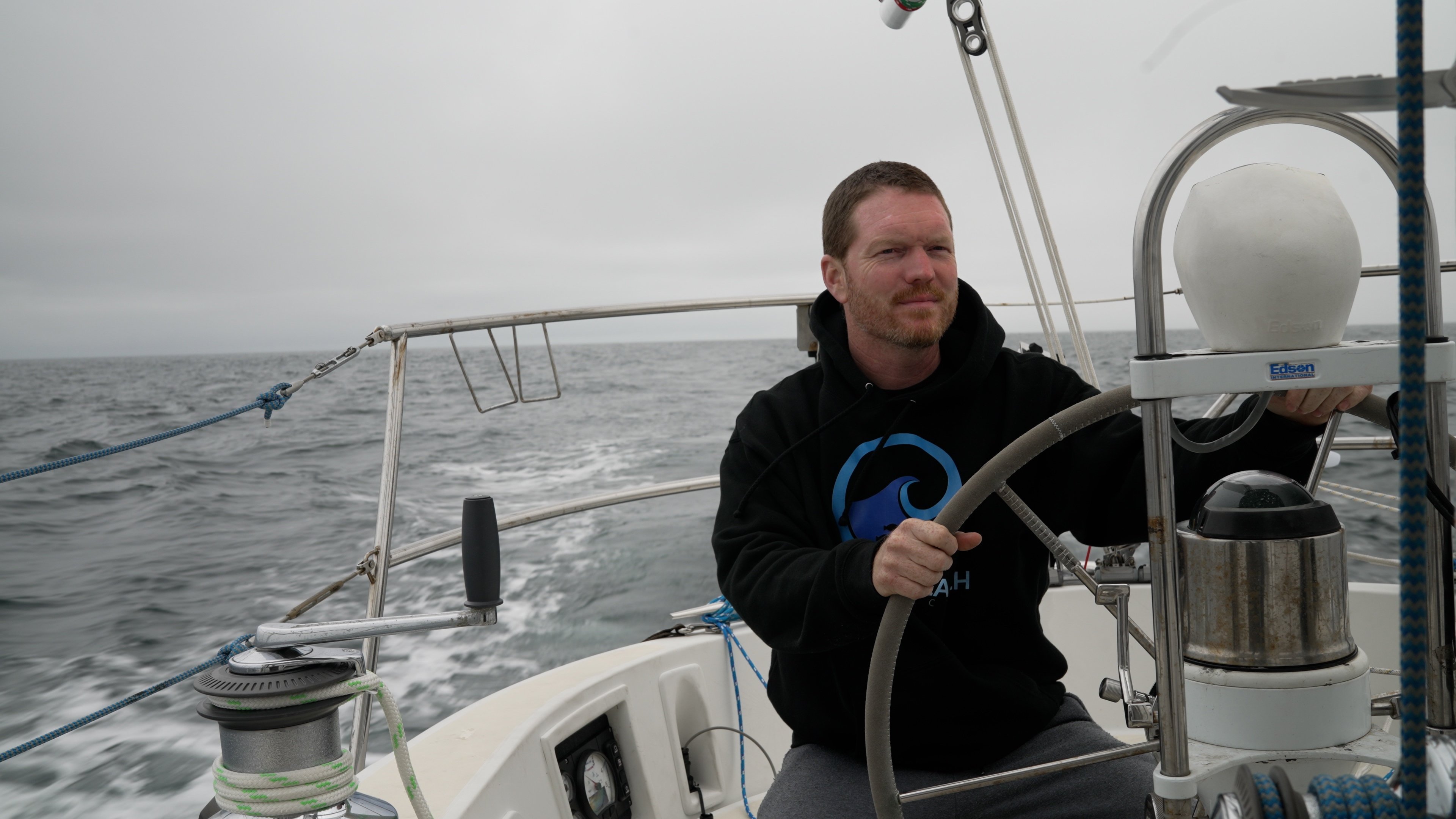
Every summer, the polar PR machine cranks into gear. A lone sailor in a reinforced fiberglass shell pushes past the Bering Strait or threads through the Northwest Passage, and the headlines write themselves: Man conquers the Arctic alone. The narrative is tailor-made for a public addicted to modern hagiography. It features a solitary hero, a hostile wasteland, and the ultimate test of human grit against a melting backdrop.
It is also largely a farce.
I have spent years watching expedition logistics up close. I have seen the bills for satellite communication arrays, the insurance underwriters sweating over emergency extraction clauses, and the backroom contracts with weather-routing services that cost more than a suburban home. The myth of the lone voyager braving the frozen abyss is a brilliant marketing construct. The reality is a heavily monitored, carbon-intensive exercise in micro-managed risk management where the only real danger is the public's gullibility.
Stop romanticizing solo Arctic circumnavigation. It is time to look at what is actually happening at the top of the world.
The Manufacturing of Isolation
Let us dismantle the core deception first. When media outlets broadcast the exploits of a solo circumnavigator, the word solo does heavy lifting.
In the age of iridium satellite networks, real-time ice-drift modeling, and autonomous synthetic aperture radar imagery, nobody is truly alone. The sailor in the cockpit might be steering the tiller, but back in a climate-controlled office in London or Oslo, a team of meteorologists, ice analysts, and crisis management consultants are tracking every square inch of their drift.
If the ice closes in, the solo explorer does not rely on intuition or ancient navigational lore. They ping a shore team that purchases commercial satellite imagery, cross-references it with European Centre for Medium-Range Weather Forecasts data, and sends a compressed text message telling the hero to tack twenty degrees port to avoid a multi-year pressure ridge.
Yet the press release pretends it is 1845 and Sir John Franklin is eating his boots.
We buy into this because we crave simplicity. Complex systemic issues like climate change, geopolitical resource scrambles in the high north, and Indigenous displacement don't fit nicely on a morning talk show. A lone man in an orange Helly Hansen jacket against a wall of white ice does. It personalizes a crisis into a consumable adventure narrative.
The Physics of Modern Hubris
To understand why this trend persists, you have to look at the evolution of adventure tourism. True exploration ended the moment the military and commercial shipping lanes mapped the coordinates. Everything since then has been performance art.
When Fridtjof Nansen let his ship, the Fram, freeze into the polar ice pack in 1893, he did so with genuine uncertainty. He had no safety net, no GPS, and no rescue helicopter stationed three hours away in Greenland. He went to test a hypothesis about ocean currents, risking total erasure.
Today's solo circumnavigator goes to generate content.
The boats are masterpieces of modern petrochemical engineering. They are built with Kevlar-infused resins, powered by hydrogen fuel cells or hydro-generators, and outfitted with emergency locator beacons that summon coast guard cutters or commercial icebreakers equipped to handle polar rescue.
When a modern voyager claims they are testing the limits of human endurance, they are misrepresenting the equation. They are testing the limits of corporate sponsorship and marine insurance products. If the mast snaps off the coast of Devon Island, the Canadian Coast Guard or a privately contracted vessel answers the distress call. The bill might be astronomical, but the survival rate is near-certain compared to a century ago.
We are not watching survival; we are watching extreme camping backed by a multi-million-dollar safety net.
The Carbon Footprint of Saving the Ice
Here is the bitter irony that the adventure industry prefers to bury in fine print: the carbon cost of documenting the melt.
Consider the logistics train required to put one man on a sailboat in the Arctic Ocean.
- Carbon-fiber hulls shipped from boatyards in France.
- Electronic navigation suites manufactured in silicon fabrication plants.
- Flights for support crews, documentary filmmakers, and PR agents to staging points in Nome or Tromsø.
- Constant satellite pinging and data uploads for daily blog posts, YouTube video updates, and sponsor check-ins.
To raise awareness about the fragile state of the polar ice cap, we burn fossil fuels to launch vessels into waters that shouldn't be navigable in the first place. The opening of the Northwest Passage—the very route that makes these modern circumnavigations possible—is the direct result of industrial emissions. Celebrating a successful transit because global warming melted the choke point is like celebrating a home burglary because the front door was unlocked.
It is ecological theater at its finest. We are using the symptoms of planetary collapse as an adventure playground for affluent thrill-seekers.
The Real Question We Should Be Asking
People often ask: What does it take mentally to survive months of total isolation in the high latitudes?
It is the wrong question. It frames the endeavor as an internal psychological struggle against loneliness.
The better question is: Who benefits from turning the desecration of the polar ecosystem into an individualistic triumph?
The answer points straight to the sponsorship portfolios. Outdoor apparel brands, watchmakers, and green-tech startups need heroes. They need clean, rugged archetypes to slap onto billboards to sell jackets that will never see salt spray and trucks that will never haul anything heavier than a bag of groceries. The solo Arctic sailor is a walking, breathing billboard for greenwashed consumerism.
When you strip away the branding, the solo circumnavigation of the Arctic Ocean is an expensive hobby masquerading as a scientific or spiritual conquest. It takes immense financial capital, institutional backing, and logistical scaffolding to pull off. It is elitist recreation disguised as egalitarian grit.
How to Actually Engage with the North
If you want to understand the Arctic, stop looking at the guys on sailboats. They are passing through a vanishing environment like tourists driving fast through a historic district they are helping to demolish.
Look instead at the communities who have lived there for millennia without needing a documentary crew to validate their existence. Listen to Inuit leaders and Arctic researchers who are documenting ecological shifts without the benefit of a sponsor logo on their parka.
True respect for the polar regions does not look like a lone man conquering the elements for a book deal. It looks like radical restraint, listening to local knowledge, and acknowledging that some places are meant to be left alone rather than conquered, monetized, or sailed around for sport.
The ice is retreating. The passage is open.
Leave the boats in the slip.