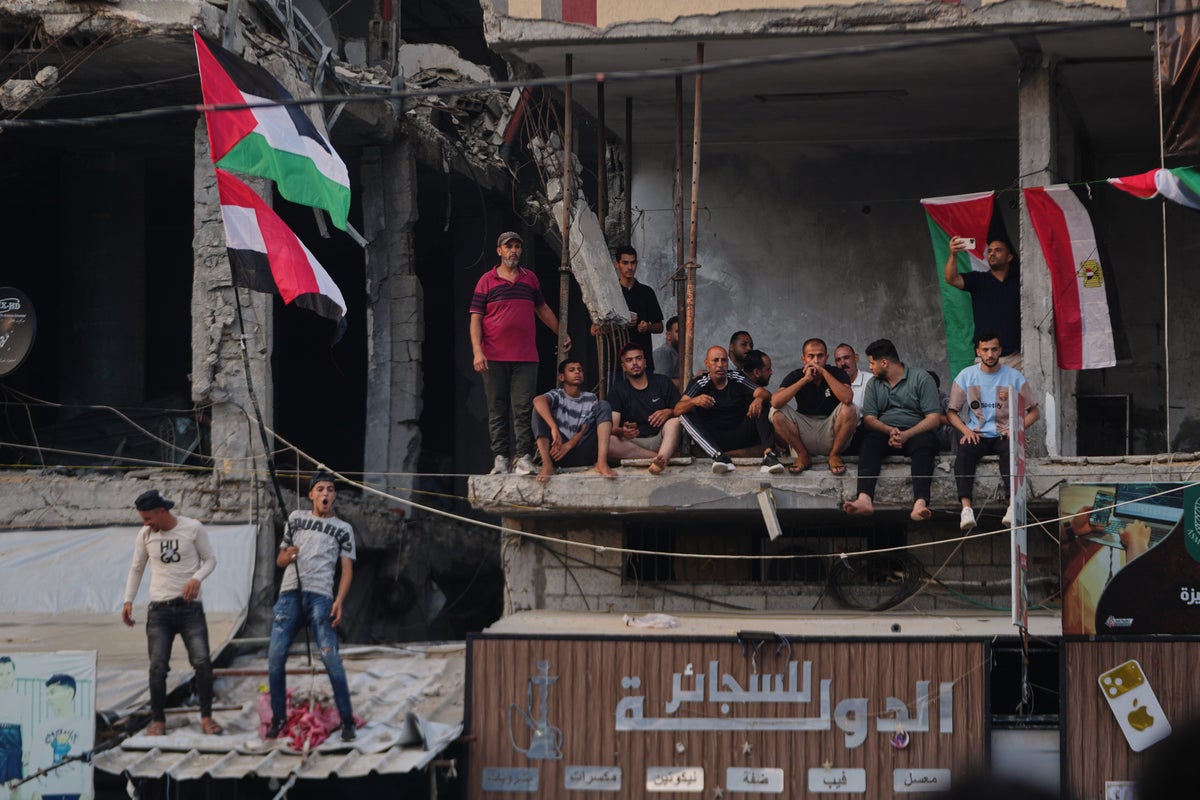
Civilian populations experiencing high-intensity urban warfare systematically deploy counter-crisis mechanisms to preserve social cohesion and psychological resilience. The collective viewing of international sporting events, such as the FIFA World Cup, within active conflict zones like the Gaza Strip is not merely a diversionary activity. It functions as a structured sociological framework for collective mourning, geopolitical assertion, and the reclamation of public space. Analyzing this phenomenon requires moving past superficial human-interest narratives to dissect the functional mechanics of community resilience under extreme kinetic duress.
The Tri-Factor Framework of Wartime Sport Consumption
The transformation of a crisis zone into a temporary theater for international sports viewing operates on three distinct socio-psychological vectors. When infrastructure is compromised and physical security is nonexistent, the consumption of a global event serves quantifiable structural purposes.
1. Spatial Reclamation and Subversion of Ruin
In an active conflict environment, the physical landscape undergoes rapid deconstruction. The conversion of a site of destruction—such as a bombed-out residential building or a displaced person encampment—into a communal viewing hub reconfigures the utility of that space.
- The Security Paradox: Gathering large groups in a singular, open-air location during ongoing instability creates an acute security risk. The decision to assemble indicates that the perceived psychological utility of collective utility outweighs the calculated physical risk.
- Symbolic Infrastructure: Utilizing makeshift screens, generators, and unstable satellite links serves as a counter-strategy against infrastructural deprivation. It asserts a temporary dominance over technological isolation.
2. The Mechanics of Commemorative Projection
In standard environments, sports fandom relies on tribal identity or national affiliation. Within a conflict zone, this dynamic shifts toward proxy representation and commemorative projection.
- Surrogate Tributes: The act of viewing is frequently dedicated to deceased community members, transforming the match into a wake. The scoreboard and the pitch become a backdrop for local memorialization.
- Geopolitical Validation: Fans in marginalized or unrecognized territories systematically align themselves with teams that represent broader political or ideological alignments. Victory for a chosen proxy team delivers a micro-dose of systemic validation that is otherwise unavailable in the viewers' immediate geopolitical reality.
3. Neurochemical Regulation and Collective Grounding
The physiological impact of prolonged exposure to kinetic warfare includes sustained cortisol production and hyper-vigilance. Collective sports viewing introduces an artificial, highly structured environment governed by predictable rules—a stark contrast to the unpredictable nature of an active conflict zone.
- Shared Catharsis: The vocalization of grief, anger, or joy during a match allows for the regulated release of suppressed emotional trauma. Because the emotional output is directed at a game, it bypasses the paralyzing despair associated with immediate material losses.
- Temporal Anchoring: War disrupts the linear perception of time, blurring days into a continuous cycle of survival. A 90-minute match re-establishes a rigid, predictable chronological framework, providing a temporary sense of normalcy.
Structural Obstacles to Cultural Preservation in Conflict Zone Communities
Executing any form of community gathering in an active theater of war requires overcoming significant infrastructural bottlenecks. The operational limitations are severe, and each point of failure carries lethal consequences.
Energy Deprivation and Grid Failure
The primary bottleneck to information access in a besieged or highly damaged environment is the total collapse of centralized electrical grids. To power a localized broadcast, communities must establish micro-grids relying on volatile fuel supplies or localized solar arrays. The reliance on internal combustion generators introduces a secondary risk profile: auditory signatures that mask incoming kinetic threats and the logistical challenge of sourcing fuel in a closed economy.
Bandwidth Bottlenecks and Information Isolation
International sports broadcasts demand consistent data throughput. In conflict zones, telecommunications infrastructure is routinely degraded either through direct physical kinetic damage or deliberate electromagnetic interference.
The utilization of low-bandwidth, high-latency satellite connections or intermittent cellular networks creates a fractured viewing experience. When the feed drops, the isolation of the population is temporarily amplified, highlighting the fragility of their connection to the global community.
The Fragmented Social Unit
Warfare systematically deconstructs the nuclear family and local tribal networks through displacement and casualties. The audience gathered around a makeshift screen is rarely a cohesive, pre-existing community; it is a synthetic social unit composed of internally displaced persons (IDPs). The shared viewing experience acts as an accelerant for social integration, forcing disparate, traumatized demographics to forge instant micro-coalitions based on shared spectatorship.
The Geopolitical Leverage of Marginalized Fandom
Global sporting bodies frequently assert that athletics exist in a vacuum separate from international relations. Empirical observation of conflict-zone fandom refutes this assumption. For a population blockaded or undergoing military engagement, the global broadcast eye represents a critical vector for asymmetric communication.
By adopting highly visible roles as consumers of global pop culture amidst rubble, civilian populations project a specific message to the international media apparatus: the assertion of baseline humanity under conditions designed to strip it away. This creates a cognitive dissonance for external observers, juxtaposing the high-tech, multi-billion-dollar industry of international sports against the absolute destitution of the immediate viewing environment.
The strategic alignment with specific national teams also serves as a diagnostic tool for tracking regional allegiances. Support is directed toward nations that have historically provided diplomatic cover or material aid, while animosity is funneled toward states perceived as complicit in the population's current condition. The stadium stands are mirrored in the ruins, converting global entertainment into a localized geopolitical chess board.
Operational Assessment of Humanitarian Interventions via Cultural Mediums
International non-governmental organizations (NGOs) and local mutual-aid groups often underestimate the logistical value of cultural infrastructure. Providing food, water, and medical triage remains the absolute baseline of humanitarian response. However, failing to allocate secondary resources to communal psychological infrastructure leads to rapid social atomization.
Future humanitarian deployment strategies in urban conflict zones must integrate localized communication hubs into their primary logistics pipeline. Deploying ruggedized, solar-powered projection units alongside water purification systems addresses the dual realities of human survival: the physiological need for sustenance and the psychological need for collective cohesion.
Leaving these gatherings entirely to ad-hoc, informal setups exposes civilians to unnecessary physical risks and unreliable information access. Structuring these spaces deliberately ensures that even amidst systemic architectural and societal ruin, the mechanisms of community preservation remain operational.



