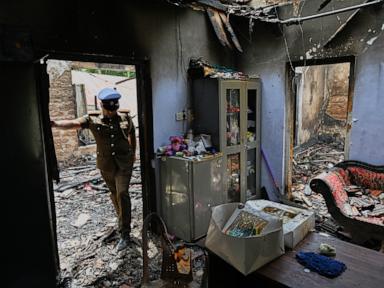
The air in the pre-dawn hours of a tropical dawn usually carries the scent of damp earth and blooming jasmine. But on this specific morning in Sri Lanka, the air tasted of plastic smoke and panic. It is a smell that doesn’t leave your clothes easily. It stays in the back of your throat, a stubborn reminder of the fragile line between a sanctuary and a trap.
We tend to look at nursing homes as final chapters written in quiet, faded ink. We assume they are places where the volume of the world is turned down, where elderly residents are shielded from the sharp edges of existence. We trust the walls. We trust the licenses hanging in the entryways. We trust that someone, somewhere, checked the wiring.
Then the smoke clears, and we find out the license never existed.
Thirteen people are dead now. The number started smaller, as these tragedies always do, before climbing steadily as the heat-damaged lungs of survivors gave out in nearby hospital wards. What remains of the structure is a blackened shell, a skeleton of concrete and charred wooden beams jutting into the sky like broken teeth. It was supposed to be a refuge for the vulnerable, a place where families paid their hard-earned rupees to ensure their grandmothers and grandfathers spent their twilight years in dignity. Instead, it became a furnace.
The horror of this event isn’t just in the flames. It is in the paperwork. Or rather, the complete absence of it.
When emergency crews arrived at the scene, they weren't just fighting a fire; they were fighting a ghost. The facility was unregistered. It operated completely outside the grid of state oversight, hidden in plain sight within a residential neighborhood. To the neighbors, it was just a large house where old people lived. To the authorities, it didn’t exist at all. This lack of registration isn't just a bureaucratic technicality. It is the exact point where vulnerability meets catastrophe.
Consider what happens when a care facility operates in the shadows.
Without state registration, there are no mandatory fire drills. There are no inspectors walking the corridors with clipboards, testing the resistance of the electrical mains, or checking if the fire extinguishers are fully charged or merely decorative cylinders gathering dust. There are no regulations dictating the ratio of staff to residents during a night shift. When the wiring shorts out in the dead of night, an unregistered facility relies entirely on luck. And luck is a terrible safety strategy.
Let us ground this abstract concept of "regulatory failure" in a hypothetical room on the second floor of that building.
Imagine an elderly woman named Anula. She is eighty-two. Her knees are swollen with arthritis, and she moves with a slow, deliberate caution that turns a walk to the bathroom into a ten-minute journey. When the alarm—if there even was an alarm—sounds at three in the morning, Anula cannot leap from her mattress. She cannot run down a dark, smoke-choked hallway. She needs a hand to steady her, a calm voice to guide her, and a clear, unobstructed exit route.
Now complicate that scenario with the reality of an illegal operation. The hallways are narrow, perhaps blocked by extra beds to maximize profit. The night staff is skeletal because keeping payroll low is the only way an underground business thrives. The windows are barred with iron grates to keep residents suffering from dementia from wandering off into the street.
When the fire breaks out, Anula isn’t just dealing with heat and smoke. She is trapped in a maze designed by negligence. The very measures meant to keep her contained become the barriers that prevent her rescue. The thick, toxic smoke from cheap polyurethane mattresses fills the room within ninety seconds. Long before the flames touch her, the carbon monoxide does its silent, heavy work.
This is the human cost of a missing permit.
The investigation into the ruins is now uncovering the predictable autopsy of a preventable disaster. Preliminary reports point toward an overloaded electrical circuit, a common culprit in old buildings repurposed for high-density living without the necessary infrastructure upgrades. Air conditioners, medical equipment, refrigerators, and television sets all drawing power from a system designed decades ago for a single-family home. It is a culinary recipe for disaster, a slow cooking of wires hidden behind plaster until the insulation melts away and the sparks find a pile of dry linens.
But the real problem lies elsewhere. It lies in the systemic supply and demand of elderly care in developing economies.
Sri Lanka, like many nations in Asia, is experiencing a massive demographic shift. The population is aging rapidly. Traditional family structures, where three generations lived under one roof and the young cared for the old, are fraying under the economic pressures of modern life. Young adults are moving to cities or migrating abroad for work, leaving behind an aging generation that requires specialized medical attention.
The state infrastructure cannot keep up. Public care facilities are overwhelmed, underfunded, and carry long waiting lists. Private, fully licensed luxury villas are astronomically expensive, far out of reach for the average middle-class family.
This creates a massive, desperate vacuum. And where there is a vacuum, an unregulated black market will always rush to fill it.
Families find themselves caught in a suffocating vice. They want the best for their parents, but their bank accounts dictate their options. A flyer appears, or a friend of a friend mentions a quiet house down the lane that takes in seniors for a fraction of the official market rate. It seems like a godsend. The rooms look clean during the daytime tour. The manager is polite and full of reassurances. The family breathes a sigh of relief, signs a ledger, and leaves their loved one in what they believe is safe hands.
They don't ask to see the registration certificates from the National Secretariat for Elders. They don't check if the local municipal council has cleared the building for commercial occupancy. Why would they? We are conditioned to trust the appearance of care. We mistake a clean floor for a safe environment.
The tragedy of the thirteen lives lost in this fire is that their families will now carry a ledger of guilt that can never be balanced. They will forever look back at the day they dropped their relatives off at that unregistered house and wonder how they missed the signs. They will dissect every conversation, every odd smell, every red flag they minimized because they desperately needed a solution to an impossible problem.
The response from the authorities has followed a familiar, cyclical choreography. There are public statements of grief. There are promises of a thorough investigation. There are stern warnings issued to other illegal operators across the island, threatening immediate closure if they do not register with the proper departments.
But these declarations ring hollow against the backdrop of the smoldering concrete.
Enforcement requires resources. It requires inspectors who cannot be bought, a centralized database that functions, and a societal willingness to blow the whistle on suspicious operations. More than anything, it requires providing a viable alternative. If the government shuts down every unregistered nursing home tomorrow, thousands of elderly citizens will suddenly have nowhere to go. They will be pushed back into families that cannot support them, or onto the streets.
It is a terrifying equilibrium where the state often looks the away because the alternative is an immediate social crisis. They tolerate the risk until the risk explodes.
We must look closely at the ashes of that Sri Lankan nursing home because they mirror vulnerabilities existing in neighborhoods across the globe. This is not an isolated incident peculiar to one island nation. It is a universal story about what happens when society grows too busy, too poor, or too indifferent to look after the people who built the world we currently enjoy.
The solution isn't just more raids or harsher prison sentences for unscrupulous operators, though accountability is mandatory. The solution involves changing how we value the final years of human life. It requires acknowledging that elder care is not a private burden to be hidden away in cheap, substandard rooms, but a public responsibility requiring collective investment.
The sun sets over the ruins now, casting long, dark shadows across the cracked concrete floor where thirteen people spent their final, terrifying moments. A broken metal bed frame sits twisted in the center of what used to be a ward. A singed photograph, its edges curled and blackened, lies in a puddle of dirty water from the fire hoses. It shows a younger man smiling next to an older woman, both squinting into a sun that set long ago.
The fire is out, but the silence left behind is deafening. It is a silence that accuses everyone who looked away, everyone who prioritized profit over safety, and a system that allowed thirteen grandmothers and grandfathers to become statistics in a ledger of avoidable deaths.



:max_bytes(150000):strip_icc()/how-many-types-of-dwarfism-are-there-2860725-v1-8dae2c531b4b47d9ae36ae404d3308a0.png)