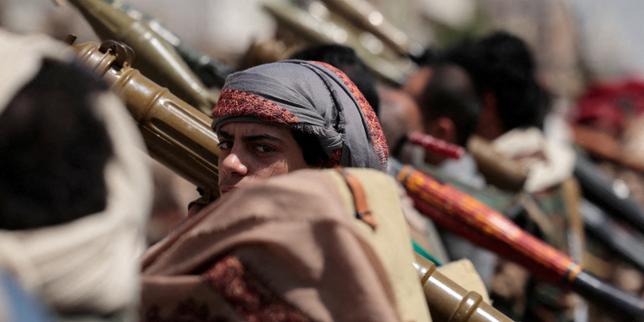
The air in the capital of Yemen always tastes faintly of sulfur and ancient dust. For nearly a decade, the mornings have broken not to the sound of roosters or market vendors unlatching their wooden shutters, but to the dull, concussive thud of distant ordnance echoing off the volcanic rock of Jabal Nuqub.
Imagine, if you can bear the weight of it, waking up in a house where the glass in your windows has long since been replaced by taped cardboard because the shockwaves from another neighborhood’s devastation shattered the panes years ago. You learn to read the sky by its colors. Gray means artillery. Black means a fuel depot has gone up. And the rare, clear blue? That is simply the terrifying pause between storms. Read more on a similar topic: this related article.
Yet, hundreds of miles away across the Red Sea, in the air-conditioned, marble-floored corridors of ministries in Riyadh, the arithmetic of survival looks entirely different. There, charts rise and fall on glowing monitors. Economic diversification plans are drafted in sleek, sans-serif fonts. Vision 2030 is not just a policy document; it is an existential shield, an ambitious blueprint designed to build a post-oil kingdom of gleaming tech hubs and tourist resorts along the turquoise waters of the Red Sea.
You cannot build a Riviera next door to a permanent war zone. Further reporting by USA Today highlights similar views on the subject.
This single, glaring geopolitical contradiction is the invisible engine driving the quiet diplomatic earthquake that just shook the Middle East. When the Iranian foreign minister stepped up to a microphone and publicly urged a direct, unmediated line of dialogue between the Kingdom of Saudi Arabia and the Houthi movement controlling northern Yemen, he was not speaking the language of sudden peace. He was speaking the pragmatic language of containment.
Consider what happens next when two bitter regional adversaries decide that bleeding out is no longer a viable strategy.
For years, the proxy war in Yemen has functioned as a perpetual motion machine of regional instability. Riyadh viewed the Houthi movement as an existential dagger pressed directly against its southern soft underbelly, armed and supplied by Tehran. Iran, conversely, found in the resilient, mountain-bred insurgency a low-cost, high-yield lever to bog down its primary Sunni rival in a quagmire reminiscent of America's Vietnam. Both sides poured resources into the abyss. Both sides watched their investments turn to ash.
Then came the pivot.
Diplomacy rarely begins with an embrace. It begins with exhaustion.
To understand the sudden urgency behind Tehran’s call for Saudi-Houthi talks, one must look past the diplomatic pleasantries and examine the raw math of exhaustion. The Iranian economy, squeezed by a punishing labyrinth of international sanctions and domestic unrest, cannot indefinitely bankroll every allied militia from Beirut to Sanaa at maximum capacity. At the same time, Saudi leadership under Crown Prince Mohammed bin Salman realized that the kingdom's grand economic transformation cannot proceed while drone strikes threaten oil processing facilities and international investors eye the southern border with profound nervousness.
A ceasefire brokered in secret rooms in Beijing and sustained through fragile regional compromises created a window. But a ceasefire is not a peace treaty. It is a holding pattern. And holding patterns are notoriously vulnerable to sudden, violent turbulence.
This is where the Iranian diplomatic overture enters the stage, carrying a heavy burden of irony. Tehran has spent years denying direct command and control over the Houthi arsenal, insisting that the movement acts as an independent sovereign actor in Yemen's complex civil tapestry. Yet, by publicly stepping forward to endorse and encourage direct bilateral negotiations between Riyadh and Sanaa, Iran inadvertently underscores the very reality it routinely obscures: nothing in this theater moves very far without Tehran's tacit nod.
Step closer to the negotiating table, and the human stakes snap into sharp focus.
In a hypothetical village just outside the contested city of Marib, a local schoolteacher named Ibrahim watches the news flicker on a small, battery-powered television screen. He does not care about geopolitical realignment. He does not care about the strategic calculus of the Gulf Cooperation Council or the ideological export of the Iranian revolution. Ibrahim cares about whether his children will have textbooks this semester, whether the local clinic has insulin, and whether the men with rifles at the checkpoint down the road will let his cousin pass with a truckload of flour.
When foreign ministers in distant capitals talk about dialogue, Ibrahim measures those words in centimeters of concrete and drops of clean water. For him, the distinction between a proxy war and a localized settlement is the difference between a roof that stays overhead and a night spent sleeping in a dirt-floor cave.
The tragedy of the modern Middle East is that peace is so frequently negotiated by the very architects of the slaughter. The men shaking hands across mahogany tables are the same ones who signed off on the shipments of ballistic components and the airstrikes that emptied schoolyards. History offers us this bitter pill time and again: wars do not end because good triumphs over evil. They end when the cost of continuing the carnage eclipses the value of the grievance.
And right now, the cost is mounting for everyone.
The Houthis, having consolidated iron-fisted control over the most populous regions of Yemen, are finding that ruling a ruined state is vastly different from fighting an insurgency against it. Salaries go unpaid. Infrastructure crumbles into dust. Public anger simmers just beneath the surface of total authoritarian control. A movement that built its entire identity on defiance now faces the grueling, unglamorous task of governance. To survive, they need ports reopened, trade revived, and foreign currency flowing. They cannot eat slogans.
Saudi Arabia, meanwhile, has learned the hard way that military superiority does not equate to political victory. The kingdom wanted a quick, decisive surgical strike to restore the internationally recognized government; instead, it received a multi-billion-dollar quagmire that tested its military readiness and invited international condemnation over humanitarian fallout. Walking away requires a delicate choreography of face-saving measures, security guarantees, and backroom assurances that the southern border will remain quiet.
When Iran nudges these two tired antagonists toward direct conversation, it is performing a delicate high-wire act. It wants to retain its influence as an indispensable regional power broker while shedding the direct financial and diplomatic liability of an active, boiling conflict.
The risk, of course, is that words spoken in press conferences do not automatically translate to the ground. Ceasefires fracture. Hardliners on both sides view compromise as treason. A single miscalculated missile launch or a botched local skirmish could shatter the thin glass of diplomacy, plunging the region back into the abyss of open warfare.
Night falls quickly in Sanaa. The electricity grid has long since given up the ghost, leaving the sprawling, ancient city bathed in the dim, amber glow of small diesel generators and the cold light of a million stars.
Somewhere in that sprawling darkness, a mother tucks her children into bed, listening for the familiar, dreaded hum in the night sky. She does not know what a foreign minister said in a press briefing thousands of miles away. She does not know if the handshake across the Gulf is sincere or merely a tactical pause before the next storm breaks.
She only knows the dark. And she waits to see if the morning will bring light, or fire.