The air always changes first.
It is not a shift in temperature, though the thermometer will soon plummet by ten or fifteen degrees. It is a subtle thickening of the atmosphere, a sudden cessation of the afternoon hum, a strange, metallic quality to the light filtering through the leaves. If you have ever stood beneath the shadow of the moon, you know this stillness. It is the quiet of a cathedral. It is the sudden, breathless realization that the grand machinery of our solar system is not a distant abstraction written in textbooks, but an active, breathing clockwork moving right above our heads.
Right now, the countdown has entered its final stretch. Three days.
Across Europe and parts of the Arctic, millions of people are checking weather forecasts with a low-grade fever of anxiety. Suitcases are open on beds in London, Reykjavik, and Madrid. Telescopes are being packed into padded cases. Rental cars are idling on remote roads in northern Spain and Iceland. They are all chasing the same fleeting prize: a total solar eclipse on August 12, 2026.
For most of human history, this exact moment would have inspired sheer terror. Entire armies laid down their weapons in ancient skies. Emperors panicked and consulted oracles. Today, we call it tourism, science, and wonder. But the visceral shudder remains hardwired into our bones. When the sun vanishes at two in the afternoon, something primal inside us whispers that the world might not come back.
Consider what happens next.
The Path of the Shadow
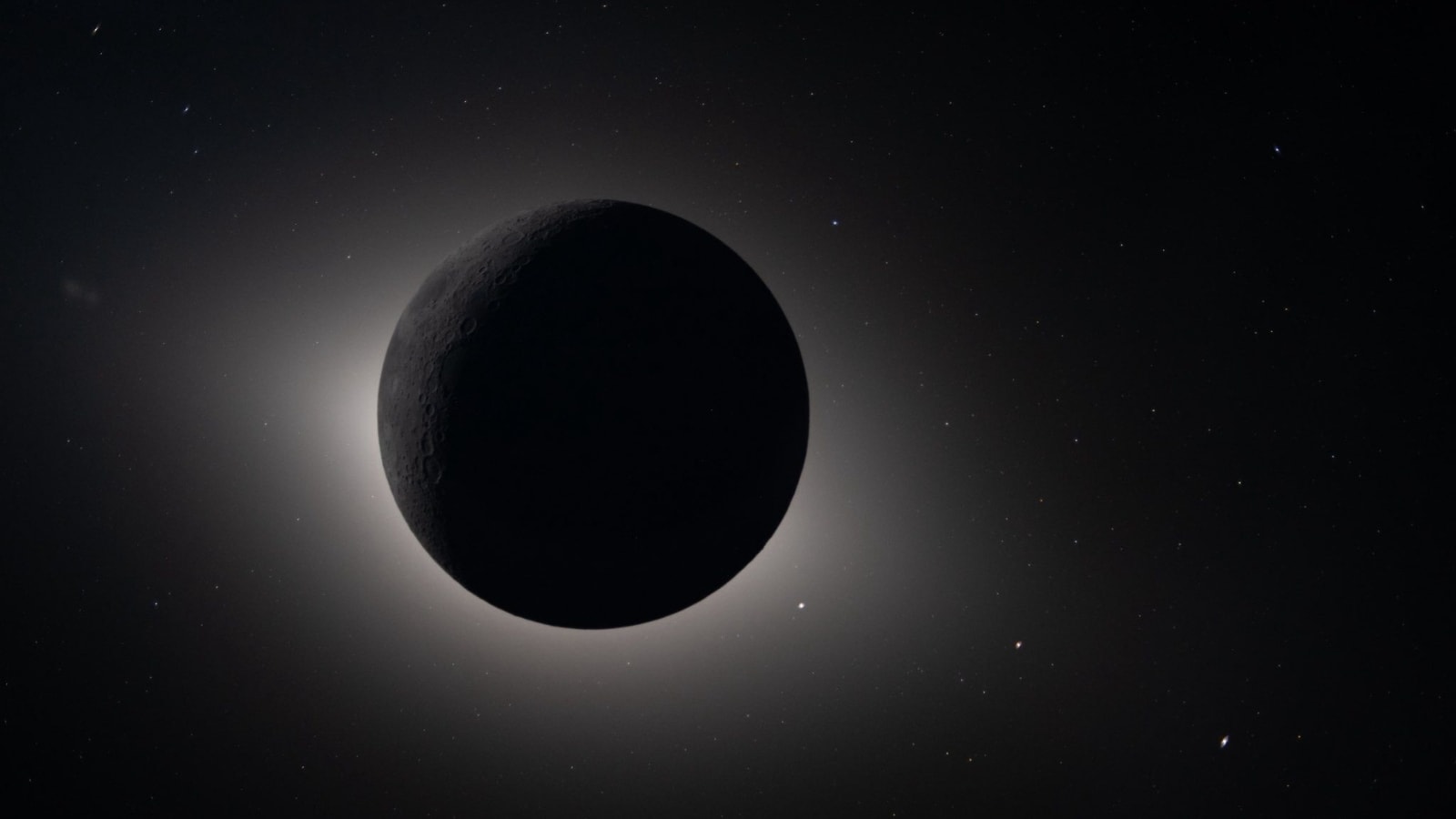
On August 12, the Moon's umbral shadow will sweep across the Earth at supersonic speeds. It touches down in the high Arctic, slicing across eastern Greenland, grazing the western edge of Iceland, and plunging downward to paint a diagonal slash across the Iberian Peninsula just as the sun dips toward the horizon.
In Reykjavik, travelers will gather along the jagged coastlines, watching the ocean turn the color of bruised steel. In Spain, the sun will hang low, a brilliant orange coin about to be swallowed by the horizon just as totality hits. That low-angle eclipse introduces a cinematic madness to the event. This is not the high-noon black sun of North America in 2024. This is a sunset blackout, a horizontal twilight stretching across ancient stone walls and modern highways alike.
The logistics are staggering. Hotels in prime viewing zones booked out years ago. Major international airports are bracing for a surge of celestial pilgrims. Highway authorities in Spain and Iceland are issuing warnings about gridlock, urging people to find their viewing spots days in advance and stay put.
Yet, numbers and traffic reports miss the point entirely.
To understand why people will fly halfway across the globe to stand in a muddy field for less than two minutes of darkness, you have to talk to someone who has chased totality before.
The Chasers
Elena Vance has spent twenty-two years collecting eclipses. She is a meteorologist by trade, but a romantic by compulsion.
"People ask me why I do it," she says, her hands tracing the rim of a coffee mug in a crowded café. "They think it is just a shadow. They think it is math. But math doesn't make grown adults weep in public. Math doesn't make birds fly backward into trees thinking it is night."
She remembers her first time in the dry heat of the Australian Outback. She remembers the way the shadows cast by the leaves turned into thousands of tiny, overlapping crescent moons on the dust. She remembers the temperature drop that felt like walking into a cellar. And then, the diamond ring effect. That blinding flash of the last ray of sunlight before the corona explodes into view.
"For those few minutes," Elena notes, "you stop being you. You stop being a collection of bills, deadlines, and anxieties. You become part of the universe looking at itself. The noise of modern life just gets unplugged."
That is the invisible stake of August 12. In an era defined by perpetual connectivity, screen fatigue, and constant noise, a total solar eclipse offers something radical: absolute, involuntary presence. You cannot scroll through totality. You cannot multitask through the corona. You either look up, or you miss it.
The Science of the Crown
Beneath the poetry lies hard, uncompromising physics.
When the moon completely blocks the bright face of the photosphere, the solar corona is revealed in all its ghostly, billowing glory. This is the sun's outer atmosphere, a million degrees hotter than its surface, stretching millions of miles into space. Space physicists live for these fleeting windows.
Satellites can block the sun artificially using coronagraphs, but they cannot match the crisp precision of the moon acting as a natural occulting disk right here from our vantage point. During these precious minutes, researchers will measure the magnetic fields of the corona, hunting for clues to the solar wind that constantly bombards our planet and threatens our power grids and communication satellites.
Every total eclipse is a laboratory experiment performed on a cosmic scale.
And yet, even for the astrophysicists staring at multimonitor setups in makeshift field camps, the science usually takes a backseat when the moment arrives. The data streams in, the instruments hum, but when the light snaps off, everyone looks up.
The Race Against the Clouds
There is a cruel irony built into the pursuit of eclipses. You can calculate the orbital mechanics down to a millisecond, but you cannot command the weather.
Right now, meteorologists are poring over atmospheric models, tracking jet streams and low-pressure systems drifting across the Atlantic. A single stray cloud can turn the experience of a lifetime into an expensive, gray disappointment.
This introduces a frantic human element to the final seventy-two hours. Rental car lots in Madrid and Reykjavik are ground zero for sudden, whispered strategy sessions. If the forecast for eastern Iceland turns sour, travelers will throw their gear into trunks and floor the accelerator toward the west coast. If the interior of Spain clouds over, thousands will race toward the coast to catch the sunset totality over the Mediterranean.
It is a nomadic migration driven entirely by a whim of the atmosphere.
You watch the radar loops. You bite your nails. You gamble your vacation days and your savings on a patch of blue sky. The vulnerability of it all is intoxicating. We live in a world where we expect total control, real-time tracking, and guaranteed outcomes. An eclipse mocks that illusion. It reminds us that we are still tenants on a spinning rock, entirely dependent on the random, magnificent grace of cosmic alignment.
The Final Countdown
The hours are slipping away.
In kitchens, offices, and airports, anticipation is curdling into a delicious, nervous tension. Solar glasses are being tested against indoor lamps to ensure no pinpricks of light bleed through the polymer films. Camera tripods are being tightened. Conversations are turning from weather reports to packing lists.
On August 12, somewhere over the jagged mountains of Greenland or the sun-baked plains of Spain, the moon will slide into its exact, unforgiving place. The sun will die for a hundred and twenty seconds. The stars will punch through the daytime sky like silver nails driven into velvet.
And then, just as quickly, the diamond ring will flash. The spell will break. The light will rush back, blinding and triumphant, forcing everyone to shield their eyes and blink into the ordinary afternoon.
You will pack up your gear. You will sit in the inevitable traffic jam crawling away from the viewing site. You will look at your photographs, knowing they never quite captured the majesty of the real thing.
And you will already be wondering where you can see the next one.