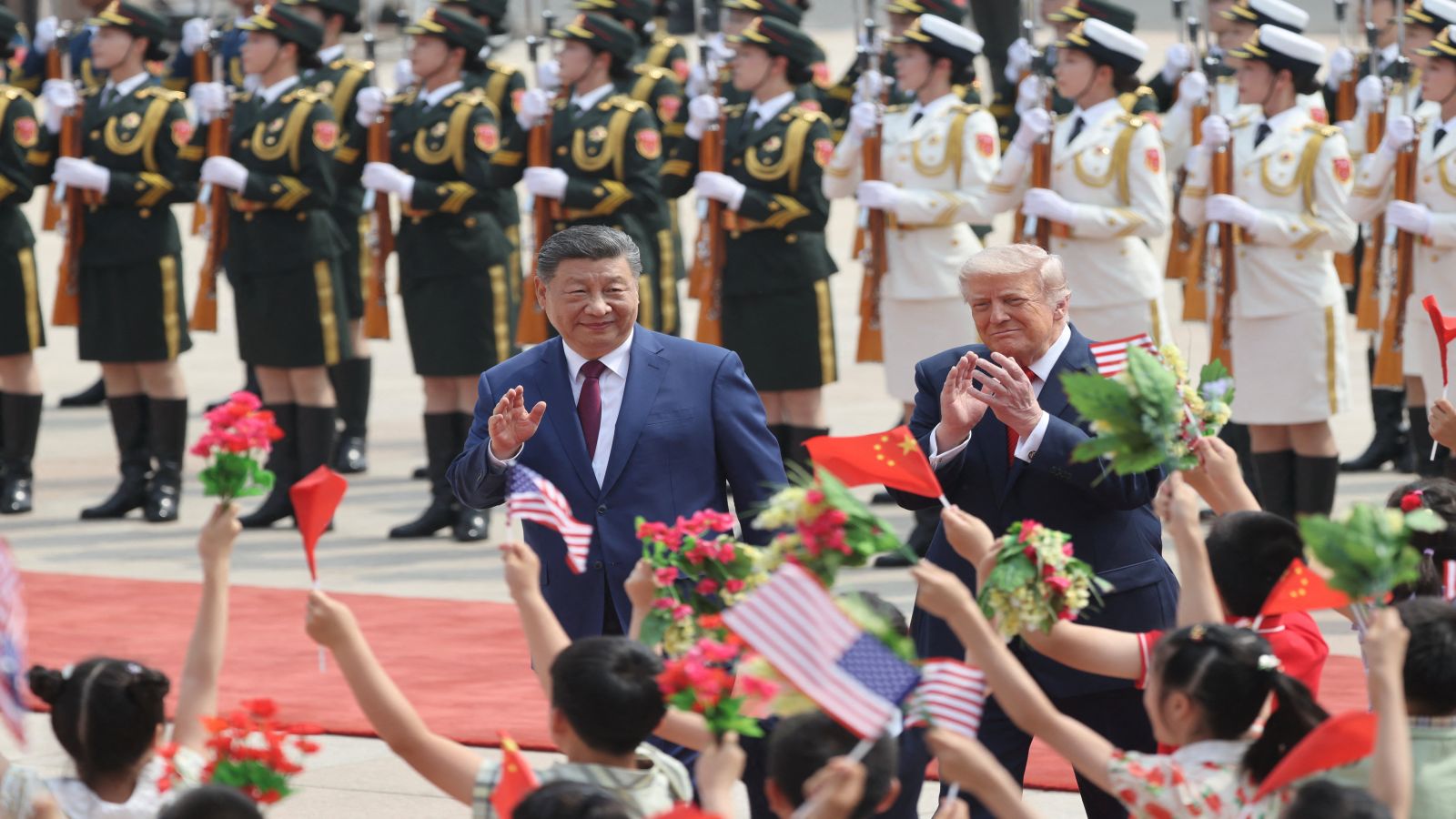
The trajectory of U.S.-China relations since 2017 is not a series of diplomatic events but a process of strategic compression, where the margin for error in trade, technology, and security has narrowed to a point of zero-sum competition. While mainstream reporting focuses on the optics of state dinners and handshakes, the actual mechanics of these interactions reveal a systematic shift from global integration toward managed decoupling. By analyzing the summits between Donald Trump and Xi Jinping through the lens of institutional bargaining and economic statecraft, we can identify three distinct phases of engagement that dictate the current geopolitical equilibrium.
The Architecture of Escalation
The 2017 Mar-a-Lago summit established a deceptive baseline for bilateral relations. It introduced the 100-Day Action Plan, an attempt to address trade imbalances through sectoral concessions. However, this framework failed because it addressed the symptoms of the trade deficit rather than the structural divergence of the two economies.
From a strategic standpoint, the Mar-a-Lago meeting exposed a fundamental mismatch in objectives:
- The U.S. sought immediate, quantifiable reductions in the trade deficit (a transactional goal).
- China sought a long-term framework to stabilize the relationship while continuing its industrial policy (a systemic goal).
The failure of the 100-day plan led directly to the 2018 imposition of Section 301 tariffs. This move transformed the relationship from one of managed friction to one of active economic warfare. When the leaders met again in Buenos Aires in late 2018 and Osaka in 2019, the discussions shifted from "cooperation" to "truce management." These meetings functioned as tactical pauses designed to prevent a total collapse of global supply chains rather than genuine attempts at reconciliation.
The Phase One Agreement: A Study in Managed Trade
The January 2020 Phase One trade deal represents the high-water mark of transactional diplomacy. To understand the gravity of this agreement, one must evaluate the Purchase Commitment Mechanism. China agreed to buy an additional $200 billion in U.S. goods and services over two years.
The structural flaws in this mechanism were three-fold:
- Capacity Constraints: The agreement ignored the physical and logistical limits of U.S. export capacity in energy and agriculture.
- Exogenous Shocks: The timing coincided with the onset of the COVID-19 pandemic, which paralyzed global demand and logistics.
- Substitution Bias: By mandating specific purchases, the deal distorted market signals, forcing China to divert trade from other partners, which created secondary geopolitical frictions.
The Phase One deal did nothing to address the core U.S. grievances regarding Intellectual Property (IP) theft, forced technology transfer, and state-owned enterprise (SOE) subsidies. By focusing on the "what" (purchase volumes) rather than the "how" (industrial policy), the summitry of this era provided a temporary ceasefire while the underlying fire of systemic competition continued to burn.
The Technology Cold Front and Export Controls
A critical oversight in standard political analysis is the decoupling of "trade talks" from "technology restrictions." While Trump and Xi were negotiating soy and Boeing purchases, the U.S. Department of Commerce was radically expanding the Entity List. The inclusion of Huawei and other Chinese tech champions signaled a shift in U.S. policy from protecting market share to denying technological parity.
This created a feedback loop that continues to define the relationship:
- Action: U.S. restricts access to advanced semiconductors and lithography equipment.
- Reaction: China accelerates its "Dual Circulation" strategy, prioritizing domestic self-reliance and reducing exposure to Western financial systems.
- Equilibrium: A fractured global tech stack where hardware and software standards are increasingly bifurcated.
The summits never successfully mitigated this friction because technology is now viewed as a core component of national security (the "Small Yard, High Fence" philosophy). Diplomacy in this context serves only to define the height of the fence, not to tear it down.
Security Dilemmas and the Taiwan Strait
Beyond the balance sheet, the Mar-a-Lago to Beijing progression highlighted an increasing rigidity in security postures. The U.S. shift toward the Indo-Pacific Strategy recontextualized China not as a stakeholder, but as a revisionist power. Each meeting between the heads of state required navigating the "Three Communiqués" against the "Taiwan Relations Act"—a delicate balancing act that has grown more precarious as China’s military modernization closes the qualitative gap in the First Island Chain.
The 2017 Beijing visit, often remembered for its "State Visit Plus" pageantry, was the last time the personal chemistry between the two leaders was leveraged to mask these security tensions. Since then, personal rapport has been replaced by bureaucratic guardrails. The "hotline" and military-to-military communication channels, often discussed in these summits, are frequently the first items suspended during periods of high tension (e.g., after the 2022 visit of the U.S. House Speaker to Taiwan), proving that personal diplomacy is a fragile substitute for institutionalized de-confliction.
The Economic Cost Function of Decoupling
Strategic analysts must quantify the impact of this era beyond mere tariff percentages. The cost of the U.S.-China rift is best understood through the Reconfiguration of Global Value Chains (GVCs).
Companies are now forced to operate under a "China Plus One" strategy. This entails:
- Redundant Infrastructure: Maintaining manufacturing bases in both China (for the Chinese market) and ASEAN or Mexico (for the Western market).
- Increased OpEx: Higher compliance costs related to sanctions, export controls, and ESG transparency requirements that target specific Chinese regions.
- Capital Risk: A "geopolitical premium" now applies to any major investment in either jurisdiction, raising the hurdle rate for cross-border M&A.
Strategic Divergence in Global Governance
The final layer of the Trump-Xi legacy is the abandonment of the World Trade Organization (WTO) as a venue for dispute resolution. Both leaders, for different reasons, found the WTO’s multilateral framework insufficient for their needs.
- U.S. Perspective: The WTO was incapable of disciplining a non-market economy of China's scale.
- China's Perspective: The U.S. was using domestic law (Section 232 and 301) to bypass international norms.
This bilateralism has led to a "minilateral" world order, where the U.S. builds blocs like the IPEF (Indo-Pacific Economic Framework) and China expands the BRICS and the Belt and Road Initiative. The summits of 2017-2020 were the pivot point where the world moved from a single, integrated trade system to a dual-hub system.
The Operational Reality for Global Capital
The era of summits between Trump and Xi proved that the "Goldilocks" period of globalization is over. For corporate leaders and investors, the takeaway is that policy uncertainty is no longer a temporary bug—it is a permanent feature of the operating environment. The "Strategic Competition Act" and subsequent legislative moves in the U.S. ensure that even with changes in administration, the structural pressure on China will remain high.
Strategic recommendation for the current cycle:
Organizations must transition from a "Just-in-Time" supply chain model to a "Just-in-Case" model, prioritizing resilience over pure efficiency. This requires a forensic audit of second and third-tier suppliers to ensure zero exposure to sanctioned entities or regions. Furthermore, firms must "localize to survive," creating independent entities in China that can operate autonomously from Western tech stacks. The goal is no longer to wait for a return to the 2017 status quo, but to build an enterprise capable of thriving in a world defined by the permanent friction of two competing superpowers.
The focus must shift toward geopolitical hedging. This involves securing long-term contracts for critical minerals outside of China’s sphere of influence while simultaneously maintaining access to the Chinese consumer market through localized partnerships that minimize IP leakage. The winners of this decade will not be those who bet on a diplomatic breakthrough, but those who successfully navigate the fragmentation.

:max_bytes(150000):strip_icc():focal(819x186:821x188)/Murdaugh-Family-e90854a716884d608fb6fd925e18d840.jpg)
