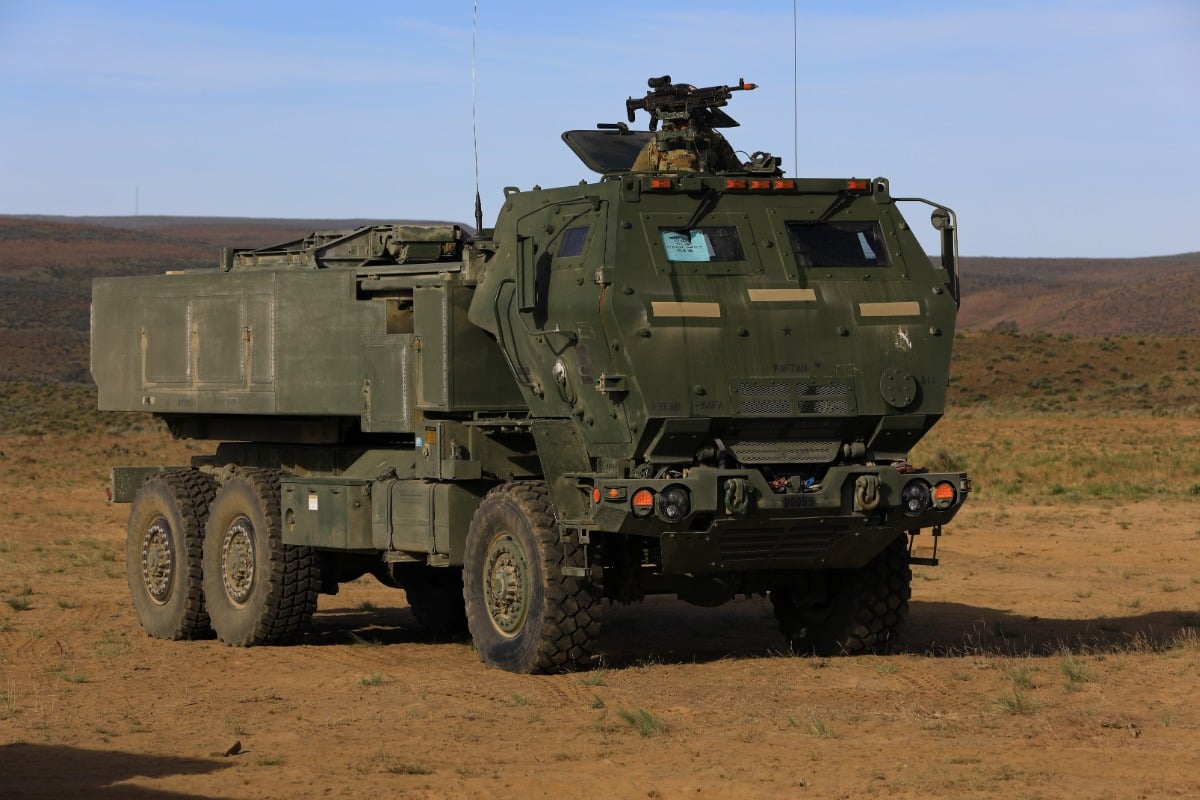
The mainstream defense press is swooning over Singapore’s recent $73 million contract to upgrade the High Mobility Artillery Rocket System (HIMARS). They call it a "brain upgrade." They talk about digital modernization, faster kill chains, and data-driven battlefield dominance as if software patches win wars by themselves.
They are wrong. They are falling for the classic technocratic trap that treats military hardware like a smartphone upgrade cycle.
The consensus view loves a big price tag wrapped in tech jargon. But if you look past the press releases, Singapore isn't buying a revolutionary tactical edge. They are paying a massive premium to solve a legacy logistics nightmare. This isn’t a story about forward-looking military genius. It is a cautionary tale about the staggering, hidden costs of proprietary defense architecture.
I have spent years watching defense ministries dump hundreds of millions into software integration, only to find out they bought a gilded cage. Here is the uncomfortable truth about what Singapore actually bought, why the hype is broken, and what it means for the reality of modern regional deterrence.
The Illusion of the Automated Kill Chain
The core argument for this upgrade rests on a single, flawed premise: that faster data transmission automatically equals better combat effectiveness. The upgrade integrates the aging HIMARS fleet into Singapore’s broader digital command network. The narrative claims this creates a seamless line from sensor to shooter, drastically reducing the time it takes to spot a target and destroy it.
That sounds great in a PowerPoint presentation. In actual combat, it ignores the physical reality of artillery warfare.
Artillery constraints are rarely limited by how fast a computer processor can calculate a firing solution. They are limited by physical logistics. They are constrained by ammunition supply lines, thermal management of the launch tubes, air defense saturation, and counter-battery survivability.
Imagine a scenario where the new digital system slashes the target acquisition time down to 15 seconds. If the launcher is currently executing a "shoot-and-scoot" maneuver to avoid retaliatory fire, or if the crew is manually reloading a heavy six-pack rocket pod in the tropical heat, that 15-second digital processing speed is completely irrelevant.
[Target Spotted] -> [Digital Processing: 15 Sec] -> [Physical Crew Action: 10 Min] = Total Time: 10 Min 15 Sec
The bottleneck isn't the brain. It's the muscle. By focusing entirely on the digital interface, observers miss the point that a $73 million software facelift does nothing to increase the physical output, payload capacity, or sustained firing rate of the platform.
Paying $73 Million to Escape Vendor Lock-In
What did Singapore actually buy for $73 million? They bought compatibility.
When a nation-state purchases American military hardware like the HIMARS, they aren't just buying the steel and the rockets. They are buying into the United States defense ecosystem. Over time, that ecosystem evolves. The US military updates its own tactical data links and fire control software. If a foreign buyer doesn't pay up to match those updates, their fleet becomes an isolated island, incapable of talking to newer assets or receiving updated ammunition types.
Singapore didn't invest in a breakthrough capability. They paid a maintenance tax to Lockheed Martin to keep their existing launchers from becoming obsolete paperweights.
This is the brutal reality of proprietary defense procurement:
- The Hardware Trap: You buy a platform expecting a 30-year lifespan.
- The Software Tax: The manufacturer forces expensive digital overhauls every decade just to keep the systems compatible with modern networks.
- The Integration Debt: Connecting third-party or domestic sensors to the system requires custom, classified software bridges that cost millions per line of code.
Calling this a "brain upgrade" is like saying you revolutionized your driving experience because you paid the manufacturer $5,000 to update the GPS software in your car. It’s a necessary expense to keep the system functioning as intended, not a paradigm-shifting leap forward.
The Island-Nation Paradox: Where Do the Rockets Actually Go?
The defense community constantly asks: How will this upgrade improve Singapore's regional deterrence?
This is entirely the wrong question. The real question is: Under what strategic scenario does an island-nation smaller than New York City deploy long-range precision rocket artillery effectively?
The HIMARS is designed for vast, distributed battlefields. It made its reputation in the deserts of Iraq and the wide plains of Ukraine, where launchers can hide in deep treelines, fire at targets 50 miles away, and disappear down a highway network.
Singapore is a highly dense, urbanized island measuring roughly 30 miles from east to west. It has no strategic depth.
- No Place to Hide: A launcher firing a Guided Multiple Launch Rocket System (GMLRS) from Singapore’s interior creates a massive thermal and visual signature that can be tracked instantly by commercial satellites, let alone military radar.
- Collateral Risk: Moving heavy artillery assets through dense civilian infrastructure during a crisis creates logistical gridlock and turns civilian areas into immediate targets for counter-battery fire.
- The Mobility Myth: The "High Mobility" aspect of HIMARS relies on the ability to scatter across vast terrain. On a small island, mobility routes are predictable, bottlenecked, and easily monitored.
If the system is meant to project power outward into the maritime domain, it faces severe tactical hurdles. Rockets designed to hit fixed land coordinates struggle against moving naval targets unless paired with highly specific, vastly expensive anti-ship munitions that require entirely separate targeting infrastructure.
The $73 million upgrade optimizes the system's ability to process data, but it does absolutely nothing to solve the fundamental geographic paradox of operating heavy, long-range rocket artillery from a geographic pinpoint.
The Dark Side of Digitalization: The Expanding Attack Surface
Every time you add a line of code to a military platform, you aren't just adding capability. You are adding vulnerability.
The original appeal of systems like the basic HIMARS layout was their rugged, relatively analog reliability. They were built to survive harsh conditions, minimal maintenance, and electronic warfare environments because their internal systems were self-contained.
By fully integrating these units into an overarching, data-heavy command network, you open the door to catastrophic failure modes:
Electronic Warfare and Signal Saturation
Modern peer conflicts have proven that heavy digital dependence is a massive liability. The Russian military’s deployment of electronic warfare in Ukraine systematically degraded Western GPS-guided munitions and disrupted tactical data networks. When you rely on a high-bandwidth digital stream to tell your launcher what to hit, a sophisticated jamming environment doesn't just slow you down—it disconnects you entirely.
Cyber Vulnerability
A "smarter" launcher is a more hackable launcher. The moment artillery becomes a node on a massive, distributed military internet, the threat vector shifts from the physical battlefield to the digital one. Malicious actors don't need to destroy the launcher with a drone; they just need to corrupt the data stream feeding the fire control computer, rendering the entire platform blind or inaccurate.
The Maintenance Nightmare
Analog systems can be fixed in the mud with a wrench and a spare part. Highly integrated, software-dependent systems require specialized diagnostic terminals, proprietary software keys, and field technicians with advanced degrees. In a prolonged conflict, this level of complexity destroys operational readiness rates.
Stop Buying Software, Start Buying Mass
The defense establishment is obsessed with the idea that precision can replace scale. They believe that if you make a weapon smart enough, you only need a handful of them.
This is a dangerous delusion. Current conflicts have thoroughly debunked the myth of the small, high-tech military winning through pure precision. War remains an industrial game of attrition.
Instead of spending $73 million on digital integration for a limited number of existing launchers, that capital is far better spent on raw mass: buying more physical munitions, expanding manufacturing capabilities for domestic defense industries, or investing in thousands of low-cost, expendable drone platforms that can scout and strike simultaneously.
A single high-tech launcher with an upgraded digital brain can still only be in one place at a time. It can still only fire a limited number of rockets before it needs to reload. It can still be knocked out of commission by a single low-cost loitering munition.
Singapore’s upgrade keeps them in the good graces of their primary defense supplier and ensures their hardware speaks the same digital language as the US military. But let's skip the breathless praise for a technological revolution. This wasn't a bold leap into the future of warfare. It was a costly corporate settlement to keep yesterday's tech running on today's network.