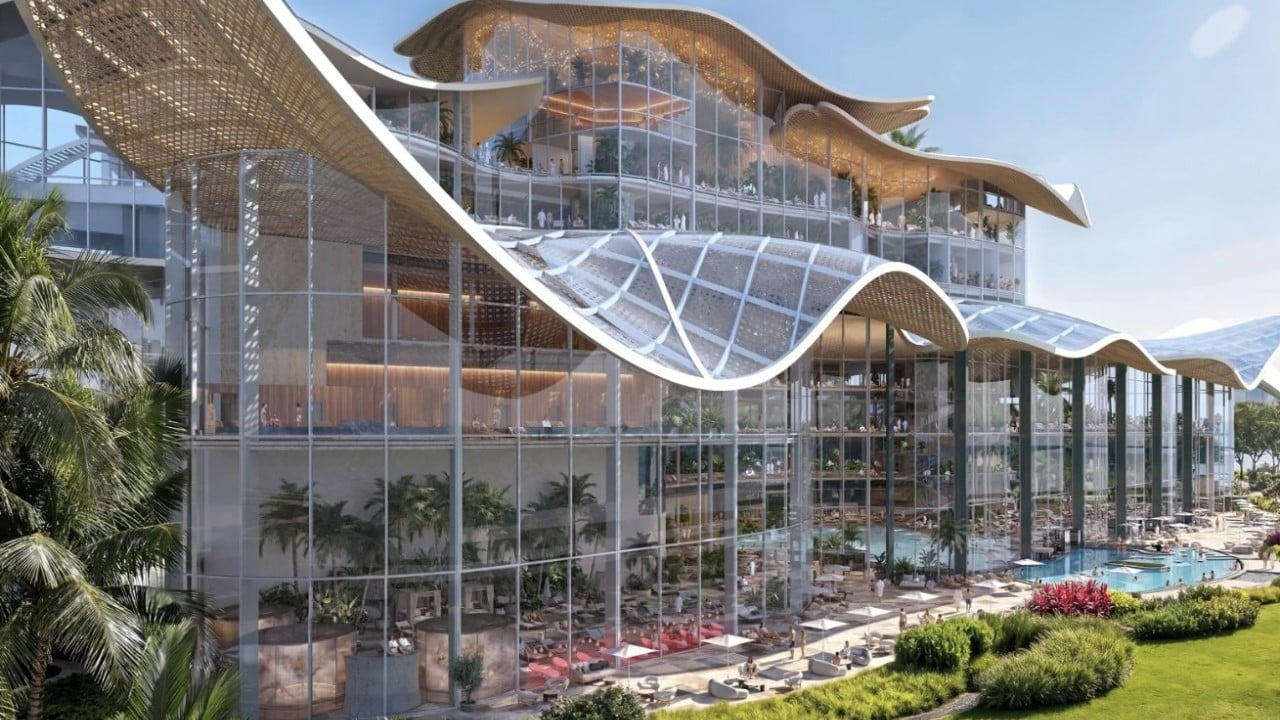
Singapore is betting US$770 million that wealthy travelers want to fly across the world to sit in a hyperbaric chamber inside a sterile mega-complex.
They are wrong.
The city-state’s latest tourism gambit—a massive, centralized wellness district designed to anchor its post-pandemic economic identity—is a textbook case of industrial-era thinking applied to a post-industrial human desire. The state-backed narrative is predictable: construct a gleaming, high-tech hub, fill it with fractional-laser clinics, luxury recovery suites, and cryotherapy chambers, and the global elite will flock to Singapore to extend their lifespans.
It is a beautiful corporate spreadsheet fantasy. It is also an operational disaster waiting to happen.
By treating health as an extractive infrastructure project, Singapore is missing the fundamental shift in global high-net-worth behavior. True well-being cannot be institutionalized, and the world's truly affluent consumer does not want to seek vitality in a mall.
The Industrialization of Longevity
The premise of this US$770 million project rests on a flawed definition of what preventive care actually means to a modern consumer. The developers have looked at the explosion of interest in longevity—driven by the public obsession with cellular optimization, biomarker tracking, and biological age reversal—and concluded that the solution is centralized real estate.
This is a profound misunderstanding of the market.
When you look at the successful longevity ecosystems globally, they are decentralized, highly personalized, and deeply integrated into nature or hyper-exclusive private networks. Think of the Swiss clinics like Clinique La Prairie, or the remote retreats in the Nicoya Peninsula. They sell isolation, clean air, and bespoke medical access.
Singapore is offering the exact opposite: a high-density, centralized destination.
Traditional Wellness Model vs. The Industrialized Mega-Complex
┌───────────────────────────────┬───────────────────────────────┐
│ True Luxury Wellness          │ The Singapore Experiment      │
├───────────────────────────────┼───────────────────────────────┤
│ • Radical isolation           │ • High-density foot traffic   │
│ • Integration with nature     │ • Urban concrete footprint    │
│ • Hyper-customized protocols  │ • Scaled commercial tenants   │
│ • Discretion and privacy      │ • High-visibility tourism hub │
└───────────────────────────────┴───────────────────────────────┘
I have watched developers blow hundreds of millions on these glittering medical-tourism plays in Dubai, South Korea, and Western Europe. The trajectory is always the same. They build the infrastructure based on peak-market projections. They sign anchor tenants that offer expensive, gimmicky modalities like IV vitamin drips and sensory deprivation. Then, within three years, the novelty wears off, the high-net-worth individuals realize they can get the exact same treatments in London, New York, or Zurich without the jet lag, and the complex degenerates into a highly subsidized mall for affluent locals seeking weekend facials.
Dismantling the Tourism Board's Premise
Proponents of the project point to market research showing a massive surge in global wellness tourism spending. But they are conflating two entirely different consumer segments.
There is the aspirational mass market, which buys clean-beauty products and books weekend yoga retreats. Then there is the ultra-high-net-worth segment—the only segment that can actually justify and sustain a US$770 million infrastructure investment.
The aspirational traveler cannot afford the price point required to yield a return on a billion-dollar urban development. The ultra-wealthy traveler will not accept the lack of privacy inherent in a centralized complex.
Imagine a scenario where a tech executive flying in from San Francisco wants to undergo a three-week epigenetic reset. Are they going to check into a high-rise complex situated next to an entertainment district, sharing elevators with thousands of cruise-ship tourists and conventions? Absolutely not. They want a closed ecosystem where discretion is absolute.
By building a monument to wellness, Singapore is creating a tourist trap, not a medical frontier.
The Innovation Illusion
The marketing copy promises a convergence of advanced medical technology and hospitality. But let's look at the underlying mechanics of tech procurement in the health sector.
Equipment like red-light therapy beds, hyperbaric chambers, and even advanced diagnostic tools like full-body MRI scanners are rapidly becoming commoditized. You do not need to fly to Southeast Asia to access a Prenuvo scan or an ozone therapy machine anymore; these technologies are popping up in suburban strip malls across America and Europe.
If the hardware is ubiquitous, the value proposition must lie in either the expertise of the practitioners or the uniqueness of the environment.
- The Expertise Bottleneck: Singapore has world-class doctors, but its regulatory environment for experimental therapies is notoriously conservative. If a wealthy consumer wants cutting-edge stem cell treatments or unapproved gene therapies, they go to Panama, Colombia, or Japan—not a heavily regulated state-backed complex in Singapore.
- The Environmental Deficit: An urban island state characterized by high humidity and dense concrete cannot compete with the psychological benefits of the Swiss Alps, the Costa Rican rainforest, or the Mediterranean coast.
Singapore is attempting to solve a biological and psychological desire using engineering and real estate. It is the wrong tool for the job.
The Hidden Costs of Optimization Real Estate
The economic realities of managing a commercial real estate project of this scale are fundamentally at odds with the patient-centric timeline of true preventative medicine.
Commercial real estate requires high turnover, high margin, and maximum square-foot optimization. Preventative health, longevity modification, and deep metabolic repair require the exact opposite: slow, iterative, low-volume, and deeply intensive care.
When you force health providers into a high-rent commercial complex, you force them to prioritize high-margin, quick-turnaround treatments. The result?
- An explosion of cosmetic and aesthetic services disguised as "inner health."
- Over-reliance on diagnostic testing without the long-term lifestyle coaching required to actually move the needle on those diagnostics.
- A rotation of trendy, scientifically dubious treatments designed to generate high social media engagement rather than actual clinical outcomes.
This is how a wellness hub transforms into a glorified aesthetic clinic. The genuine medical innovators get priced out by high-margin dermatologists and lifestyle influencers selling branded supplements.
How to Actually Build a Health Capital
If Singapore genuinely wants to lead Asia’s health economy, it needs to stop building real estate and start building ecosystems. Stop trying to attract tourists for a weekend of biohacking and instead pivot to long-term structural advantages that cannot be duplicated by a real estate developer in a neighboring country.
Decentralize the Capital, Centralize the Research
Instead of aggregating clinics into a single expensive complex, the government should use that US$770 million to fund long-term clinical trials on aging biomarkers, metabolic health, and preventative therapeutics.
The real value in the longevity economy is not the delivery of the treatment; it is the data generated by the treatment. If Singapore establishes a regulatory sandbox that allows for faster, safer human trials of longevity therapeutics, the world’s best biotech firms and wealthiest patients will come naturally. They will come for the science, not the architecture.
Reform the Regulatory Framework
True health innovators do not care about shiny buildings; they care about freedom to operate. Singapore should create a specific economic zone with relaxed, yet safe, regulatory frameworks for experimental cellular therapies and regenerative medicine.
Make it easy for top-tier global scientists from Harvard, Oxford, or the Max Planck Institute to set up clinical practices without the suffocating bureaucracy of traditional medical boards, provided they maintain rigorous data transparency.
Shift from Tourism to Residence
The concept of a "wellness tourist" is a relic of the 2010s. The modern focus should be on the "resident optimizer." Create long-term incentive programs, specialized residency visas, and corporate tax structures that encourage the creators of the longevity economy to live, work, and build their companies in the city permanently.
You do not want someone who spends US$10,000 over a weekend. You want someone who invests US$10 million over a decade because the local environment actively supports their longevity goals through clean air policies, noise reduction, and integrated metabolic tracking at the municipal level.
The era of the destination wellness resort is dying, replaced by the demand for an optimized life. Singapore's US$770 million complex is a monument to an outdated paradigm. By the time the ribbons are cut and the first hyperbaric chamber is turned on, the global elite will have already moved on to something far more valuable: absolute privacy, uncompromised nature, and regulatory freedom. You can't build that in a shopping mall.