Midday heat sits heavy on the corrugated tin roofs of rural schools across West Bengal. Inside one such classroom, chalk dust hangs in the sunbeams. Seven-year-old Aarav stares blankly at a slate resting on his knees. His ribs press softly against his thin cotton shirt. He is not listening to the Bengali alphabet song anymore. He is listening to the hollow drumbeat in his own stomach.
Hunger has a sound. It is a persistent, low frequency that drains the color from a blackboard and turns a promising morning into an endless countdown.
Multiply Aarav by millions.
Across the state, millions of children step into classrooms carrying the invisible weight of malnourishment. For decades, the midday meal scheme has served as the single most reliable anchor keeping these kids tethered to their desks. Rice and lentils provide calories, yes. But calories alone do not build a brain, fortify an immune system, or repair growing tissue. They fill the space, but they leave the structure weak.
Then came the change.
Outcry works. Sometimes, it works because parents, teachers, and public health advocates refuse to whisper. They shouted from the rooftops of community halls and wrote petitions in ink stained with anxiety. They demanded to know why children subsisting on minimal rations were being denied a fundamental building block of life: the humble egg.
The state government listened. Funds were allocated. Shells cracked.
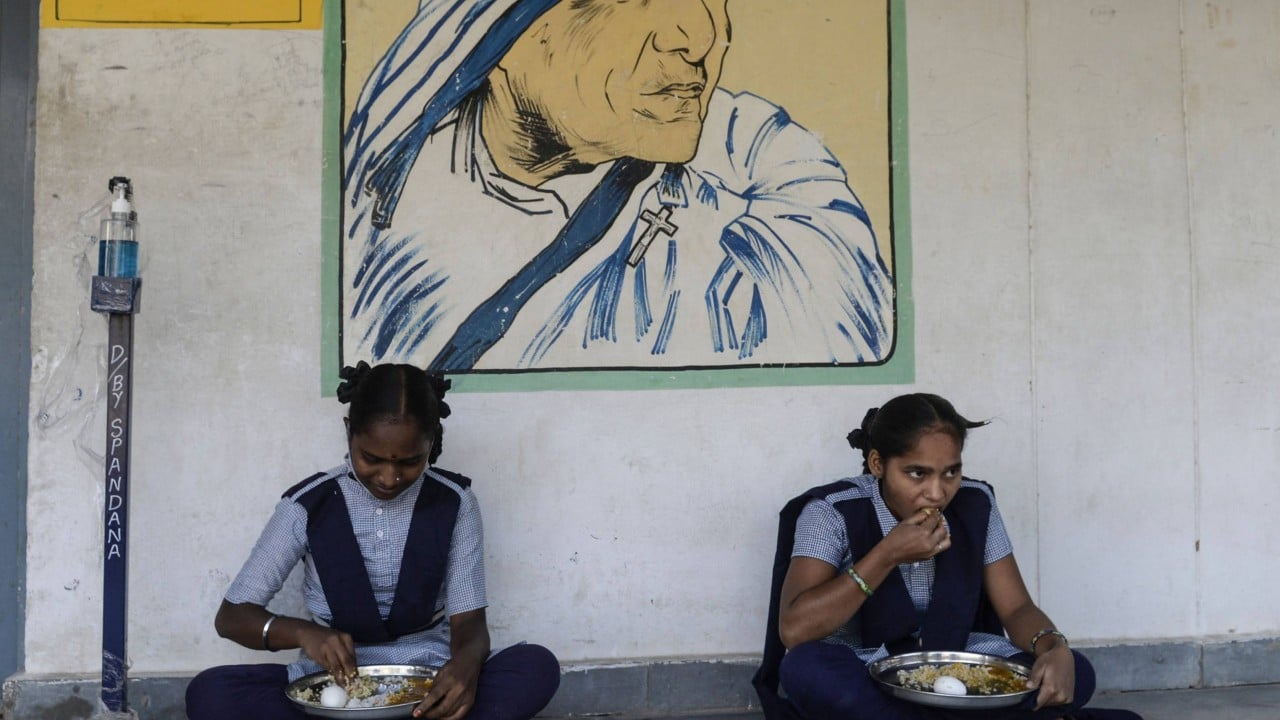
Consider what happens next in a classroom when a boiled egg appears on a tin plate next to the afternoon rice.
Aarav taps the shell against the edge of his wooden bench. A web of tiny fractures spreads across the calcium surface. He peels away the white fragments, revealing the smooth, golden-hearted orb within. It is a small moment. Microscopic in the grand machinery of public policy. Yet, in that single action, the chemistry of the school day shifts.
Protein enters the equation. Micronutrients arrive.
Behind every policy pivot lies a mountain of friction. Bureaucracy is heavy. Procurement is messy. Budgets stretch thin like old rubber bands. When officials in West Bengal decided to shell out funds specifically for eggs in school meals, they were not just buying groceries. They were navigating a complex labyrinth of local vendors, cold storage limits, transportation hurdles, and fiscal oversight. Skeptics pointed to the logistics. Critics questioned the recurring cost.
Money is finite. Growing bodies are urgent.
Nutritionists have long argued that plant-based staples alone cannot bridge the developmental gap for children in economically vulnerable households. Animal protein packs a biological punch that is remarkably difficult to replicate with lentils and greens alone. Essential amino acids. Choline for cognitive function. Iron that actually gets absorbed.
When a child eats an egg, doors open in the brain. Focus sharpens. Lethargy retreats.
Step back into that classroom in West Bengal. Notice the change in the hum of the room. The afternoon slump does not hit quite as hard. The teacher notices fewer heads dropping onto folded arms. Attendance registers show fewer unexplained absences on days when the meal plan promises that extra touch of nourishment.
Parents notice, too. A mother sending her daughter off with a patched uniform feels a fractional easing of an otherwise crushing daily burden. She knows her child will receive something substantial before the afternoon bell rings. That peace of mind is an invisible currency. It allows families to breathe, even if just for a few hours.
Of course, policy announcements on paper do not automatically translate to perfection on the ground. Corruption is an old ghost that haunts public distribution systems everywhere. Ensuring that the allocated funds actually buy fresh, high-quality eggs that reach the plates of children in remote villages requires relentless vigilance. It takes local school committees checking deliveries. It takes headmasters refusing substandard produce. It takes transparency that shines like sunlight through a windowpane.
The system is imperfect. But the direction is true.
When society decides that a child's plate is a matter of state priority, the moral compass recalibrates. We stop viewing education as merely an exercise in memorizing facts and start viewing it as a holistic nourishment of human potential. You cannot teach a starving mind. You cannot inspire an empty vessel.
Aarav finishes his egg. He wipes his fingers on a handkerchief. The hollow drumbeat in his chest has quieted, replaced by a steady, quiet warmth. He picks up his slate. He looks back at the blackboard, where the chalk letters suddenly seem a little brighter, a little sharper, and entirely within reach.
The shells gather at the bottom of a galvanized bucket, white shards catching the afternoon light like broken stars.