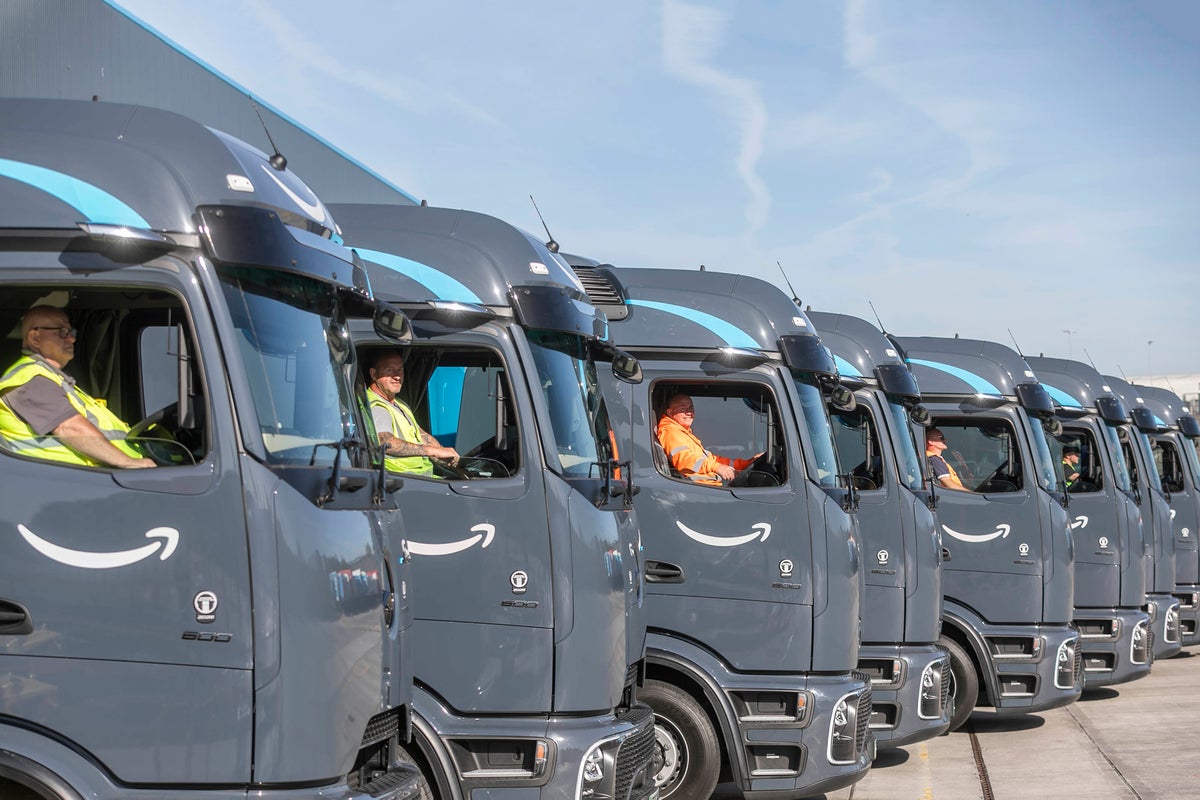
Amazon has officially weaponized its internal logistics infrastructure to systematically dismantle the market dominance of FedEx and UPS. By opening the newly minted Amazon Supply Chain Services to all external corporations, the e-commerce titan is no longer merely delivering its own packages; it is actively absorbing the freight, warehousing, and parcel volumes of the entire corporate world. Legacy carriers are retreating to higher-margin niches, but this defensive positioning may be a miscalculation. The infrastructure war is over, and the commercial commercialization of Amazon's network has begun.
For over a decade, traditional shipping executives dismissed the idea that an e-commerce platform could replicate a century-old global distribution apparatus. They pointed to the staggering cost of airplanes, long-haul trucking fleets, sorting facilities, and final-mile sorting hubs. The consensus held that Amazon would remain dependent on external partners for its complex, heavy, or long-distance distribution needs. Building on this idea, you can also read: Why Scott Bessent Wants No More Bank Penalties But Keeps Dropping Sanctions.
That consensus was wrong.
The Infrastructure Trap
The strategy mirrors the playbook used to build the cloud computing infrastructure that dominates the internet. Years ago, the tech giant constructed vast networks of servers to handle its own seasonal web traffic, then productized that excess capacity to create a corporate utility. Today, the exact same method is applied to physical fulfillment. Experts at CNBC have provided expertise on this trend.
The scale of this operation is staggering. The network operates with more than 200 domestic fulfillment centers, an internal airline operating more than 100 cargo planes, 80,000 trailers, and 24,000 intermodal containers. The infrastructure exists, the capital expenditure has already been absorbed by e-commerce revenue, and the marginal cost of adding external cargo is remarkably low.
Traditional carriers are trapped by their own legacy cost models. To protect profitability, FedEx and UPS have relied on complex pricing matrices filled with fuel surcharges, residential delivery fees, and peak-season penalties. These line items look like profit drivers on a quarterly balance sheet, but they function as friction points for corporate shippers who crave predictable expenses.
Amazon Shipping undercuts the market by eliminating these friction points entirely. Corporate clients are seeing contract proposals that strip out residential surcharges, offering straightforward, simplified per-piece pricing that runs up to 30 percent below comparable rates from traditional carriers. Data from supply chain intelligence platforms shows that shifting residential delivery volume from legacy players to this new network can save enterprise retailers up to six dollars per package.
Consider a hypothetical mid-sized consumer electronics brand moving ten million residential parcels annually. Under the legacy framework, that company faces fluctuating fuel indexes and variable fees for every residential address. By shifting ninety percent of its distribution to the newly opened network, the hypothetical company removes millions in variable costs, locking in a predictable operational budget that traditional couriers cannot match without destroying their own margins.
The Myth of the Strategic Retreat
In response to this pressure, legacy carriers have initiated what executives describe as a shift toward high-value volume. The narrative presented to Wall Street emphasizes margin over market share. UPS has deliberately shed lower-margin e-commerce business, reducing facility headcount and closing nearly a hundred hubs to insulate its bottom line. FedEx has adopted a similar stance, prioritizing business-to-business freight, healthcare logistics, and heavy shipments over two pounds that travel long distances.
This retreat rests on a dangerous assumption. It assumes that the high-value market segments are large enough to sustain legacy cost structures.
The data reveals a stark reality. Business-to-consumer delivery accounts for roughly 75 percent of the total domestic parcel market. Business-to-business logistics has shrunk to just 25 percent. By abandoning commodity last-mile residential delivery, the traditional giants are fighting over a rapidly diminishing sliver of the overall market.
Furthermore, the idea that legacy carriers can hold the line on heavy cargo or corporate business-to-business freight is evaporating. The expansion did not stop at small parcels. The rollout of less-than-truckload services now allows any commercial business to move palletized freight weighing up to 15,000 pounds to any warehouse, distribution center, or retail storefront in the country.
Blue-chip corporations are noticing the shift. Household manufacturers and major apparel brands like Procter & Gamble, 3M, and American Eagle Outfitters have already integrated their broader supply chains into this system. These companies are not just using the platform to fulfill orders sold on a specific website; they are using it to move raw materials, restock physical retail shelves, and manage bulk wholesale inventory.
The Density Advantage
The economics of logistics come down to a single concept. Density.
Every stop a delivery truck makes costs money. If a driver stops at a house to drop off one package, the transaction is expensive. If that same driver stops at the same house to drop off four packages, the cost per package plummets.
Legacy carriers must build this density from scratch through customer acquisition. The new challenger already owns it. Because a substantial percentage of American households receive daily deliveries from the e-commerce network, adding an external corporate package to the same delivery route involves almost zero additional transportation cost. The truck is already visiting the neighborhood.
This inherent route density allows the operation to absorb low-margin volume that would push a traditional carrier into the red. It also explains why the platform can aggressively offer seven-day-a-week delivery without charging the steep weekend premiums that FedEx and UPS use to offset labor costs.
The pressure is even squeezing the public sector. The U.S. Postal Service historically maintained a monopoly on sub-pound packages due to its universal service mandate and daily mail routes. Yet, recent industry audits show that Amazon Shipping is now undercutting the postal service on lightweight shipments destined for metropolitan areas. The structural advantage is absolute.
The Last Line of Defense
A single defense mechanism remains for the incumbents. Time.
The new logistics platform currently specializes in two-to-five-day ground transportation within the contiguous United States. It does not yet offer a comprehensive, guaranteed overnight air express network capable of moving time-critical biological samples, legal documents, or specialized aerospace components by 8:00 AM the next day.
FedEx and UPS still maintain deeply integrated air networks tailored for these specialized needs. The premium pricing attached to these complex services protects their remaining profitability. Shippers requiring guaranteed next-day delivery across the country have no choice but to stay with the traditional giants.
But this moat is narrowing. The air fleet is expanding its operational capabilities, and the software layer managing the network is increasingly sophisticated. Independent industry analysts warn that the introduction of an overnight express option is an inevitability rather than a possibility. When that transition occurs, the final structural barrier shielding the legacy carriers will dissolve.
Corporate supply chain directors now face a stark calculation. Relying entirely on a single logistics utility presents undeniable strategic risks. If a manufacturer hands its entire distribution network over to a platform that also operates a massive retail marketplace, it yields significant operational visibility to a potential competitor.
Yet, when inflation pressures corporate margins and competing carriers raise their base rates every January, the promise of a 30 percent reduction in shipping costs becomes impossible to ignore. Capital follows efficiency. The legacy carriers are realizing that their oldest customer has permanently transformed into their most dangerous competitor, and the market share shift is accelerating before the defensive strategies can take root.