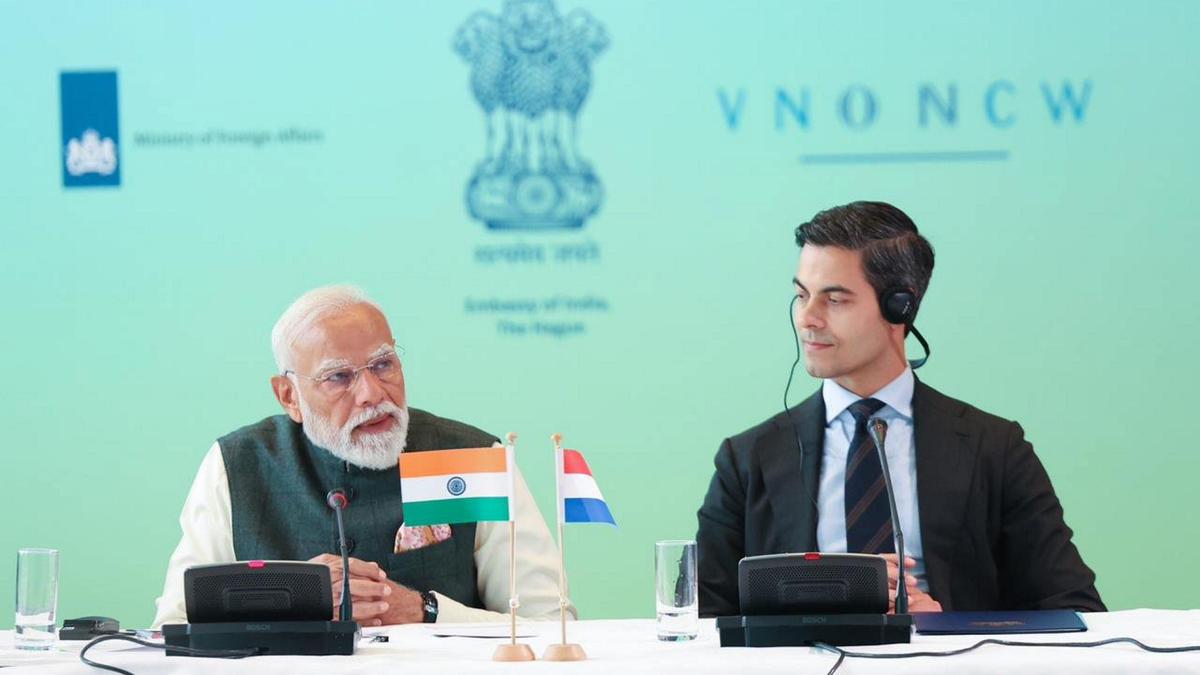
New Delhi and Amsterdam are quietly rewriting the rules of Euro-Asian commerce. While flashier geopolitical alliances dominate the front pages, India and the Netherlands have elevated their bilateral relationship to a strategic partnership. This shift is not about diplomatic niceties or routine trade agreements. It is a calculated, structural response to volatile global supply chains, chip shortages, and the pressing need to diversify manufacturing away from autocratic hubs. By locking in a direct economic corridor, both nations are securing critical vulnerabilities in semiconductor machinery, maritime logistics, and green technology.
Behind the public handshakes lies a hard economic reality. The Netherlands is India’s third-largest export destination in Europe, but the relationship has historically been transactional, focused on refined petroleum and agricultural products. That era is over. The new strategic alignment targets structural vulnerabilities that have plagued Western and Asian markets since the supply chain collapses of the early 2020s. Meanwhile, you can find related events here: The Photo-Op Trade Illusion Why the India Netherlands Bilateral Talks are Geopolitical Theater.
The Silicon Axis
Europe wants diversification. India wants industrial modernization.
At the absolute center of this partnership sits the semiconductor industry. The Netherlands holds a near-monopoly on the world’s most advanced lithography machines through ASML, making it the gatekeeper of high-end computing. India, through its multi-billion-dollar semiconductor incentive packages, is desperately trying to position itself as the world’s next major chip fabrication and packaging hub. To see the full picture, check out the excellent report by The Washington Post.
The math is straightforward. India provides the raw talent and the massive domestic market. The Dutch possess the proprietary machinery and engineering blueprints. By establishing direct institutional pipelines between Dutch technology clusters in Eindhoven and India’s emerging electronics hubs in Gujarat and Karnataka, both nations bypass traditional geopolitical chokepoints.
This is not a philanthropic endeavor. Dutch tech firms face intense pressure to find stable, highly skilled engineering pools outside of traditional East Asian hubs. India’s engineering graduate output offers a ready-made solution, provided the infrastructure can support it. The partnership formalizes fast-track investment corridors, ensuring that Dutch equipment manufacturers face minimal bureaucratic friction when setting up operations on the subcontinent.
Maritime Gateways and the Great Rerouting
Trade requires paths. The Netherlands controls Europe’s largest port in Rotterdam, acting as the primary entry point for goods entering the continent. India is currently overhaulilng its own maritime infrastructure through mega-port projects along its western coastline.
Linking these two logistical powerhouses changes how goods move between Asia and Europe. The current focus centers on developing green shipping corridors. This involves integrating digital tracking systems, automating customs clearing, and testing alternative marine fuels to cut down transit times and carbon penalties at European ports.
The Western Industrial Corridor
The immediate beneficiary of this logistical alignment is India’s western industrial belt. Manufacturers in Maharashtra and Gujarat can now project direct transit times to Rotterdam with far greater predictability. For industries dealing in perishable goods, advanced textiles, and high-precision automotive components, a reduction in bureaucratic customs friction at Rotterdam is worth billions.
Water Control as National Security
Climate change creates volatile economies. The Netherlands has spent centuries mastering water management, flood defense, and high-tech delta agriculture. India faces the dual crisis of severe groundwater depletion and unpredictable, destructive monsoon seasons that regularly wipe out billions of dollars in agricultural output.
The strategic partnership translates Dutch water expertise into Indian municipal reality. This is happening through the implementation of "living labs" in Indian states prone to extreme weather. Dutch engineers are working directly with local Indian authorities to deploy automated flood-warning networks and managed aquifer recharge systems.
[Traditional Agriculture] -> Highly vulnerable to monsoon shifts -> Yield instability
[Dutch-Indian Collaboration] -> Climate-resilient delta management -> Consistent food security
This is not just about environmental protection. It is a core economic stabilizer. If India cannot secure its water supply, its industrial ambitions fail. Manufacturing plants require massive, consistent water inputs; semiconductor fabrication facilities, in particular, consume millions of gallons of ultra-pure water daily. The Dutch partnership provides the technical framework to recycle industrial wastewater at a scale India has never previously achieved.
The Structural Friction Points
No alliance is seamless. Despite the optimism, significant friction points remain that could derail these long-term industrial plans.
The primary obstacle is India's historical fondness for bureaucratic protectionism. While New Delhi has made strides in improving its ease-of-doing-business rankings, foreign investors still routinely run into a wall of state-level regulations, sudden tax policy shifts, and slow contract enforcement. Dutch firms, accustomed to highly predictable regulatory environments, frequently express frustration at the pace of project implementation once agreements move past the federal level.
Intellectual property protection forms another battleground. As Dutch technology firms prepare to transfer high-value engineering knowledge to Indian subsidiaries, they demand stringent IP protections. India’s legal system is notoriously slow in resolving commercial disputes, a reality that makes European tech executives deeply uncomfortable.
Moving Beyond Intellectual Property Deadlocks
To overcome these legal hurdles, the new framework establishes specialized joint arbitral panels designed to bypass traditional court systems. These panels operate under international trade law standards, offering Dutch investors a faster, more predictable mechanism for resolving contract disputes.
Furthermore, the focus is shifting toward joint R&D initiatives rather than outright technology transfers. By co-developing new technologies in clean energy and agricultural automation, both nations share ownership from the ground up, neutralizing traditional IP disputes before they can paralyze commercial operations.
The Green Hydrogen Gamble
Energy security underpins the entire agreement. Europe is desperate to decouple from fossil fuel dependencies, and the Netherlands aims to become the green hydrogen hub for the continent. India possesses the geographical footprint and solar capacity to produce green hydrogen at a fraction of European costs.
The strategic partnership creates a direct investment pipeline for Dutch energy conglomerates to finance massive solar-to-hydrogen arrays in India’s desert regions. The ultimate goal is to ship liquefied green ammonia directly from Indian ports to Rotterdam, powering European heavy industry with Indian sunlight.
This requires massive capital expenditure. The infrastructure to store, transport, and regasify green hydrogen at scale does not yet exist in any mature form. The success of this pillar relies entirely on whether the private sector steps up to match the political rhetoric coming out of New Delhi and Amsterdam.
The success of this entire strategic pivot will not be measured by diplomatic communiqués or ministerial visits. It will be measured in the volume of semiconductor components flowing out of Indian factories, the reduction in transit days between Mumbai and Rotterdam, and the liters of industrial water recycled in Gujarat. Both nations have laid the structural tracks; the global market will now determine how fast the train moves.