The windows in North Tehran don’t just rattle when the missiles strike. They hum. It is a low-frequency vibration that starts in the soles of your feet before the sound ever reaches your ears. On this particular evening, the vibration was different. It wasn’t the distant thud of a border skirmish or the controlled roar of a military exercise. It was the sound of a vacuum being created in the very center of a nation’s power.
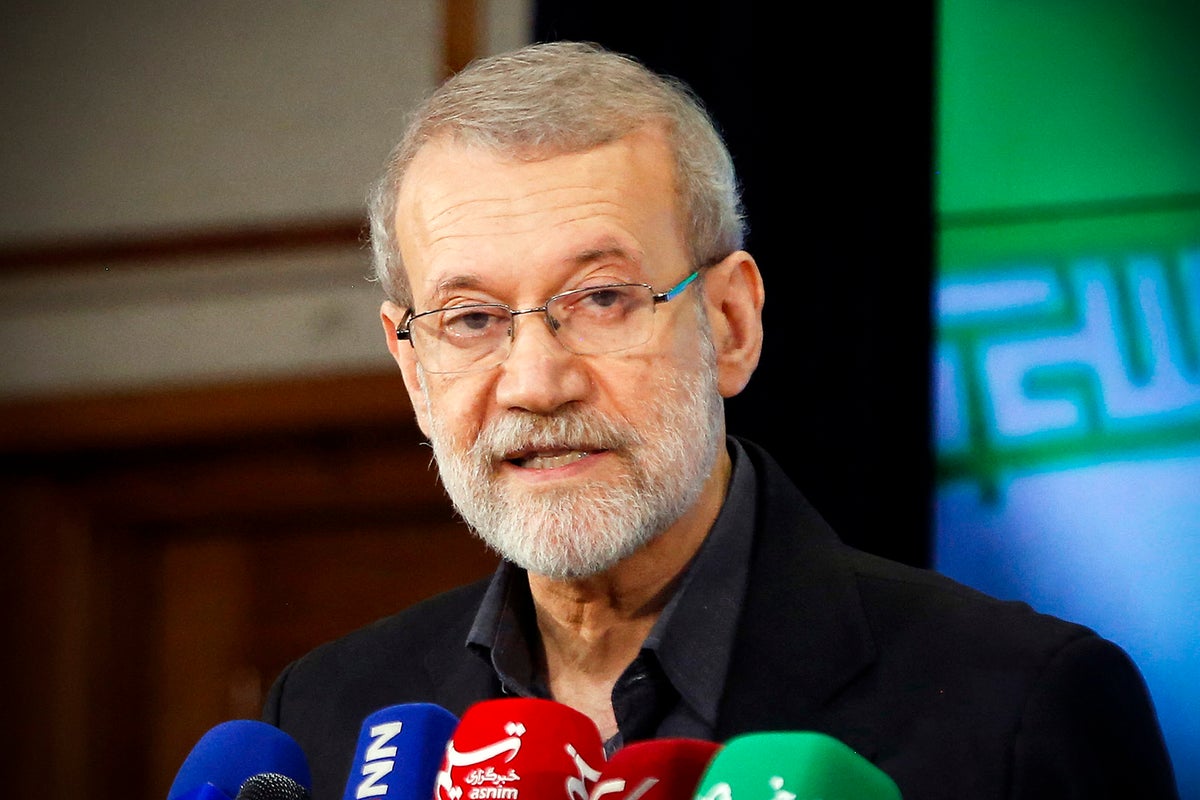
Ali Larijani was not a man who lived in the shadows, yet he operated within the intricate clockwork of Iranian influence with the precision of a master watchmaker. When the Israeli air strikes tore through the structural integrity of his location, they did more than flatten a building. They snapped a primary spring in a machine that has been ticking for decades.
To understand what died in that rubble, you have to look past the military rank and the political titles. You have to look at the architecture of a region that is currently losing its architects.
The Weight of a Name
In the West, names like Larijani are often relegated to the crawl at the bottom of a news screen. We see a face, a beard, a stern expression, and we move on to the next crisis. But in the corridors of the Majlis and the high-walled gardens of Qom, Larijani was a pillar of the "old guard." He was the bridge.
Imagine a bridge that has stood for forty years. It has weathered floods, revolutions, and the biting wind of international sanctions. People cross it without thinking, assuming it will always be there to hold the weight of the traffic. Then, in a single, kinetic instant, the bridge is gone. The traffic doesn't just stop; it plunges into the water.
Larijani represented a specific brand of Iranian pragmatism—a sophisticated, often ruthless intellect that knew exactly how far to push the West and when to pull back. He was the son of a Grand Ayatollah and the brother of a former Chief Justice. He wasn't just in the government; he was the government’s DNA. By removing him, the strike didn't just eliminate a general. It deleted a library of institutional memory.
The Geometry of the Strike
The technical reality of an air strike is often described in terms of "precision-guided munitions" or "surgical strikes." These are cold, sterile words. They hide the terrifying reality of what it means to be targeted from a sky you cannot see.
When the Israeli jets crossed into the airspace, they weren't just looking for coordinates. They were hunting for a ghost. Larijani was a man of immense caution. His movements were calculated, his meetings shielded by layers of security that would make a billionaire's detail look like a neighborhood watch.
The success of the strike points to a terrifying breach of trust. For a missile to find its mark in the heart of a high-security zone, someone had to speak. Someone had to whisper a time and a place into a phone. The physical explosion was the result of a much more devastating social explosion: the total collapse of internal security.
Consider the atmosphere in Tehran tonight. It is a city of whispers. Every official is looking at their subordinates, their peers, and even their family members, wondering where the leak began. This is the "major blow" the headlines mention, but they rarely explain why it hurts so much. It isn't the loss of one man; it's the sudden, paralyzing realization that no one is safe.
The Empty Chair at the Table
There is a specific kind of silence that follows the death of a negotiator. Larijani was a veteran of the nuclear talks, a man who understood the nuances of the JCPOA and the intricate dance of European diplomacy. He was a hardliner, yes, but he was a hardliner who spoke the language of the international order.
When a figure like this is removed, the vacuum is rarely filled by someone more moderate. It is filled by the screams for retribution.
The stakes here are not abstract. They are measured in the price of oil, the stability of shipping lanes in the Strait of Hormuz, and the safety of millions of civilians who live in the shadow of this escalating shadow war. For the average person in the region, this isn't a geopolitical chess move. It’s the sound of the world getting darker.
I remember talking to a shopkeeper in a bazaar years ago who told me that Iranians are masters of "Taarof"—a complex system of etiquette where what is said is rarely what is meant. Larijani was the ultimate practitioner of political Taarof. He could smile at a diplomat while moving pieces on a battlefield a thousand miles away. Without that layer of sophisticated maneuvering, we are left with the raw, jagged edges of direct conflict.
The Invisible Stakes
Why does this matter to someone sitting in a coffee shop in London or a suburb in Ohio? Because the Middle East is not a disconnected island. It is the furnace of global energy and the crossroads of three continents.
When the leadership of a country like Iran is decapitated in such a public and violent manner, the response is never just a press release. It is a ripple effect. It manifests in cyberattacks on infrastructure, in the mobilization of proxy groups in Lebanon and Yemen, and in a renewed, frantic push toward nuclear capability.
If you are the Iranian leadership, and you see that your most protected assets can be reached even in your own capital, your logic changes. You stop thinking about "if" you need a deterrent and start thinking about how fast you can build one. The strike on Larijani may have been intended to weaken the regime, but history suggests it often has the opposite effect: it turns a political entity into a cornered animal.
The Ghost in the Machine
We often talk about "intelligence failures" or "intelligence successes" as if they are scores in a game. But intelligence is about people. It’s about a young officer in Tel Aviv staring at a satellite feed until their eyes bleed. It’s about an informant in Tehran risking a public execution for a suitcase full of currency.
The killing of Ali Larijani is a testament to the fact that Israel’s reach is now deeper than the Iranian state ever imagined. It is a psychological victory as much as a physical one. It tells the remaining leadership that their walls are made of glass.
But there is a cost to this kind of victory. Every time a "pillar" is knocked down, the roof of the entire region sags a little lower. The moderate voices—what few of them remain—are silenced by the roar of the hawks. The diplomats are replaced by the commanders. The pen is not just put away; it is snapped in half.
A Night Without Stars
Tehran is a beautiful city at night. The Alborz mountains loom over it like silent sentinels, their peaks often dusted with snow. But tonight, the mountains offer no comfort. The city feels smaller.
The death of Ali Larijani marks the end of an era of predictable tension. We have entered a phase where the rules of engagement are being rewritten in real-time with fire and steel. There is no manual for what happens when a country’s institutional memory is vaporized in a Tuesday night air strike.
As the dust settles over the impact site, the real work begins for the survivors. They must decide if they will rebuild the bridge or if they will use the rubble to build a wall. In the meantime, the humming in the windows of North Tehran has stopped, replaced by a silence that is far more haunting.
It is the silence of a nation holding its breath, waiting for the next sound from the sky.