The air over Fort Cavazos usually vibrates with a familiar, mechanical heartbeat. It is a low, thrumming bass that rattles the loose change in your pocket and makes the coffee in your paper cup ripple. That sound is the AH-64 Apache. For the soldiers on the ground, it is comfort disguised as thunder. It means eyes in the sky, steel in the dark, and a protective shield hovering just beyond the treeline.
Then came the quiet.
When the US Army made the decision to temporarily halt all Apache training missions following a crash in Texas, the silence that settled over flight lines wasn't just a logistical pause. It was a heavy, suffocating weight.
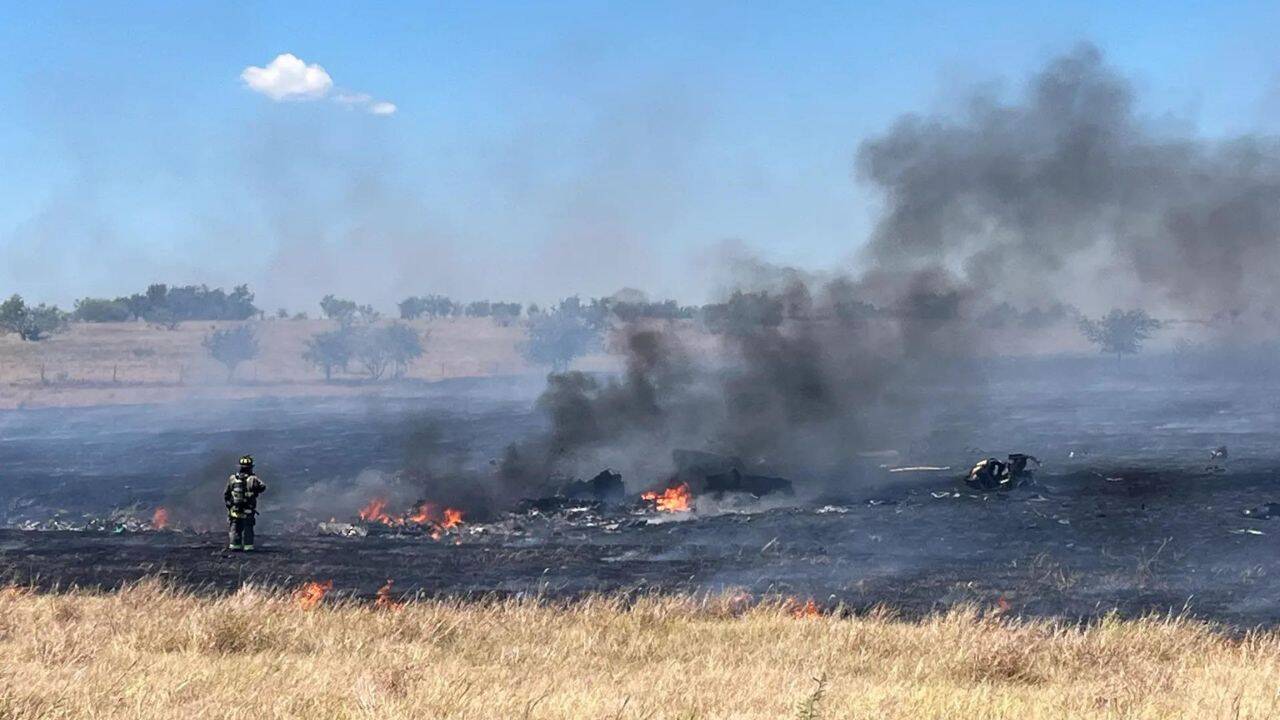
Let us be entirely honest about what that silence means. It means an investigation board is currently sifting through twisted fragments of carbon composite and aviation fuel, hunting for ghosts in the machine. It means hundreds of pilots, men and women who have spent years mastering one of the most complex aerial combat systems ever devised, are suddenly staring at grounded airframes. They are reviewing manuals, running simulations, and waiting.
Always waiting.
Flying an Apache is not like driving a car, or even flying a standard helicopter. Imagine trying to play a complicated polyphonic fugue on a church organ while simultaneously reciting a foreign language backwards, all while strapped into a titanium tub hurtling sideways through a canyon at one hundred knots. The helmet-mounted display alone projects a torrent of targeting data directly onto your right retina. Your brain must learn to separate what is real from what is rendered in green phosphor light.
When something goes wrong in that environment, there is rarely a second chance to ask questions.
Consider what happens inside the cockpit during a sudden emergency. You have mere fractions of a second to diagnose a catastrophic failure. Is it a hydraulic bleed? A digital flight control anomaly? Or is it something deeper, something buried within the twin General Electric turboshaft engines that churn out thousands of horsepower?
The recent crash in Texas did not just destroy an aircraft. It fractured the routine of an entire community. While the official statements from military public affairs offices speak in measured tones about safety stands, risk mitigation, and preliminary findings, the human reality is far more raw. It touches the young specialist who spent twelve hours torque-wrenching bolts on a tail rotor hub. It touches the seasoned warrant officer who woke up at dawn, kissed their spouse, and expected to spend the afternoon practicing autorotations.
And, most acutely, it touches the families waiting at home. Every time a military aircraft goes down, an invisible shockwave radiates outward through neighborhoods outside the base gates. Spouses look at their phones with a sudden, sharp intake of breath. Children freeze when a car door slams in the driveway. The suspension of training is a necessary protective measure, but it is also a stark reminder of the perpetual gamble these aviators take every time they pull collective.
The Army has faced these crossroads before. History is littered with similar stand-downs. Following previous major aviation mishaps, the service has historically frozen operations to recalibrate. It did so with the Chinook fleet, and it has done so across various airframes when recurring technical anomalies demanded a total reset. These pauses are not signs of institutional failure. They are the exact opposite. They are the painful, deliberate acknowledgment that no mission, no training schedule, and no operational deadline is worth the life of a crew.
Yet, fixing the problem is rarely simple. Modern military hardware has grown so sophisticated that troubleshooting a single fault often requires peeling back layers of proprietary software, sensor arrays, and aerospace engineering that rival the complexity of modern spacecraft. When an unknown variable causes a crash, engineers cannot simply guess. They have to recreate the impossible in laboratories, testing components under microscopic scrutiny until the truth yields.
Meanwhile, the operational tempo of the global military machine does not actually stop. While the training missions in Texas and across domestic installations are on hold, strategic commitments elsewhere do not pause. This creates a quiet friction. Commanders must balance the urgent need for absolute safety with the relentless demand for combat-ready units.
But safety must win. Every single time.
The pilots know this better than anyone. Talk to an Apache pilot about a stand-down, and you will not hear complaints about boredom or missed flight hours. You will hear a quiet respect for the process. They are students of gravity. They respect the physics of flight because the physics do not care about your rank, your experience, or your mission brief.
When the investigation concludes, and the cause is finally laid bare in a dense, unclassified safety report, the rotors will turn again. The thunder will return to Fort Cavazos. The coffee in the paper cup will ripple once more.
Until then, the base waits beneath a sky that feels just a little too empty, holding its collective breath while the machine heals.