The air at an airfield has a specific weight. It smells of high-octane fuel, sun-baked bitumen, and the metallic tang of machinery that defies gravity. At Caboolture Airfield, north of Brisbane, that weight usually carries the hum of hobbyists and the occasional roar of a vintage engine. It is a place of precision. Pilots here don't just fly; they curate a relationship with the sky, guided by checklists that leave no room for the messy variables of human emotion.
But on a Tuesday morning that began with the unremarkable clarity of a Queensland autumn, that precision shattered.
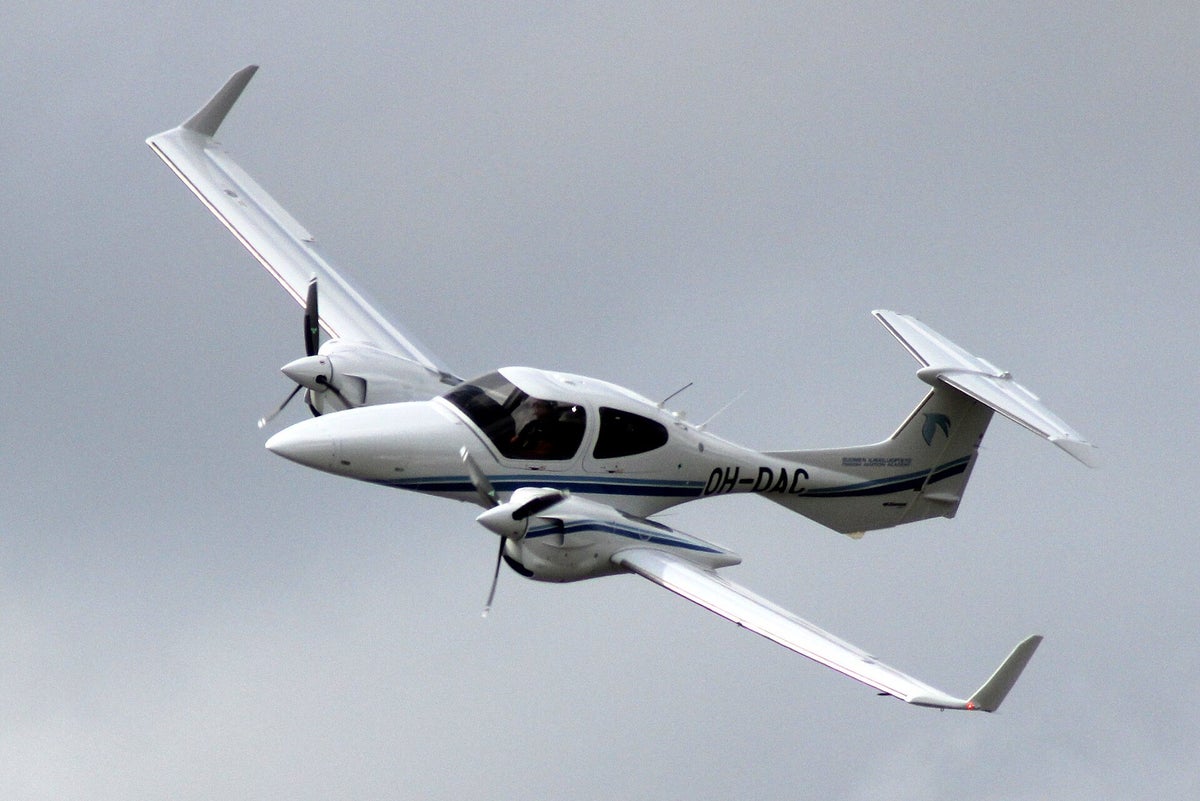
The facts, as recorded by the authorities, are stark. A light plane, a Cessna 172, was attempting to take off. It didn't clear the perimeter. Instead, it veered, banked, and slammed into a hangar at the end of the strip. Two people were on board. Neither survived. The hangar, a steel shell designed to protect dreams of flight, became a tomb.
To understand the weight of this, you have to look past the wreckage and into the cockpit of the human experience.
The Mechanics of a Moment
Flying a light aircraft is a series of small, vital promises. You promise to check the fuel. You promise to monitor the wind. You promise to respect the stall speed. When you push the throttle forward on a runway like Caboolture’s, you are committing to a transition from the certain ground to the fickle air.
Imagine the pilot in those final seconds.
The engine is screaming at full chat. The vibrations of the runway are drumming through the soles of their shoes. They are looking for "rotation"—that magical speed where the wings finally find enough grip on the air to lift the nose. But something goes wrong. Perhaps the engine stutters, a momentary lapse in the mechanical heart of the beast. Perhaps a gust of wind catches a wing just as the wheels leave the tarmac.
In that micro-second, the cockpit transforms from a place of control into a chaotic theater of physics.
The Cessna 172 is the workhorse of the sky. It is often described as the safest, most forgiving plane ever built. It is the vehicle in which thousands of pilots earned their wings. Because of its reputation, a crash involving a 172 feels like a betrayal. It’s the reliable family sedan of the clouds suddenly turning into a weapon.
The Invisible Stakes of the Hangar
A hangar isn't just a garage. For the community at Caboolture, these structures are sanctuaries. They house restored Warbirds, meticulously maintained Cessnas, and the shared history of Australian aviation. When a plane strikes a hangar, it isn't just hitting a wall. It is colliding with the very heart of the local flying culture.
Eyewitnesses spoke of a sound like a "crack of thunder" on a day with no clouds.
That sound marks the transition from a normal morning to a permanent "before and after." For the first responders who arrived minutes later, the scene was a grim puzzle of twisted aluminum and the smell of fire. The Queensland Fire and Emergency Services, alongside police, found themselves in a race against the clock, not to save lives—the impact had already claimed those—but to secure the site. Fuel leaks in a confined space like a hangar are a ticking clock.
Think about the families of those two individuals. They likely saw them off that morning with a wave and a "see you later." In the world of general aviation, there is a pervasive sense of "it won't happen to me" because the checklists are so robust and the training so rigorous. The shock of a crash at your home base is a visceral, communal wound.
The Investigation as a Search for Meaning
The Australian Transport Safety Bureau (ATSB) has already begun its grim harvest of data. They will look at the weather, the maintenance logs, and the weight and balance of the aircraft. They will scour the wreckage for "witness marks"—tiny scratches on instruments that freeze the moment of impact in time.
But the ATSB cannot measure the "why" that haunts the survivors.
Why did the plane veer? Was it a medical emergency? A mechanical failure that occurred at the worst possible moment of the take-off roll? Or was it the "impossible turn"—that frantic, instinctive attempt to return to the runway after an engine failure that has claimed so many pilots before?
Consider the psychological burden on the other pilots at Caboolture. For them, every takeoff for the next month will be shadowed by the ghost of that Cessna. They will check their oil twice. They will stare a little longer at the windsock. They will feel the fragility of the thin aluminum skin that separates them from the void.
The Reality of the Risk
Statistics tell us that flying is safer than driving. We repeat this like a mantra to soothe our lizard brains when we hit turbulence. But the math of general aviation—small planes, private strips—is different from the math of commercial airliners. In a light plane, you are the captain, the navigator, and the mechanic. You are solely responsible for the physics of your survival.
The tragedy at Caboolture highlights a truth we often ignore: every time we seek the thrill of the perspective found at 5,000 feet, we are making a high-stakes wager with gravity.
The two lives lost weren't just numbers in a news cycle. They were individuals who loved the view of the Glass House Mountains from the air. They were part of a lineage of aviators who believe that the risk is worth the reward of seeing the world without the clutter of the ground.
As the sun sets over the airfield today, the hangars are closed. The investigators move in silence, their torches casting long shadows over the debris. The runway is empty. The silence isn't just the absence of engines; it’s the presence of a profound loss.
We live in a world that demands answers immediately, but the sky keeps its secrets. It will be months before the official report is released, months before the "how" is codified into a PDF. Until then, there is only the memory of a morning that should have ended with a smooth landing and a cold drink, but instead ended in the stillness of a steel hangar.
The wings are broken, but the stories of those who fly remain etched into the tarmac at Caboolture, a reminder that the sky is a beautiful, demanding, and occasionally merciless frontier.