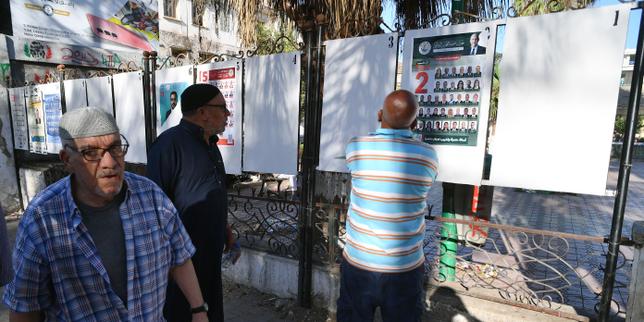
The coffee machine at a small café off Rue Didouche Mourad groans under the pressure of another midday rush, but the young man sitting near the window isn’t looking at his espresso. He is staring at his thumbs.
Amine is twenty-four. He has a degree in computer science, a closet full of neatly ironed shirts, and absolutely nowhere to go on a Sunday morning. When asked about the upcoming presidential election, he doesn’t get angry. He doesn't launch into a passionate political tirade. Instead, he simply shrugs, a slow, heavy movement that seems to carry the weight of an entire generation's exhaustion.
"Why bother?" he asks. His voice is barely louder than the clinking of porcelain behind the counter. "The script was written before the actors even took the stage."
This is the invisible reality gripping Algeria today. Beyond the official campaign posters, the televised speeches, and the bureaucratic machinery of the state, lies a profound, suffocating quiet. It is not the silence of peace. It is the silence of a population that has decided, collectively and quietly, to look away.
The international headlines describe it mechanically as political apathy or a locked electoral system. They use cold words like "voter turnout metrics" and "institutional consolidation." But on the ground, the truth feels much more human. It feels like a door being gently but firmly locked from the outside, while those inside stop knocking.
The Mirage of Choice
To understand how Algeria arrived at this moment of intense skepticism, consider how a standard election is supposed to function. In a healthy system, an election acts like a pressure valve. When public frustration builds, the ballot box offers a safe, predictable way to release that energy, allowing citizens to steer the ship of state in a new direction.
In Algiers, that valve has been welded shut.
The current political landscape is dominated by a systematic tightening of control that leaves virtually no room for genuine opposition. It is an intricate, bureaucratic maze. To even get on the ballot, candidates must navigate a labyrinth of signatures, clearances, and regulatory approvals managed by an establishment that views unpredictability as a threat. The result is a pre-filtered slate of options that offers the illusion of movement without any actual change.
Think of it as a football match where one team owns the stadium, writes the rules, hires the referee, and reserves the right to change the score at halftime. You can still play the game. You can run until your lungs burn. But the outcome was decided in a boardroom three months ago.
For the average Algerian citizen, watching this unfold triggers a specific kind of psychological weariness. When the state apparatus spends months ensuring that nothing unexpected can possibly happen, the act of voting ceases to feel like a civic duty. It begins to feel like participating in a piece of theater where you didn't get to audition, but you're still expected to applaud.
The Ghost of 2019
The current quiet is even more striking when you contrast it with the roaring energy that filled these exact same streets just a few years ago.
In 2019, the Hirak movement erupted. It was a breathtaking, spontaneous explosion of human hope. Millions of Algerians marched week after week, demanding a total overhaul of the ruling political class. The energy was electric, infectious, and entirely peaceful. Old men wept on the sidewalks; young women led chants that echoed off the white colonial facades of the capital. They forced the resignation of a long-standing president and briefly pulled back the curtain to reveal a glimpse of a different future.
Then came the systematic dismantling of that dream.
Slowly, methodically, the authorities reclaimed the space. Activists were detained. Independent journalists found their credentials revoked or their publications squeezed out of existence. New laws broad-brimmed enough to categorize routine dissent as a threat to national security were quietly enacted. The vibrant, chaotic public square was sanitized, replaced once again by the predictable rhythm of state-sanctioned television broadcasts.
Consider what happens next: when people risk everything to demand systemic change, only to watch the old guard rebuild the walls thicker and higher than before, something breaks inside the collective psyche. The anger doesn't vanish. It mutates. It turns inward, transforming into a deep, stubborn cynicism.
This cynicism is the true architect of the massive turnout crisis threatening the upcoming vote. The government wants the legitimacy that comes with high voter turnout; it craves the stamp of approval that millions of inked thumbs provide. Yet, by ensuring that the election remains completely controlled, they have stripped the vote of the very value that makes people want to participate in the first place.
The Economics of Turning Away
This political gridlock does not exist in a vacuum. It bleeds directly into the daily struggle of putting bread on the table.
Algeria is a nation blessed with vast natural wealth, sitting on massive reserves of oil and gas. But walk through the working-class neighborhoods of Bab El Oued, and you will see little evidence of that wealth trickling down to the pavement. Instead, you find a generation trapped in an economic holding pattern. Inflation has turned grocery shopping into an exercise in anxiety. The price of basic staples fluctuates wildly, while stable, meaningful employment remains a luxury reserved for the well-connected.
For a young graduate like Amine, the lack of political agency is directly tied to his lack of economic agency. The two are inseparable.
When a government faces no real accountability at the ballot box, it has very little incentive to fix the structural rot in the economy. The bureaucracy remains bloated, innovation is strangled by red tape, and the talent of the country’s youth is treated as an afterthought.
The real problem lies elsewhere, far beneath the surface of official economic reports. The danger isn't just that people won't vote. The danger is that they are withdrawing their faith from the entire idea of a formal future within their own borders. When the political door is locked and the economic window is barred, the mind begins to wander toward the sea.
Every year, thousands of young Algerians take unthinkable risks to cross the Mediterranean on flimsy boats, chasing a life where they might finally possess a shred of control over their own destiny. They call it Harga—literally, "to burn"—referring to the burning of identity papers, and metaphorically, the burning of bridges behind them. The refusal to vote is simply a less dangerous version of the same impulse. It is a migration of the mind, a way of saying: I am no longer invested in this system.
The Echo of the Empty Ballot Box
On election day, the state media will likely broadcast images of orderly polling stations, elderly veterans casting their ballots with pride, and officials declaring the vote a triumph of stability. They will point to the smooth logistical execution of the day as proof of a robust democracy.
But the real story will be told by the empty spaces.
It will be told by the young men leaning against the walls of the apartment blocks, intentionally ignoring the polling booths down the street. It will be told by the families who choose to spend their day at the beach or inside their homes, treating the historic civic event as nothing more than a quiet day off work.
Abstention is often painted by authorities as a sign of laziness or a lack of civic education. That is a comforting lie the powerful tell themselves to avoid looking in the mirror. In reality, a massive, widespread refusal to vote is an incredibly loud, deliberate act of political communication. It is a vote of no confidence delivered via absence. It is the only weapon left for a population that has been stripped of every other tool of dissent.
The state can control who runs, who wins, and what the evening news says about it. But they cannot force a cynical population to believe in the illusion. They cannot mandate hope.
Amine finishes his espresso, leaving a few coins on the table. Outside, a campaign truck drives past, its loudspeakers blaring nationalistic songs, the faces of the approved candidates plastered across its side panels in bright, unconvincing colors. He doesn't even turn his head to look. He steps out into the bright Mediterranean sunlight, turns his back on the campaign posters, and walks away into the crowd, disappearing into the vast, silent majority.