The Tuareg-led rebellion in northern Mali has shifted from a localized insurgency into a direct existential threat to the military junta in Bamako. Following the devastating ambush at Tinzaouaten in July 2024, where rebel forces decimated a combined column of Malian soldiers and Russian Africa Corps mercenaries, the psychological barrier protecting the transition government has shattered. Bilal Ag Acherif and the Strategic Framework for the Defense of the People of Azawad (CSP-DPA) are no longer merely fighting for desert autonomy; they are actively coordinating for the total collapse of Colonel Assimi Goïta’s administration. This is a war of attrition that Bamako is fundamentally unequipped to win.
While the junta projects an image of defiant nationalism, the reality on the ground reveals a state losing its grip on the very territory it claims to be "liberating." The departure of French forces and the expulsion of the UN’s MINUSMA mission left a security vacuum that Russian hardware and Wagner-branded mercenaries cannot fill. The rebels have recognized this vulnerability. They are moving away from hit-and-run tactics toward a strategy of strangulation, cutting off supply lines and leveraging the junta’s own diplomatic isolation against it.
The Tinzaouaten Effect and the Russian Mirage
The battle at Tinzaouaten was the turning point. It wasn't just a military defeat; it was a branding disaster for the Kremlin’s interests in Africa. For years, the Wagner Group—now rebranded as the Africa Corps under the Russian Ministry of Defense—marketed itself as the "rugged" alternative to Western intervention. They promised results without the "human rights baggage" demanded by Paris or Washington.
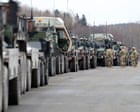
The desert sands proved that promise hollow. In a three-day battle near the Algerian border, CSP-DPA fighters utilized the terrain and a sudden sandstorm to trap a mechanized column. The resulting casualties included dozens of seasoned Russian operatives. This loss stripped away the aura of invincibility that Goïta relied upon to justify his coup. If the Russians cannot secure the north, the junta’s primary argument for holding power—security at any cost—evaporates.
The rebels have capitalized on this by expanding their diplomatic outreach. By framing their struggle as a defense against foreign "mercenary colonization," they are finding unexpected ears in regional capitals. They are no longer viewed as ragtag separatists but as a disciplined paramilitary force capable of defeating a European-backed professional army in open combat.
Financial Rot and the Cost of War
War is expensive, and Mali is broke. The junta’s decision to sever ties with traditional Western partners has led to a drying up of development aid and budgetary support. Meanwhile, the cost of maintaining the Russian presence is astronomical. Estimates suggest the Malian treasury pays tens of millions of dollars monthly for security services that are failing to deliver.
To fund this, the government has squeezed the mining sector, particularly gold. Mali is one of Africa’s top gold producers, but the industry is now being cannibalized to pay for drones and mercenary salaries. This creates a vicious cycle. As the state diverts funds from infrastructure, education, and electricity to the war effort, public discontent in Bamako grows. Rolling blackouts and rising food prices are doing more to undermine the junta than any rebel bullet ever could.
The CSP-DPA understands this economic fragility. Their recent operations have targeted logistics hubs and transit corridors. If they can disrupt the flow of goods from the ports of Abidjan or Dakar into the landlocked capital, the junta will face a popular uprising from within. Hunger has a way of clarifying political loyalties.
The Drone Warfare Paradox
One of the junta’s few tactical advantages has been the acquisition of Turkish TB2 drones. These platforms allowed Bamako to strike deep into rebel territory with impunity for much of 2023. It gave the Malian Armed Forces (FAMa) a sense of technological superiority. However, the rebels have adapted with surprising speed.
Man-portable air-defense systems (MANPADS) have started appearing in the hands of Azawad fighters. Whether these were captured from retreating state forces or procured through the murky arms markets of the Sahel is secondary to the fact that they have neutralized the air advantage. The rebels are also utilizing their own commercial drones for reconnaissance and "kamikaze" strikes, leveling the playing field.
Technology is a force multiplier, but it cannot hold ground. You need infantry for that. The FAMa is stretched thin, plagued by desertions, and increasingly reliant on conscripts who have little desire to die in the Saharan heat for a government that cannot even keep the lights on in the capital.
The Ethnic Fracture and the Risk of Genocide
The rhetoric coming out of Bamako has taken a dangerous turn toward ethnic polarization. The junta and its digital influencers frequently conflate the Tuareg and Arab populations of the north with "terrorists." This is a calculated move to whip up nationalist fervor among the Bambara and other southern ethnic groups, but it is a short-sighted strategy.
When the state treats an entire segment of its population as the enemy, it guarantees a forever war. The CSP-DPA has successfully used this state-sponsored marginalization as a recruitment tool. They aren't just fighting for land; they are fighting for survival against a state they believe intends to ethnically cleanse them. This isn't a political disagreement anymore; it’s an existential clash.
Regional Isolation and the ECOWAS Divorce
Mali’s exit from the Economic Community of West African States (ECOWAS) and the formation of the Alliance of Sahel States (AES) with Burkina Faso and Niger was supposed to be a masterstroke of sovereignty. Instead, it has created a "pariah bloc." By isolating themselves from their neighbors, these three juntas have cut off their own escape routes.
The CSP-DPA is leveraging this isolation. They have maintained back-channel communications with regional players who are quietly terrified of the "junta contagion" spreading. While no neighbor will openly support a rebel group, many are content to watch Goïta struggle. A weakened Mali is a warning to other aspiring putschists in the region.
The rebels are also playing a sophisticated game with Algeria. Algiers views the Sahel as its "near abroad" and is deeply skeptical of Russian boots on its southern flank. The failure of the 2015 Algiers Accord—which the junta effectively tore up—has left Algeria looking for new ways to assert influence. The CSP-DPA is more than happy to provide them with an alternative to the chaos in Bamako.
The Strategy of the Noose
The vow to topple the junta is not based on a plan for a grand cinematic march on Bamako. The rebels are not going to roll tanks into the city square. Their strategy is the "Noose."
- Isolate the Outposts: Force the FAMa to retreat from smaller northern towns into a few heavily fortified "islands" that must be resupplied by air.
- Bleed the Mercenaries: Target the Russian Africa Corps specifically. Make the "Mali contract" so bloody and expensive that Moscow decides the PR and human cost is no longer worth the gold concessions.
- Economic Sabotage: Disrupt the mining operations and trade routes that provide the junta with hard currency.
- Wait for the Internal Crack: Support the inevitable civil unrest in Bamako as the state fails to provide basic services.
This is a professional insurgency. They have time. The junta, facing mounting debts and a restless urban population, does not.
The international community often misinterprets the Sahel as a chaotic mess of " jihadists vs. the state." This ignores the legitimate political grievances of the northern populations who have been lied to by every administration in Bamako since 1960. The CSP-DPA has managed to distance itself—at least rhetorically and tactically—from the Al-Qaeda-affiliated JNIM, presenting itself as a secular, nationalist movement. This distinction is vital for their long-term legitimacy.
The Fragility of the Military Coalition
The "Colonel’s Club" running Mali is not a monolith. Internal rivalries are simmering. As the losses in the north mount, the finger-pointing begins. Did the intelligence fail? Did the Russians lead them into a trap? Why is the money gone?
History shows that juntas rarely survive prolonged military failure coupled with economic collapse. The moment the mid-level officers realize that the senior leadership is sacrificing them to protect a failing Russian partnership, the "counter-coup" becomes a statistical certainty.
The Tuareg rebels aren't just betting on their own strength; they are betting on the junta's incompetence. So far, that has been a winning wager. The map of Mali is being redrawn in real-time, and the lines are moving south. The desert is reclaiming its sovereignty, one ambushed convoy at a time, leaving the men in the air-conditioned offices of Bamako to wonder how their "sovereign revolution" turned into a siege.
The junta's survival depends on a total military victory in the north—an outcome that has eluded every Malian government for sixty years. The rebels only need to survive and keep the pressure on the throat of the capital. In a war between a state that is running out of money and a rebellion that is fueled by identity and survival, the desert always wins.
The era of the "Wagner Shield" is over. What remains is a hollowed-out state, a professional rebel army with a clear mandate, and a population that is beginning to realize that the men who promised them security have delivered only more war and deeper poverty.