The clock on the wall of a death row cell does not tick; it thumps. It is a heavy, rhythmic reminder that the state of Texas has scheduled a precise moment for your heart to stop. For Ivan Cantu, that moment has been approaching for over twenty years, a slow-motion collision between a rigid legal system and a story that refuses to stay buried.
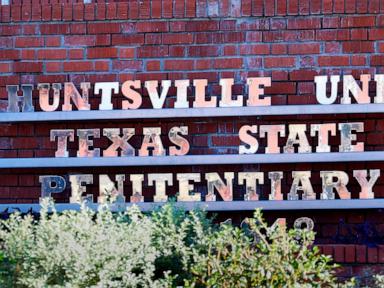
Cantu sits in the Polunsky Unit, accused of the 2000 murders of his cousin, James Mosqueda, and Mosqueda’s fiancée, Amy Kitchen. The facts presented at trial were a hammer blow. Bloody jeans found in Cantu’s trash. A witness who pointed a finger with unwavering certainty. A jury that saw a cold-blooded killer. But as the execution date looms, the air in the courtroom has shifted from the sterile scent of legal filings to the musk of a long-hidden truth.
The Midnight Confession
Imagine standing in the rain, watching the person you grew up with—your own blood—being fitted for a shroud, knowing you hold the needle. This is the weight allegedly carried by Amy Boettcher, the state’s star witness and Cantu’s then-girlfriend. Her testimony was the spine of the prosecution’s case. She told the court that Cantu admitted to the killings, that she saw him dispose of the evidence, and that the motive was a simple, tawdry robbery.
But stories told under the harsh lights of a witness stand sometimes wither when exposed to the elements of time.
Years later, a different narrative began to leak through the cracks. It wasn't a sudden burst of light, but a slow, rhythmic dripping of inconsistencies. Boettcher has since passed away, but the ghost of her testimony haunts the appeals. New evidence suggests that the "bloody jeans" didn't even fit Cantu. Witnesses who were once silent have begun to whisper about Mosqueda’s involvement in the dangerous, jagged world of local drug trafficking—a world where debts are settled with lead, not lawsuits.
The Cousin in the Crosshairs
The most jarring twist in this tragedy isn't found in a forensic lab, but in a claim that flips the script entirely. Information has surfaced suggesting that the real architect of the violence might have been much closer to the victims than anyone dared to look. Specifically, claims have emerged that a rival or an associate within the drug trade—someone Mosqueda feared—was the one who actually pulled the trigger.
Consider the reality of a capital trial. It is a machine designed for finality, not necessarily for the messy, evolving nature of human memory. Once the "Guilty" verdict is read, the system shifts its entire weight toward upholding that decision. It becomes a fortress. To breach it, you don't just need a key; you need to tear down the walls.
Cantu’s legal team isn't just fighting a prosecutor. They are fighting the momentum of two decades. They are arguing that the jury never heard about the threats Mosqueda received in the days leading up to his death. They never heard about the suspicious movements of others who had a motive to see Mosqueda gone. The jury saw a snapshot, but Cantu’s defenders argue they missed the entire movie.
The Geometry of Evidence
Legal battles often come down to the smallest measurements. A few inches of fabric. The timing of a phone call. The trajectory of a bullet.
In the Cantu case, the physical evidence has undergone a strange transformation. The jeans found in the trash—the "smoking gun" of the trial—are now a point of fierce contention. If they were too large for Cantu, as his family and lawyers claim, then the story of him wearing them during a double homicide begins to dissolve.
Then there is the matter of the Rolex watch. Boettcher claimed Cantu threw it out a car window. Later, it turned up at the victims' house, recovered by family members. How does a discarded piece of jewelry travel from a dark road back into the home of the deceased? These aren't just "technicalities." They are the threads that, when pulled, threaten to unravel the entire tapestry of the state's timeline.
The Human Toll of Certainty
We crave certainty. We want to believe that when the state takes a life, it does so with the precision of a surgeon. We want to believe that the "bad guy" has been caught and the "good people" are safe. But the law is a human invention, and humans are notoriously prone to patterns, biases, and the desire for closure.
For the families of Amy Kitchen and James Mosqueda, this prolonged uncertainty is a secondary trauma. They have lived with a version of the truth for twenty years, only to have it challenged as the end draws near. For Cantu’s mother, Sylvia, the battle is a desperate, daily marathon to prove that her son is not a monster, but a man caught in a web of coincidences and bad company.
The state argues that the time for doubt has passed. They point to the numerous appeals already denied, the procedural hurdles that have been cleared, and the need for justice to be final. In the eyes of the law, there is a point where the quest for truth must yield to the requirement of execution.
The Weight of the Final Mile
As the execution date nears, the activity in the legal offices reaches a fever pitch. There are petitions to the Texas Court of Criminal Appeals. There are letters to the Governor. There are activists shouting into the wind, hoping a breeze carries their voices into the chambers of power.
But inside the cell, there is only the waiting.
If Ivan Cantu is executed, and later evidence proves his innocence, there is no "undo" button. The state cannot apologize to a grave. This is the inherent terror of the death penalty—it demands a level of perfection that our species has never been able to achieve.
We are left staring at a man who insists he was framed by the very people he trusted. We are left looking at a witness whose story has more holes than a target at a firing range. And we are left wondering if the person who actually killed Amy Kitchen and James Mosqueda is still out there, watching the news, watching a man die for their crime.
Justice is often depicted as a blindfolded woman holding scales. In the case of Ivan Cantu, the blindfold feels less like a symbol of impartiality and more like a shroud. The scales are tipped, not by the weight of truth, but by the sheer mass of a system that finds it easier to kill a man than to admit it might have been wrong.
The van is idling. The chemicals are being prepared. Somewhere in a quiet room, a phone sits on a desk, waiting for a call that may never come, while the ghost of a doubt grows larger than the man on the gurney.