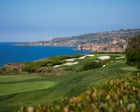
The Pacific breeze carries a distinct salt spray across the manicured greens of Rancho Palos Verdes. Perched on jagged cliffs overlooking the endless blue expanse of the ocean, the Trump National Golf Club usually exudes an aura of serene exclusivity. On a quiet Sunday afternoon, however, that illusion of absolute safety fractured just enough to remind everyone of the turbulent era we inhabit.
Plainclothes federal agents noticed him before anyone else did. He wasn't carrying a golf bag. He wasn't admiring the dramatic drop into the sea. Instead, thirty-eight-year-old Jeanine John Taele was documenting the terrain. His phone captured angles, sightlines, and the invisible seams of a security perimeter that was rapidly tightening ahead of a presidential visit.
Days later, Donald Trump was scheduled to arrive for a high-stakes Republican National Committee fundraising event. But long before the motorcades or the political rhetoric, the machinery of modern protection was already quietly whirring.
Suspicion turned into swift intervention. Los Angeles County Sheriff's deputies moved in, detaining Taele before he could blend back into the coastal traffic. The search yielded immediate concern: a loaded 16-round magazine sitting in his pocket, and a loaded pistol tucked away inside his vehicle.
What followed was a familiar, chilling ritual of modern investigation.
Detectives secured a warrant and traveled to a residence in nearby Downey. What they uncovered inside transformed a localized detention into a sobering headline. They found body armor, an illegally modified AR-type pistol, a .45-caliber handgun, and a trove of additional weaponry. Nestled among the hardware were multiple notebooks filled with cryptic, concerning statements.
The exact nature of those written thoughts remains under seal, locked behind the cautious statements of investigators trying to piece together a motive that sits somewhere between ideological grievance and psychological unraveling.
We have grown terrifyingly accustomed to these near-misses. From the dense shrubbery of West Palm Beach to the checkpoint drama of Coachella, the intersection of high-profile politics and localized danger has become a persistent American shadow. Every threat neutralized is a crisis averted, but each incident leaves a residue of anxiety. It begs a heavy question about how an open society protects its figures without entirely locking itself away behind concrete barriers and perpetual fear.
Local law enforcement rushed to steady public nerves, emphasizing that despite the arsenal found in the Downey home, no immediate, credible threat remained to the surrounding community. Yet, the psychological toll lingers. The case now sits squarely on the desk of the Los Angeles County District Attorney's office, where prosecutors must weigh the line between intent and preparation, charging Taele with carrying a concealed firearm and possessing prohibited ammunition while the broader apparatus of the state tries to figure out how to keep the peace in a country frayed at the edges.
The sun still sets magnificently over the Palos Verdes cliffs, painting the Pacific in shades of amber and violet. But the golfers are gone, the federal agents watch from unmarked cars, and the margin for error grows thinner by the day.
For more details on this developing security investigation, you can watch this Man arrested near SoCal Trump rally coverage. This video provides helpful context regarding how local authorities and federal agencies coordinate security responses to potential threats during high-profile political visits in Southern California.