The map on the wall of the command tent in eastern Ukraine does not care about geography the way an atlas does. It is marked by grease-pencil lines, overlapping circles of artillery range, and small, pinned flags that shift by hundreds of meters each day, translating human lives into geometric shapes.
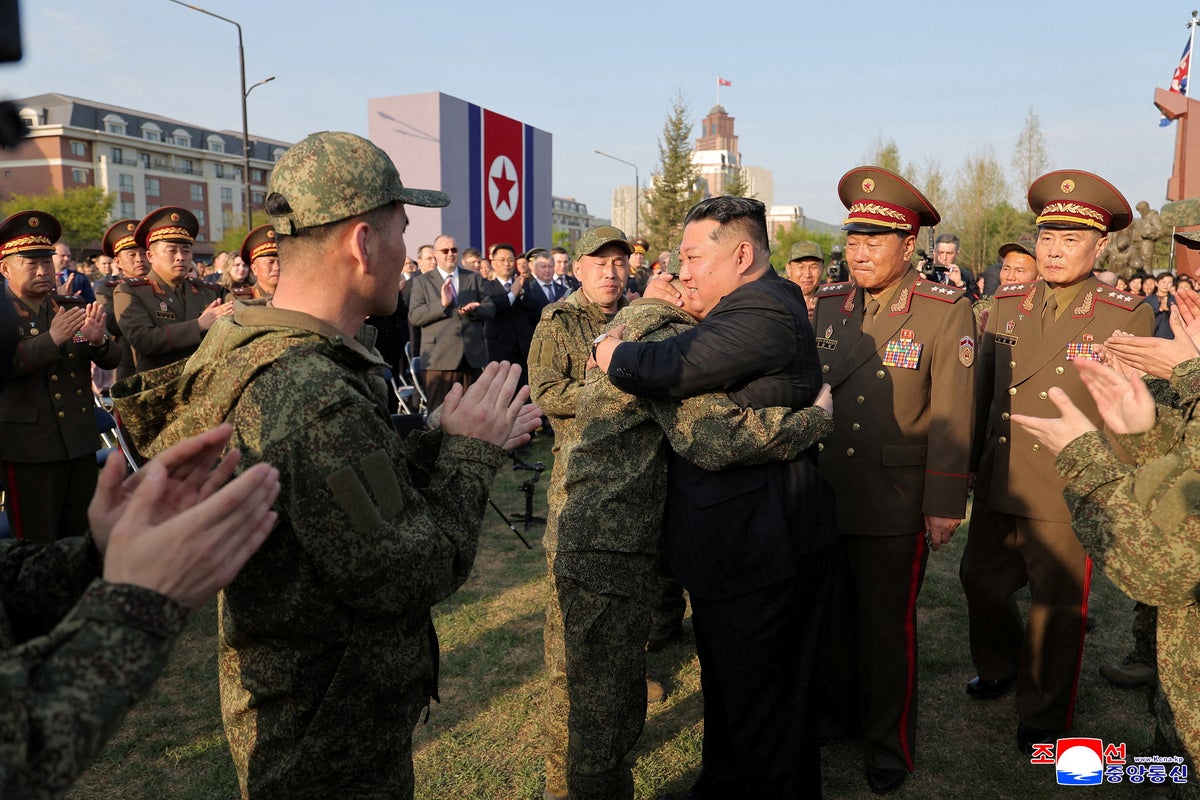
Distance is a strange thing. To a teenager scrolling through a smartphone in London, Seoul, or Chicago, the war in Europe is a flicker of compressed pixels, a muted broadcast on a kitchen television, or a notification buried beneath local headlines. But distance is an illusion engineered by borders. When reports emerge of thousands of fresh soldiers moving across continents—specifically intelligence assessments pointing toward tens of thousands of North Korean troops entering the theater to reinforce the Russian lines—the war stops being a local dispute over trenches and fields. It becomes global machinery.
Consider what happens next.
Trenches do not fill themselves. They are hollowed out by cold hands, reinforced with splintered timber, and maintained through an endless, grinding rotation of bodies. For months, military analysts have tracked the shifting demographics of the front lines. Supplies run thin. Domestic political costs rise. Mobilization campaigns face quiet resistance. In response to these pressures, international alignments tighten in the dark.
A hypothetical soldier—call him Min-su, stationed thousands of miles away from home in unfamiliar European mud—does not think in terms of geopolitics. He thinks of the freezing wind rattling the corrugated metal of a temporary bunker. He thinks of the language barrier, the strange artillery thunder echoing through pine forests, and the stark reality of being a pawn in a transaction signed in capital cities. He is a data point in a bilateral agreement, a name on a manifest of logistics and mutual defense pacts.
The integration of foreign forces into an active, high-intensity industrial conflict is not a minor footnote. It is a terrifying escalation of scale. Modern warfare devours ammunition, armor, and human resources at a pace that outstrips peacetime manufacturing. When one side seeks to supplement its ranks with foreign personnel—pushing toward figures like thirty thousand additional troops—it signals a fundamental desperation for mass. Precision weapons and drones have revolutionized the battlefield, but the ancient axiom remains stubbornly true: ground is ultimately held by infantry. Flesh and bone absorb the shrapnel.
Look closely at the mechanics of this deployment. It requires transport networks, logistics hubs, retraining facilities, and encrypted command channels to bridge armies that have never trained side by side. It is an administrative nightmare that becomes a reality through sheer political will. The cost of this expansion is measured not just in immediate casualties, but in the permanent hardening of global fault lines. Every soldier added to the line pulls the world further away from a diplomatic off-ramp.
We tend to view conflicts as bounded events, contained within the borders of the nation-state where the fighting occurs. History teaches us otherwise. Once foreign combatants cross into a European war of this magnitude, the precedent shifts. Globalization, long celebrated for trade, digital connectivity, and cultural exchange, now applies its efficiency to war. Supply chains now move battalions.
The silence in the trenches before dawn is heavy. It is the kind of quiet that makes every sound—a distant engine, a snapping twig, the whistle of wind through barbed wire—feel like an omen.
That silence belongs to everyone. It stretches from the front lines of Donetsk back to the quiet suburbs where leaders calculate the price of attrition. It whispers a warning about a world where conflicts no longer stay local, where alliances cross oceans to feed the meat grinder of industrial combat, and where the human cost is quietly cataloged and filed away in triplicate.
The map on the wall is running out of space.