The ink on a decree usually dries in seconds. But in Damascus, the signatures written this week carry the weight of a decade of rubble, hushed whispers, and the sudden, disorienting glare of an unwritten future.
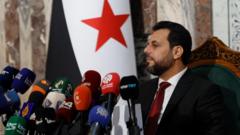
Seventy names. That was the final tally. Syria’s president just appointed the last block of lawmakers to a new, post-Assad parliament. To a casual observer scanning a news feed, it looks like standard bureaucratic housekeeping—a government filling seats, checking boxes, and moving on.
It is not.
To understand what is happening inside those pristine legislative chambers, you have to look at the hands of the people sitting in them. For generations, power in this corner of the world was a monolithic, predictable entity. Decisions were not made; they were handed down. Now, a fragile, deeply complicated transition is underway. The seventy individuals entering this room are not just politicians taking an oath. They are placeholders for an entire nation’s anxiety.
The Ghost of the Old Gavel
Imagine walking into a room where every single wall has been repainted, yet the faint outline of the old portraits still shows through the primer. That is the psychological reality of Damascus today.
For decades, the parliament was a rubber-stamp institution. It existed to codify the will of a single family and its inner circle. When the gavel struck, it wasn't deciding law; it was signaling obedience. The transition to a "post-Assad" framework sounds clean on paper, like switching a channel or opening a new tab. In reality, it is a messy, halting experiment in political reincarnation.
The seventy newly appointed lawmakers represent the final piece of this experimental puzzle. Under the transitional framework, these seats were reserved to ensure a balance of technocrats, regional representatives, and figures capable of stabilizing a fractured economy. But balance is a luxury when a currency is in freefall and basic infrastructure resembles a patchwork quilt.
Consider a hypothetical shopkeeper in the old markets of Damascus. We can call him Tariq. For twenty years, Tariq kept his head down, paid his taxes, and never looked a man in uniform in the eye. To Tariq, the parliament was a distant planet. If a law changed, he adapted by paying a higher bribe or working longer hours. Today, Tariq watches the television in his shop with a mixture of intense skepticism and quiet, terrifying hope. He doesn't care about the ideology of the seventy new lawmakers. He wants to know if they can turn the electricity back on for more than three hours a day. He wants to know if his son will be conscripted into another conflict.
The stakes are entirely human.
The Anatomy of the Final Seventy
Why seventy? Why now?
The structure of the transitional parliament required a meticulous, agonizing process of vetting and negotiation. The body is designed to act as a bridge between the old state apparatus—which cannot be dismantled overnight without triggering total anarchy—and the emerging political factions vying for a voice.
The final seventy names were the hardest to settle. They represent the compromise candidates. Among them are engineers tasked with rebuilding shattered water grids, academics who stayed through the worst of the shelling, and tribal leaders whose allegiance is vital for keeping the peace in the outlying provinces.
- The Technocrats: Selected not for political loyalty, but for survival skills. These are the logistical minds meant to court international aid and manage basic distribution networks.
- The Regional Delegates: Appointed to give voice to areas that felt abandoned by the capital for a generation, acting as a pressure valve for lingering regional resentments.
- The Institutional Holdovers: Figures from the civil service who understand how the old machines operate, kept on to prevent the total collapse of administrative functions.
This composition reveals the true strategy of the current presidency. It is an exercise in crisis management disguised as governance. The goal is not to create a flawless democracy in a single afternoon; the goal is to prevent the roof from caved-in completely.
But the real problem lies elsewhere. You cannot build a culture of debate in a room that has only ever known echoes.
The Sound of Someone Else's Voice
Step inside the halls of the new parliament and the silence is different now. It is a tense, watchful silence.
In the past, political survival meant blending into the background. If you were loud, you disappeared. Now, these seventy new arrivals are expected to argue. They are expected to represent competing interests in a country that has been violently divided for over a decade. The sheer psychological whiplash of this transition is staggering. How do you teach a politician who grew up under an authoritarian regime to suddenly dissent constructively?
It is a terrifying prospect. Fear does not vanish just because a new constitution is signed. It lingers in the way people carry their shoulders, the way they phrase their objections, and the way they look at the doors before they speak.
The international community watches this development with profound cynicism. Many western analysts argue that the appointments are merely a cosmetic facelift designed to legitimize a regime that simply changed its coat. They see the final seventy lawmakers as puppets with new strings.
That perspective is easy to hold from a distance of three thousand miles. It is clean. It fits neatly into a headline. But when you are on the ground, the view changes. Even if the system is flawed, even if the appointments are strategic, the existence of a functioning legislative body that must explicitly negotiate its power is a shift in the tectonic plates of the region.
The Invisible Ledger
Every politician entering that room carries an invisible ledger of debt and expectation.
The regional delegates are being watched by communities that have lost everything. Parents who buried their children in makeshift backyard graves are looking to these seventy names for some semblance of justice, or at the very least, bread. Meanwhile, the institutional holdovers are trying to protect their own skin, terrified that the shifting political tides will eventually wash them away.
This is the friction that will define Syria's immediate future. It is a collision between the desperate need for radical change and the terrifying necessity of stability.
If the parliament fails to function, if these seventy seats become just another layer of wealthy elites insulating themselves from the harsh reality of the streets, the consequences will not be measured in political setbacks. They will be measured in another wave of migration. They will be measured in the sound of storefront shutters closing permanently across the country.
The transition is a tightrope walk over an abyss.
The Unwritten Chamber
The true test of this new parliament will not happen during the televised opening ceremonies. It will happen two months from now, at three o'clock in the morning, when a committee has to decide how to allocate a depleted national budget between healthcare and military spending.
It will happen when a lawmaker from a formerly rebel-held territory has to sit across a mahogany table from a lawmaker who served the old regime throughout the war. They will have to look at each other. They will have to breathe the same air. They will have to decide whether to litigate the past or attempt to construct a road into tomorrow.
The seventy chairs are no longer empty. The names have been announced. The decrees have been filed away in the state archives. But the building itself remains a shell until the people inside it prove they are capable of carrying the grief of a nation without dropping it.
Outside the gates, the traffic of Damascus moves with its usual, chaotic rhythm. Horns blare. Street vendors call out the prices of mint and tomatoes. A generation of children who have known nothing but conflict walk home from school, their shoes kicking up dust from streets that have been cleared of rubble but not yet healed. They are not watching the parliament building. They are just trying to get home before the sun sets and the dark returns.