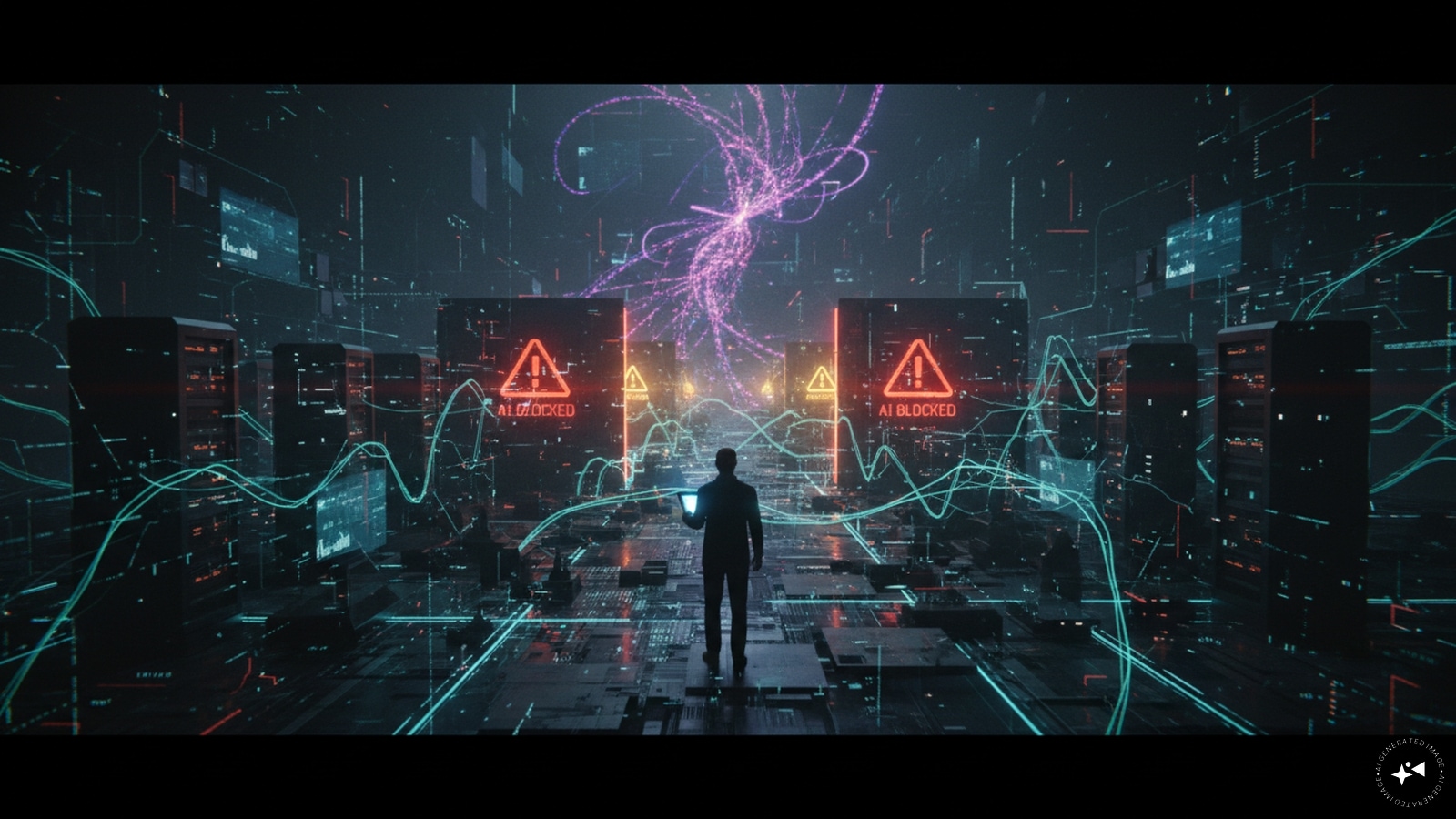
Static.
That is what a soldier remembers first. Not the flash, not the roar, but the sudden, violent death of sound on a handheld radio when a frequency jammer drops like a heavy woolen blanket over the trench. In modern conflict, the air is thick with invisible predators. Small plastic quadcopters buzz overhead like hornets, carrying munitions, watching, waiting for a heartbeat to betray a position. But worse than the bomber is the hunter. The interceptor drone. Fast, lethal, and blind to reason.
For months, the math was brutal. By the time a reconnaissance drone spotted an enemy hunter closing in from behind, the acoustic signature was already screaming in the pilot's headset. Seven seconds. That is all the time a human operator has to process the threat, scream a warning, and watch a multi-thousand-dollar asset turn into a cloud of confetti on a grainy video feed.
Seven seconds is not enough.
(Note: All tactical timelines cited here reflect operational data gathered from frontline electronic warfare units operating under active signal-denial conditions.)
Consider what happens inside a command dugout three kilometers behind the front line. Mud cakes the floorboards. A generator hums with a steady, migraine-inducing rhythm. The screen glows blue, casting long shadows across faces too young to know the ache in their joints.
A pilot named Marko stares at the monitor. His fingers are cramped around a controller that feels heavier with every passing hour. He isn't fighting a machine; he is fighting physics. The enemy uses high-speed fiber-optic guided drones or autonomous terminal-guidance systems that laugh at standard electronic countermeasures. When they dive, they dive straight down at speeds that defy evasion.
"Incoming," a voice crackles through the internal comms.
It is always too late.
The traditional fix was hardware. Slap a bigger battery on the scout, add a heavier camera, armor the chassis. But every gram added to a reconnaissance platform steals precious flight time. Every upgrade makes the bird heavier, louder, and more vulnerable. The engineers were caught in a trap of their own making. They were trying to build a tank out of dragonflies.
Then came the shift in perspective.
The breakthrough did not arrive in a flash of lightning from a corporate laboratory in Silicon Valley. It came from the cold, gray workshops of Lithuania, where engineers and frontline veterans sat knee-to-knee over cups of bitter coffee, looking at charred circuit boards.
They realized a fundamental truth. You cannot outrun a hunter if you are waiting for a human eye to spot it.
The solution was not a bigger weapon. It was an early warning system built into the brain of the scout itself. By integrating advanced edge-processing microchips and acoustic-visual threat detection algorithms directly onto the Lithuanian scout drone platform, designers gave the bird its own peripheral vision.
Think of it like driving a car through a dense fog. You can stare intently at the white lines inches from your hood, or you can rely on your peripheral vision to catch the sudden flash of a deer leaping out from the treeline. The human brain does not process every blade of grass; it filters for motion, anomaly, and threat.
The upgraded scout now does the same.
While the primary camera streams high-definition intelligence back to Marko, a secondary, low-power optical processor scans the invisible threat zones behind and above. It does not need internet. It does not need satellite uplink. It runs entirely on local logic. When a high-velocity interceptor enters its defensive bubble, the scout's onboard computer registers the micro-signature of the approaching hazard instantly.
Before the pilot's coffee cup stops rattling on the wooden desk, the scout reacts.
It fires a localized decoy flare, executes an erratic evasive snap-roll, or drops a localized signal burst that scrambles the pursuer's terminal guidance camera. It buys three seconds. Sometimes four. In the grim calculus of modern drone warfare, four seconds is the eternity between breathing and oblivion.
Let us be honest about the limitations. Technology is not a shield forged by gods. It is a temporary edge.
Within weeks of a new tactical advantage appearing on the front, the opposing side adapts. They change frequencies. They upgrade their machine-learning target acquisition models. They train new pilots to anticipate automated evasion maneuvers. The battlefield is an unyielding evolutionary soup where standing still means extinction.
Yet, there is a profound human shift happening in those dugouts.
Marko talks about the psychological weight of the old days. Every flight felt like walking a tightrope over an open furnace. You knew the hunter was coming. You just didn't know which second it would strike. The exhaustion of constant vigilance eroded the nerves of the best operators within weeks.
Now, sitting in the same damp bunker, his shoulders are fractionally lower. He still hears the hum of the generator. He still feels the chill of the damp earth seeping through his boots. But when the red warning light flashes on his secondary display, it no longer feels like an execution notice.
It feels like a second chance.
The scout drone dipping below the tree line isn't just a piece of military hardware dodging a missile. It is a proxy for human endurance. It takes the crushing, inhuman speed of mechanical destruction and stretches it just long enough for a human being to outsmart fate.
The screen flickers green. The telemetry stabilizes. Somewhere out in the gray expanse, an interceptor drone overshoots its target, diving uselessly into an empty field while the scout slips back into the shadows of the canopy, silent and watching.