The federal budget database updated on June 12 with a transaction that Congress never explicitly authorized. The Office of Management and Budget quietly approved the reallocation of $351.6 million originally destined for the front lines of executive protection. Instead of supporting active field personnel, the money was funneled into specialized accounts labeled for White House security improvements.
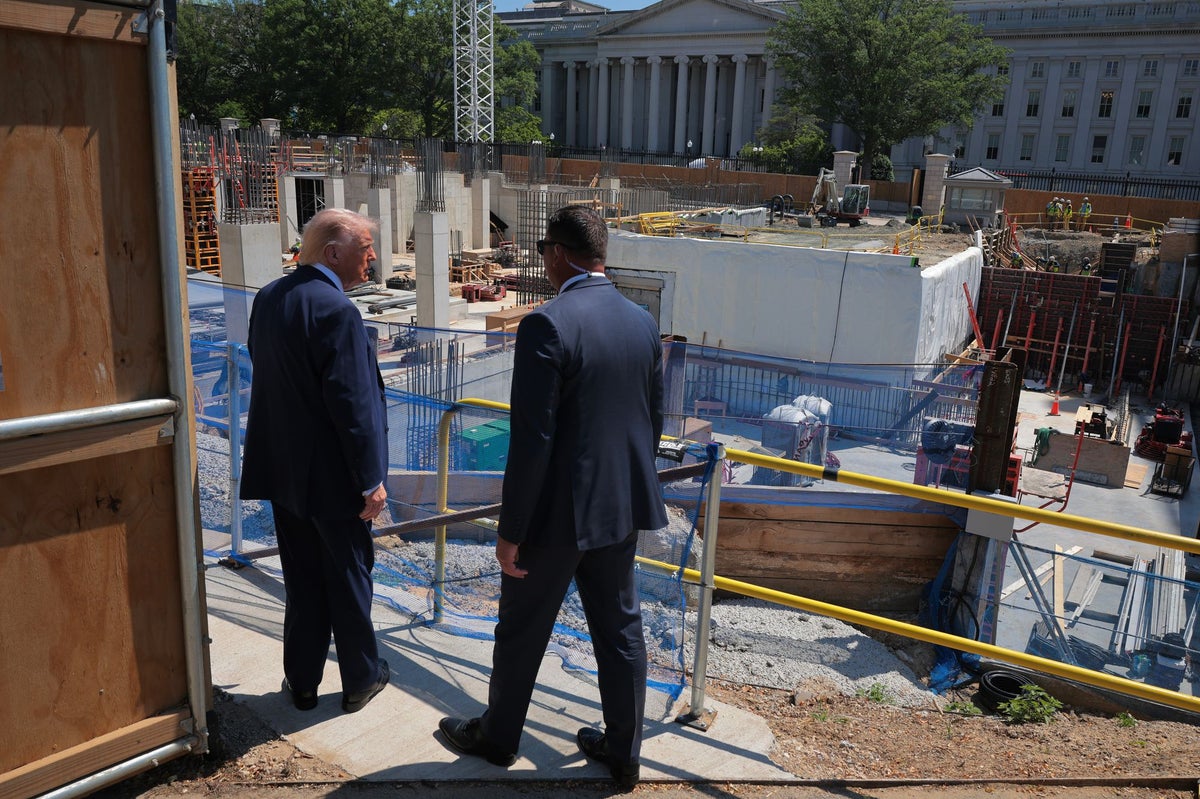
This financial maneuvering redirects money meant for frontline agent recruitment, training facilities, and retention bonuses. The funds are now supporting the "East Wing Modernization Project," an expansive 90,000-square-foot structure currently replacing the demolished historic East Wing. Internal project estimates indicate that the total construction bill has escalated to $600 million, with public tax dollars covering more than half of the cost.
The Shell Game inside the Omnibus
The origin of these funds trace back to last summer's partisan legislative victory, the One Big Beautiful Bill Act. Congress packed the massive budget reconciliation package with emergency funding for the U.S. Secret Service. The explicit legislative intent was to bolster an understaffed agency reeling from multiple active threats against the president. The law earmarked a $1.17 billion cash infusion strictly for field operations, training programs, and critical personnel bonuses to curb a mounting retention crisis.
The White House managed to exploit a technical loophole in the statutory language. By routing $340.8 million into a broad "Procurement, Construction, and Improvements" account and another $10.75 million into "Operations and Support," the administration legally transformed operational personnel funds into a capital construction reserve.
A review of the internal ledger from the lead contractor, Clark Construction, reveals exactly how the administration planned to piece together the $600 million required for the build.
| Funding Source | Contribution Type | Allocated Amount |
|---|---|---|
| U.S. Secret Service | Redirected Public Funds | $155 million |
| White House Military Office | Diverted Public Funds | $149 million |
| Executive Residence Fund | Diverted Public Funds | $3 million |
| Private Donors | Unverified Philanthropy | $293 million |
The Subterranean Fortress
The administration justifies this rapid reallocation of capital as an urgent national security requirement. White House spokesperson Davis Ingle stated that the modernization effort remains inextricably tied to the protection of the executive grounds. Officials frequently cite recent security threats, including an alleged disrupted attack targeting a public athletic event on the South Lawn, as immediate proof that traditional, above-ground White House venues are no longer safe for hosting foreign dignitaries.
The physical blueprint of the project extends far beyond a standard reception space. The historic East Wing structure was completely leveled in October 2025 to clear ground for an advanced complex. While the ground floor features a grand ballroom designed for large state dinners, the structure descends six stories beneath the surface.
This massive subterranean facility is designed to include an independent military field hospital, classified research rooms, secure communications infrastructure, and specialized anti-drone and missile defense command centers. The administration argues that adding these modern defenses directly beneath the primary reception space creates a secure venue that will protect future executives for decades.
Bypassing the Power of the Purse
The decision to divert agency operational funds occurred immediately after the administration suffered a series of sharp rebuffs on Capitol Hill. In late May, Senate Republicans attempted to insert a direct $1 billion appropriation for White House upgrades into a broader immigration and border enforcement spending package. The requested allocation included $220 million to directly fund the structural hardening of the new ballroom, covering blast-resistant glass, advanced chemical filtration, and sophisticated drone detection grids.
The legislative push collapsed during intense committee negotiations. Senate Democrats threatened to block the entire $70 billion enforcement package using the filibuster, warning that they would force vulnerable incumbent lawmakers to vote on the record regarding controversial luxury spending.
Concurrently, the Senate Parliamentarian issued a quiet but decisive procedural ruling. The parliamentarian determined that the ballroom security cash did not comply with the strict rules governing budget reconciliation, stripping the provision of its filibuster-proof status. Recognizing that the funding could derail their broader legislative priorities, the Senate Judiciary Committee stripped the ballroom funding from the final bill.
Rather than accepting the legislative defeat, the executive branch turned inward. By utilizing internal Office of Management and Budget transfer authorities, the administration accessed the previously passed Secret Service funds. This maneuver effectively bypassed the congressional committees that had spent months actively denying the specific spending request.
Broken Promises and Legal Roadblocks
The discovery of hundreds of millions of public dollars flowing into the construction site directly contradicts the administration's public assertions. The president has consistently maintained that the structure would be built entirely via private donations, explicitly stating that the taxpayer would not contribute a single dime to the project.
The revelation that public money is covering more than half of the $600 million project has alienated key congressional allies. Senior lawmakers on both sides of the aisle are expressing growing frustration over the lack of transparency, noting that funds intended to protect field personnel are instead being absorbed by a massive real estate development on the North Lawn.
The project faces significant legal challenges outside of Congress. The National Trust for Historic Preservation filed a federal lawsuit immediately following the demolition of the original East Wing in late 2025. The organization argues that the administration completely bypassed mandatory historical preservation reviews and lacked the statutory authority to raze a national monument without a clear mandate from lawmakers.
The legal battle reached a critical point in March when U.S. District Judge Richard Leon issued an injunction halting all above-ground construction, ruling that the executive branch had likely exceeded its constitutional limits. However, the court allowed underground work to continue under a narrow national security exemption.
By labeling the redirected $351.6 million as essential "White House Security Measures," the administration can continue pumping vast sums of money into the deep subterranean footprint of the site, keeping the construction crews active while the legal battle over the above-ground ballroom plays out in federal court.