A high school student stands at a podium in an official public building. She just finished presenting her academic research to the local leadership. Instead of receiving feedback on her hard work, she is blindsided.
"God, you're hot, you know that?"
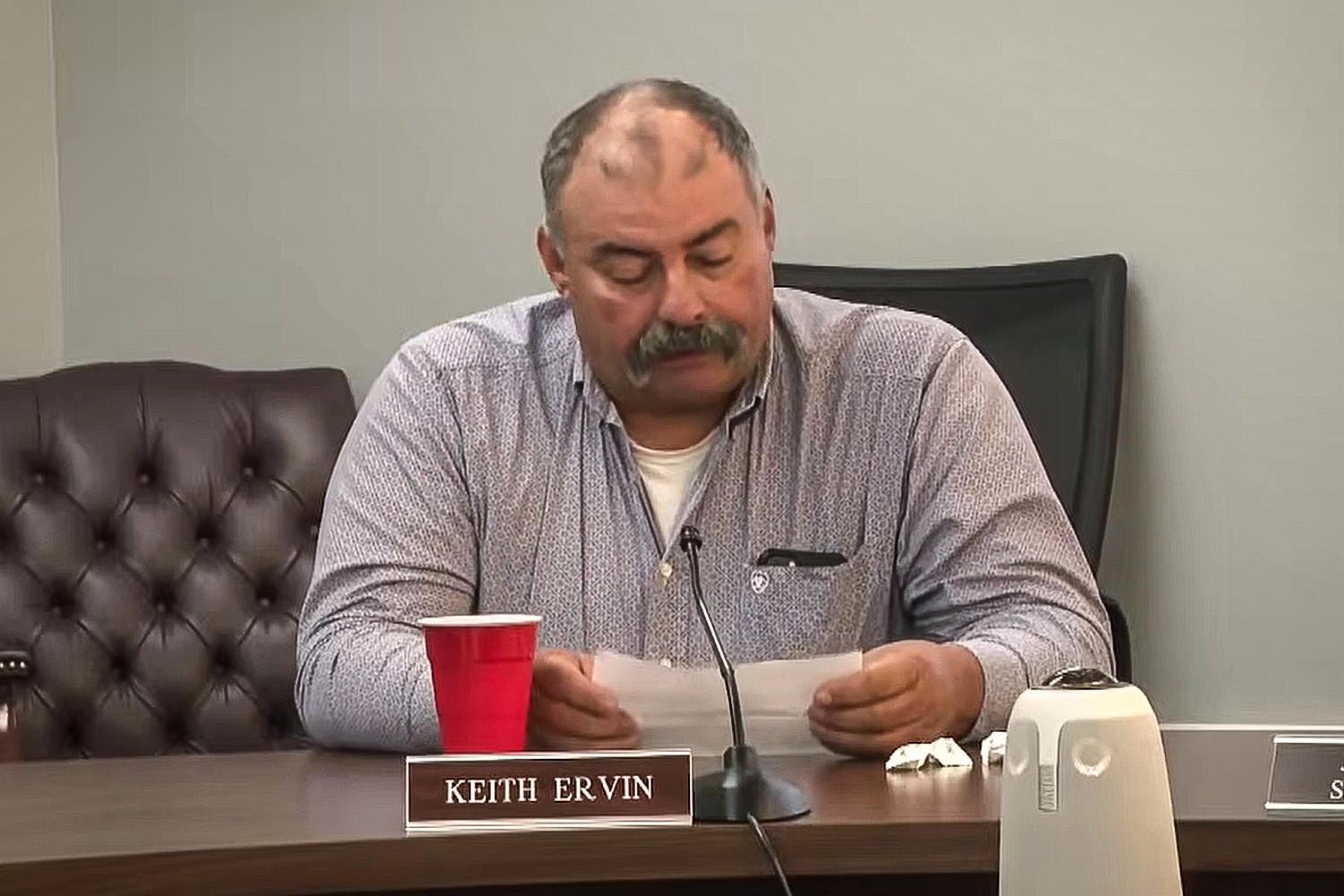
Washington County School Board member Keith Irvin said those exact words during an official meeting in Tennessee. He didn't just stop at the verbal remark. He reached out and touched her arm. The room instantly grew tense. Some public officials and a sheriff's deputy present at the meeting actually laughed before the proceedings simply moved along.
This isn't a script from a bad movie. It happened right in front of a live audience and running cameras. When the video circulated, it sparked national outrage, massive petitions, and an emergency meeting where furious parents demanded immediate accountability.
The fallout of this incident highlights a massive, systemic flaw in how local government operates. When an elected official crosses the line with a minor, the system is shockingly unequipped to protect the public.
The On Fire Defense and the Reality of Local Power
During an emergency session called to address the national backlash, Irvin offered an explanation that local parents flatly rejected. He claimed his words were taken entirely out of context.
"When I mentioned she was hot, I meant she was on a roll," Irvin told the crowd. "It was nothing to do with her appearance."
The crowd erupted, shouting over his statement and calling him a liar. The local community wasn't buying the excuse, especially when public records revealed this wasn't an isolated incident. In 2009, Irvin faced an accusation for making a lewd, juvenile gesture of a sexual nature inside a classroom in response to a student's remarks. The board censured him back then, and he apologized. History repeated itself when the board voted to censure him yet again for his recent behavior.
But here's the kicker that leaves most people completely baffled. The school board cannot fire him.
Because school board members are elected officials, a superintendent or a fellow board member doesn't have the administrative power to hand them a pink slip. Removing an elected official from office requires a complex legal process involving a formal petition, a massive number of verified voter signatures, a recall election, or a direct order from a judge.
Superintendent Jerry Boyd acknowledged the intense discomfort in the room but noted that since the student wasn't in immediate physical danger, the meeting simply continued. This exact dynamic is why parents feel completely powerless when local leaders behave badly.
The High Cost of the Cowardly Copout
The student involved didn't stay silent. Weeks after the initial incident, she stood at the very same podium to address the entire board directly. Her words cut through the usual bureaucratic noise.
"I believe that you are all cowards," she said, looking directly at the board members. She blasted the officials who used religious forgiveness as a shield to avoid taking a hard stance. "Just as religion is not allowed in schools by authority figures, it has no place in this boardroom or any professional setting."
Her speech exposed the deep emotional toll these incidents take on young people. She openly noted that the temporary discomfort the board felt from public scrutiny wasn't a fraction of what she experienced.
"Thank you for teaching me that no one will stand up for me besides myself," the student stated.
This case shows a glaring gap in professional standards. School administrators, teachers, and staff members must undergo strict, mandatory training regarding sexual harassment, appropriate conduct, and student boundaries. Yet, the elected officials who oversee the entire school district budget and set local education policies often skip these exact protocols entirely.
How to Force Accountability in Your Local School District
If you're waiting for state or federal authorities to step in and fix local board behavior, you'll be waiting a long time. Change only happens from the ground up. If you want to prevent your own local district from turning into a viral scandal, you need to use the actual levers of community power.
Track the History of Local Candidates
The fact that a previous 2009 censure didn't stop a candidate from holding office shows that voter memory is incredibly short. Before local elections, dig into the public meeting minutes. Look up past board resolutions, censures, and official complaints. Don't rely on campaign flyers.
Demand Mandatory Conduct Policies
Push your local district to adopt strict codes of conduct that apply explicitly to elected trustees, not just employees. Demand that board members complete the same student-protection and harassment training required of classroom teachers.
Show Up When the Room is Empty
Bad behavior thrives when nobody is watching. Most school board meetings are completely empty except for the officials and a few journalists. Showing up, sitting in the front row, and recording the sessions forces a level of basic professionalism that vanishes when the public stays home.
Understand the Recall Process Before You Need It
Don't wait for a crisis to figure out how local removal laws work. Every state has specific rules regarding the percentage of signatures needed to trigger a recall election for local officials. Know the threshold, keep the paperwork ready, and understand that the ballot box is ultimately the only permanent fix for a broken board.
The true lesson of the Washington County scandal isn't just that a public official made an abusive, inappropriate comment to a teenager. The real takeaway is that the systems built to protect our kids will consistently fail to police themselves unless local voters actively force the issue.
The raw footage and local community reactions show the intense public pushback following the incident. You can watch the full community confrontation and the board's response in this Tennessee School Board Censure Report, which details the historical patterns of behavior and the community's fight for accountability.