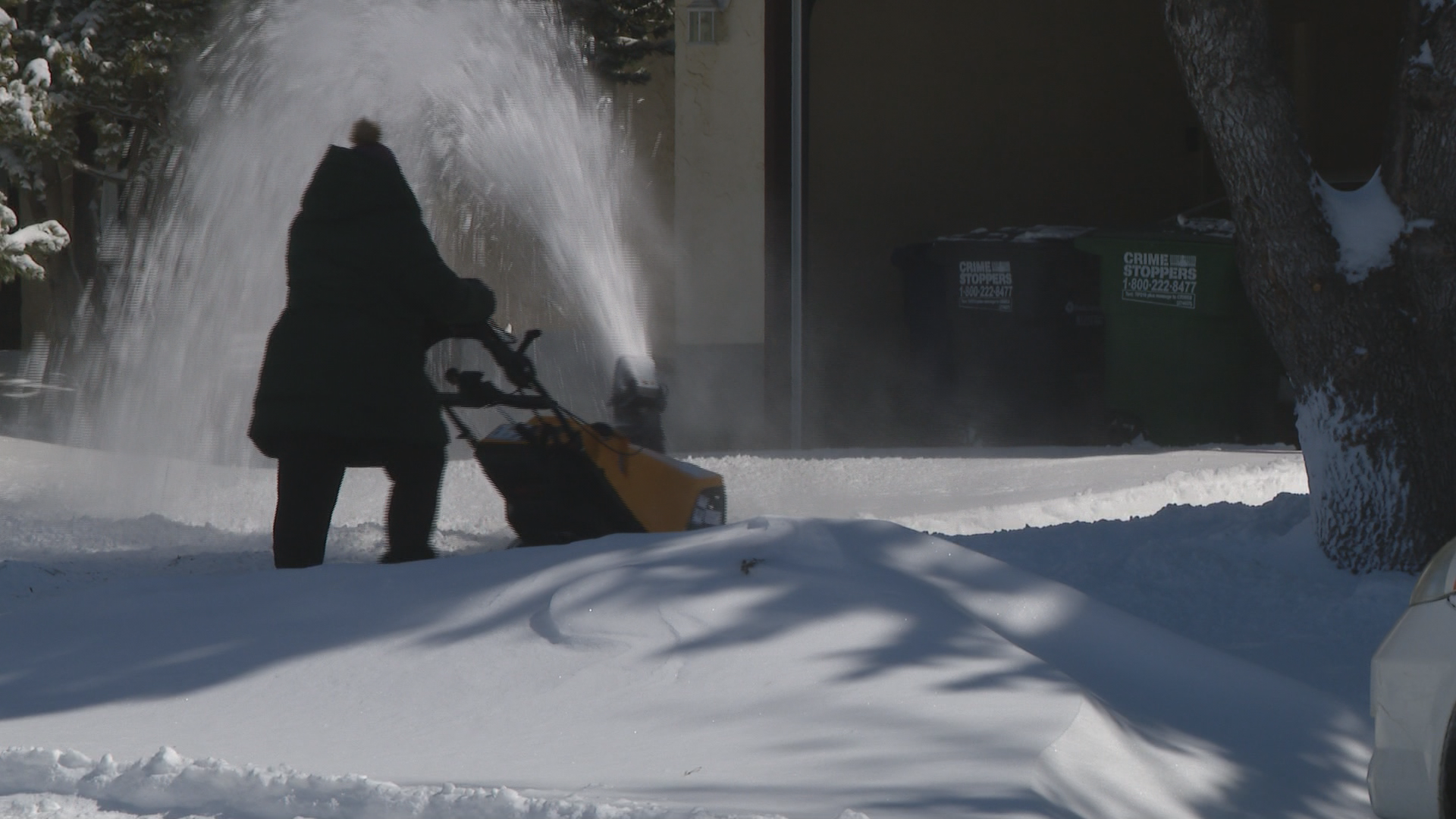
Saskatchewan residents just got ghosted by spring. Again. One day you’re looking at patches of brown grass and thinking about where you stashed the garden spade, and the next, you’re digging your SUV out of a drift that wasn't there at midnight. This latest blast of heavy snow across the prairies isn't just a minor dusting. It's a reminder that in this part of the world, April is often just Winter Part Two with better lighting.
The transition from March to April in Saskatchewan is notoriously fickle. We call it "false spring" for a reason. It’s that deceptive window where the mercury hits 10°C, the melt starts to smell like wet earth, and everyone collectively decides to wash their car. Then the wind shifts. A low-pressure system rolls in from the Rockies or up from the south, and suddenly the province is under a white blanket once more. This isn't just bad luck. It’s a systemic weather pattern that defines life on the Canadian prairies.
Why Saskatchewan weather keeps breaking our hearts
If you've lived here long enough, you know the drill. The geography of the Great Plains makes Saskatchewan a massive bowling alley for competing air masses. You have cold, dry arctic air screaming down from the north and warm, moist air trying to push up from the Gulf of Mexico. When they collide over the flat expanse of the prairies, the result is usually messy.
Late-season snowstorms are often heavier and more disruptive than mid-winter ones. In January, the air is too cold to hold much moisture. You get that light, crystalline snow that blows around like dust. But in late March and April, the atmosphere warms up. Warmer air holds more water. When that moisture hits a cold front, it drops as heavy, wet "heart attack" snow. This is the stuff that snaps power lines, collapses old shed roofs, and makes shoveling feel like a CrossFit workout from hell.
Environment and Climate Change Canada often warns about these systems days in advance, yet they still catch us off guard. We want to believe the winter is over. We want it so bad we ignore the barometer. But the data shows that some of the province's most significant snowfall events have happened well after the spring equinox.
The heavy cost of a late season dump
This isn't just about ruined patio plans. A sudden return to deep snow has real economic and safety consequences. Highways across the province, from the Trans-Canada to the secondary grid roads, become skating rinks in hours. The "false start" usually means the ground had started to thaw, creating a layer of ice underneath the new snow that makes driving treacherous even for those with four-wheel drive.
Municipalities have to scramble. Snow removal budgets that were supposed to last until next November get chewed up in a single weekend. Grader operators who thought they were moving on to spring maintenance are back on 12-hour shifts clearing residential streets.
- Power Outages: Heavy snow clings to lines. If the wind picks up, those lines gallop and snap.
- Agricultural Delays: Farmers watch the calendar with gritted teeth. Snow stays on the fields longer, keeping the ground cold and saturated, which pushes back seeding dates.
- Livestock Stress: For ranchers in the middle of calving season, a late-season blizzard is a nightmare. Newborn calves can't handle the wet cold of a spring dump like they can the dry cold of mid-winter.
The psychological toll is real too. Seasonal Affective Disorder doesn't just disappear because the calendar says March 21st. When you've spent six months in a parka and finally see the sun, having it snatched away by a 20-centimeter snowfall feels like a personal insult from the universe.
Navigating the mess without losing your mind
So, what do you do when the shovel you just put in the garage has to come back out? First, stop trusting the five-day forecast like it's gospel. In Saskatchewan, the only weather report that matters is the one you see when you look out the window.
Don't take your winter tires off yet. It’s a classic mistake. People see a week of sunshine and book an appointment at the shop. Keep those winters on until at least the end of April. The rubber compound in all-seasons gets hard when the temperature dips back toward freezing, losing the grip you need to handle the slushy, icy mess that defines a Saskatchewan spring.
Check your emergency kit. Most people let their car kits get depleted by this time of year. Make sure you still have a heavy blanket, a candle, and some snacks in the trunk. If you get stuck on a secondary highway during one of these "false spring" blasts, it might take hours for a tow truck or a plow to reach you.
Moving forward while the drifts linger
The snow will melt. It always does. But the transition period is the most dangerous time for both your car and your sanity. Watch for localized flooding as this heavy snow eventually turns to water. If the catch basins in your street are buried under the new drifts, clear them out now. If that water has nowhere to go when the sun finally returns, it's heading for your basement.
Check on your neighbors, especially the older ones. This heavy, wet snow is dangerous to clear for anyone with heart conditions or mobility issues. A quick pass with a snowblower can save someone a lot of grief.
Basically, stay patient. Saskatchewan is a place of extremes, and this is just the price of admission. Put the summer tires away, keep the parka near the door, and wait for the real spring to show up. It’ll be here eventually, probably right before it turns into 30°C heat. That’s just how we roll. Clear your sidewalks before the overnight freeze turns them into a luge track, and keep an eye on the highway hotlines before heading out on any road trips. It’s messy out there, so give yourself twice as much time as you think you need to get anywhere.