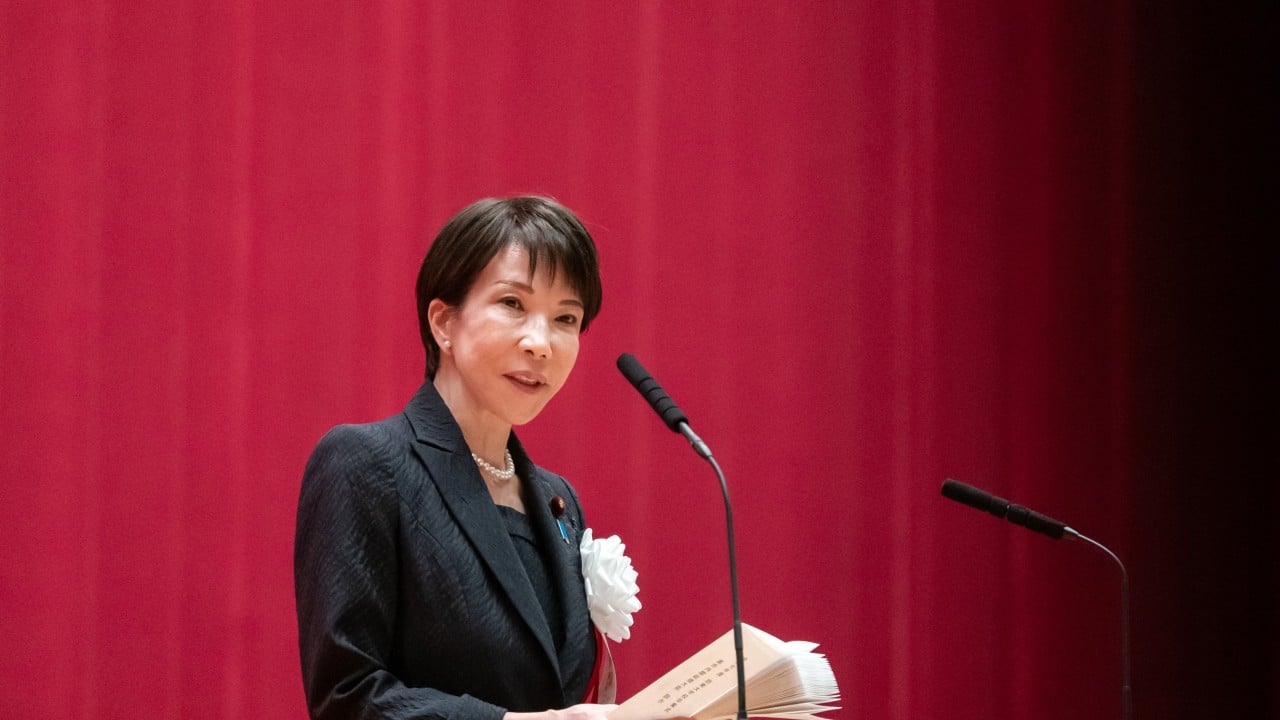
The debate over Article 9 of the Japanese Constitution is no longer a fringe academic exercise. It is a live wire. For decades, the "Peace Constitution" served as the bedrock of Japan’s post-war identity, a legal barrier preventing the nation from maintaining a formal military or using force to settle international disputes. Sanae Takaichi, a formidable force within the Liberal Democratic Party (LDP), is now pushing that barrier to the breaking point. Her objective is clear: transform Japan into a "normal" nation with a fully functional military.
This isn’t just about changing words on a page. It is a fundamental shift in the geopolitical architecture of East Asia. Takaichi’s vision involves removing the constraints that limit Japan’s Self-Defense Forces (SDF) and elevating their status to a national military. While critics fear a return to the militarism of the early 20th century, Takaichi argues that the current legal framework is an era-defining liability. In a region where neighbors are rapidly modernizing their arsenals, she views pacifism not as a moral high ground, but as a strategic vacuum.
The Iron Lady of Nara
Sanae Takaichi does not shy away from controversy. Often described as a protégé of the late Shinzo Abe, she carries his torch with a sharper, more ideological edge. Her frequent visits to the Yasukuni Shrine—a site that honors Japan's war dead, including convicted war criminals—signal her refusal to bow to external pressure from Beijing or Seoul. This isn't just posturing. It is a calculated signal to the conservative base that the era of Japanese apology is over.
Her rise represents a shift within the LDP. While the party has long flirted with constitutional revision, Takaichi is part of a faction that views it as an immediate necessity. They argue that Japan’s security can no longer be outsourced entirely to the United States. The "Yoshida Doctrine," which focused on economic growth while relying on the U.S. for defense, is showing its age. Takaichi believes Japan must be able to stand on its own feet, both legally and kinetically.
The Article 9 Bottleneck
To understand the friction, one must look at the text of the Constitution itself. Drafted by American occupation officials in 1946, Article 9 explicitly renounces war. It states that "land, sea, and air forces, as well as other war potential, will never be maintained."
Reality, however, has moved faster than the law. Japan currently maintains one of the most technologically advanced "non-military" forces in the world. The SDF operates helicopter destroyers that look remarkably like aircraft carriers and maintains a sophisticated fleet of F-35 stealth fighters. Takaichi’s argument is built on this hypocrisy. She contends that the legal ambiguity puts Japanese personnel in a precarious position. If an SDF commander cannot act with the legal certainty of a sovereign military officer during a crisis, the delay could be fatal.
She wants to delete the second paragraph of Article 9. By doing so, Japan would formally recognize its right to possess a military. This would allow for a more streamlined command structure and, crucially, a more aggressive stance on defense R&D and arms exports.
Economic Security and the Silicon Shield
Takaichi’s platform extends beyond tanks and missiles. She has been a vocal proponent of "Economic Security," a concept that treats supply chains and semiconductor production as front-line defense issues. During her tenure as Minister of State for Science and Technology Policy, she pushed for legislation to protect Japan’s industrial secrets from foreign espionage.
She recognizes that modern warfare is won in the cleanroom, not just the battlefield. By aligning the defense industry with Japan’s massive tech conglomerates, Takaichi hopes to spark a domestic military-industrial complex. This would serve two purposes: bolstering national defense and providing a high-tech stimulus for a stagnant economy. The goal is to make Japan indispensable to the global supply chain, creating a "Silicon Shield" similar to the one Taiwan currently enjoys.
The Regional Powderkeg
The reaction from Japan’s neighbors has been predictably sharp. Beijing views any move toward Japanese rearmament as a direct threat to its regional hegemony. The Chinese foreign ministry frequently invokes the "history issue," reminding the world of Japan’s imperial past. Takaichi’s rhetoric provides ample fuel for this fire.
However, the domestic landscape is more complicated. The Japanese public remains deeply divided. While younger generations are increasingly wary of a rising China and a nuclear-armed North Korea, the older generation remembers the horrors of the Pacific War. There is a profound cultural attachment to the "Peace Constitution." For many, it is not just a legal document, but a promise that Japan will never again lead its people into a catastrophic conflict.
Takaichi must navigate this emotional minefield. She isn't just fighting a political battle; she is fighting a psychological one. To succeed, she must convince a skeptical public that the world has changed so fundamentally that the old rules no longer apply.
The Washington Factor
The United States finds itself in a delicate position. Washington has long encouraged Japan to take a larger role in regional security, essentially acting as the "unsinkable aircraft carrier" for U.S. interests in the Pacific. A more capable Japanese military would ease the burden on the U.S. Navy.
Yet, there is a risk. A Japan that is legally allowed to act independently might not always align with U.S. strategic goals. If Japan becomes a "normal" military power, it may eventually seek to distance itself from the U.S. security umbrella, pursuing its own regional interests which could clash with American diplomacy. Takaichi’s brand of nationalism is staunchly pro-Japan, which is not always synonymous with being pro-Washington.
The Cost of Normalization
Changing the constitution is a Herculean task. It requires a two-thirds majority in both houses of the Diet, followed by a national referendum. No amendment has ever been passed since the document was enacted. Takaichi is betting that the deteriorating security environment in the Indo-Pacific will finally provide the momentum needed to clear this hurdle.
The financial cost would also be staggering. Transitioning from a "Self-Defense" model to a full-scale military requires massive investment in long-range strike capabilities, satellite surveillance, and cyber-warfare divisions. Japan has already committed to doubling its defense spending to 2% of GDP, but Takaichi’s vision would likely require even more. In a country with the world’s highest debt-to-GDP ratio and a shrinking population, finding the yen for this expansion is a problem she has yet to fully solve.
Technical Realities of Modern Defense
The shift Takaichi proposes would involve a total overhaul of the Japanese Ministry of Defense. Currently, the SDF operates under strict "civilian control" mechanisms that are far more restrictive than those in the U.S. or U.K. Every major movement requires explicit cabinet approval, a process that critics say is too slow for the age of hypersonic missiles.
$$Defense_Efficiency = \frac{Command_Speed \times Technological_Capability}{Legal_Restriction}$$
If the denominator (Legal Restriction) remains high, the overall efficiency of the defense force stays low, regardless of how many billions are spent on hardware. Takaichi’s focus is on reducing that denominator. She wants to empower the military to act decisively in the "gray zone"—scenarios that fall short of full-scale war but threaten national sovereignty, such as the harassment of fishing vessels or cyber-attacks on critical infrastructure.
The Brink of Transformation
The push for constitutional change is often framed as a move toward war, but Takaichi frames it as the ultimate deterrent. Her logic is rooted in the "Si vis pacem, para bellum" (if you want peace, prepare for war) philosophy. By removing the ambiguity of Article 9, she intends to signal to adversaries that Japan is no longer a passive observer in its own backyard.
This is a high-stakes gamble. If she succeeds, she will have fundamentally altered the DNA of the Japanese state. If she fails, she risks further polarizing a nation that is already struggling to find its place in a fractured global order. The "chopping block" isn't just for the Constitution; it’s for the very idea of Japan as a pacifist exception.
Takaichi is betting that the ghosts of the past are less dangerous than the threats of the future. Whether the Japanese electorate agrees will determine the course of the century in the Pacific. Japan is moving toward a crossroads where the choice is no longer between peace and war, but between a constrained past and an armed, uncertain future.
The path to revision is paved with logistical nightmares and deep-seated societal trauma. It requires more than just political will; it requires a rebranding of what it means to be Japanese in an era of global instability. Takaichi is the architect of this new identity, but the foundation remains shaky. The next few years will reveal if the Japanese people are ready to trade their unique pacifist status for the cold reality of a conventional power. This isn't just a policy shift. It is a national soul-searching mission with the volume turned all the way up.