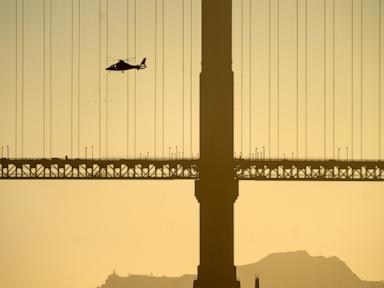
The San Francisco Bay looks beautiful from the shore, but anyone who has captained a boat there knows it hides a violent, unpredictable stretch of water. On Tuesday, July 14, 2026, that reality hit a family in the worst way possible. A 49-foot cabin cruiser named the Volare was carrying 20 people near Alcatraz Island when a wave slammed into the vessel. Within minutes, the boat rolled over and sank into the freezing water.
First responders pulled 16 survivors from the bay, but 79-year-old Clifford Joseph Boisa died shortly after being pulled from the water. On Thursday, a passing boater spotted the body of 58-year-old Tondra Madruga near Treasure Island, making her the second confirmed fatality. Two women, Jackie Boisa and Carol Boisa, are still missing.
This wasn't a reckless joyride. The family had gathered on the boat to scatter the ashes of a loved one who passed away more than a decade ago. Instead of finding closure, they ended up in a fight for their lives.
The Anatomy of the Volare Disaster
To understand why this tragedy happened, look at the geography of the bay. The waters near Alcatraz are a literal bottleneck. When the Pacific Ocean rushes through the Golden Gate during an incoming tide, it collides with the massive water runoff from the Sacramento and San Joaquin rivers. This creates conflicting currents, rip tides, and sudden, steep waves.
The Volare was a multi-story cabin cruiser. These types of boats offer great views, but their high profile makes them top-heavy. When a large wave strikes a top-heavy vessel sideways, it can compromise the boat's stability instantly. According to investigators, a wave struck the Volare, causing it to take on water and roll over.
Survivors recalled a horrifying scene. Several passengers were trapped inside the main cabin as the boat tipped. Justin Marceline, a local rescuer who rushed to help, stated that passengers were actively banging on the cabin windows trying to break free as the vessel went down. Yvonne Thatcher, a survivor on board, managed to squeeze through the main cabin door right as the boat fully submerged, leaving her relatives trapped inside.
Why the Search Shifted to a Deep Water Recovery
On Wednesday evening, the U.S. Coast Guard suspended its active search-and-rescue operation after covering 950 square nautical miles. That is a massive area, roughly half the size of Rhode Island. When the Coast Guard stops searching, it means the window for human survival in the water has closed.
The San Francisco Bay is incredibly cold, usually hovering around 53°F (11°C) in July. Hypothermia sets in fast. An adult in water that cold loses functional coordination in less than an hour, making it impossible to swim or stay afloat without a life jacket.
Because of this, the San Francisco Police Department Marine Unit has taken over the operation, shifting it from a rescue mission to a complex recovery effort.
The wreckage of the Volare sits on a rocky, uneven seabed roughly 120 to 130 feet below the surface. Diving at that depth is hazardous. The water is pitch black, the currents are strong enough to rip gear off a diver, and the tidal windows for safe diving last only a few minutes a day.
What Happens During a Marine Salvage Operation
The police department is currently coordinating with commercial salvage companies to locate and potentially raise the Volare. If you want to know what the next few days look like for the investigation, it comes down to three steps.
First, side-scan sonar and remote-operated vehicles (ROVs) must map the exact position of the wreckage. Divers cannot safely enter the hull until operators know if the boat is stable or resting at a precarious angle on the rocks.
Second, if the boat is secure, specialized divers will conduct a sweep of the interior cabins. Coast Guard Captain Jarod Toczko noted a high probability that the remaining missing passengers are still trapped inside the vessel.
Third, if the hull is intact, salvage crews will use heavy cranes or inflatable lift bags to raise the Volare to the surface. Raising the vessel is the only way the National Transportation Safety Board (NTSB) and the Coast Guard can inspect the engines, bilge pumps, and structural integrity to determine why it sank so rapidly.
Crucial Safety Steps for Chartering a Bay Boat
If you plan to rent or charter a boat on the San Francisco Bay, this tragedy highlights why you cannot treat the bay like a calm inland lake.
- Know where the life jackets are stored before the boat leaves the dock. If a vessel capsizes, you will not have time to dig through a marine locker to find one.
- Stay on the deck if the water gets rough. Being inside a closed cabin when a boat rolls over makes escaping incredibly difficult due to water pressure locking the doors shut.
- Verify the captain's license and the vessel's capacity limits. The Volare had 20 adults on board. Investigators will be looking closely at whether the weight distribution contributed to the capsizing.
The SFPD marine unit will continue utilizing sonar scans throughout the weekend near Treasure Island and Alcatraz. Updates on the salvage timeline and potential recovery of the remaining victims will depend entirely on the weather and the strength of the bay currents over the coming days.