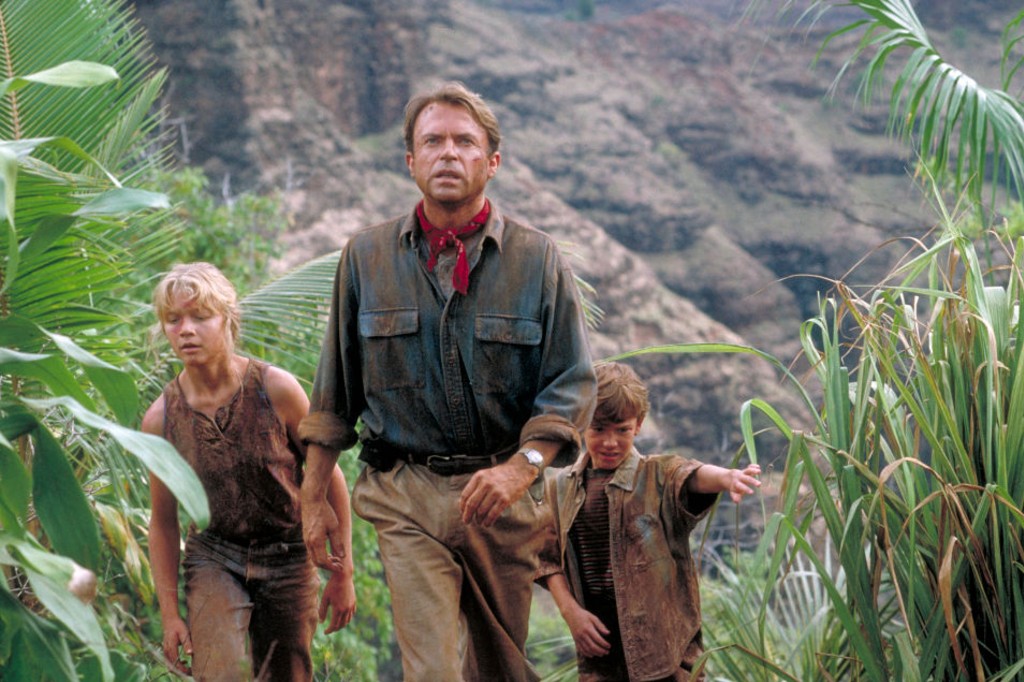
The movie star who didn't want to be a movie star has left us. Sam Neill, the New Zealand icon who spent decades grounding some of cinema’s most chaotic worlds with his quiet dignity, died on July 13, 2026, at the age of 78.
His family confirmed the news from Sydney, Australia, noting that he passed away surrounded by loved ones at St Vincent’s Private Hospital. While Neill spent years fighting a highly aggressive stage-three blood cancer, his family emphasized that his passing was sudden, unexpected, and completely unrelated to the disease. He actually died cancer-free, courtesy of a groundbreaking genetic therapy that had put his lymphoma into remission months prior.
Most people know him as Dr. Alan Grant, the gruff paleontologist in a fedora who won over a generation of dinosaur kids. But fixing your gaze only on Jurassic Park misses the point of what made Sam Neill a legendary figure. He wasn't a flashy Hollywood type. He didn't care about the red carpet. Instead, he chose to build a career defined by an impossible versatility and a life defined by his Central Otago winery, his farm animals, and a genuine, unforced love for humanity.
The Secret Battle He Already Won
When the news broke, many assumed Neill finally succumbed to the rare form of non-Hodgkin lymphoma he had been fighting since 2022. That wasn't the case. His diagnosis was angioimmunoblastic T-cell lymphoma, a vicious blood cancer that resists standard treatments. Traditional chemotherapy failed him entirely.
By early 2026, things looked bleak. Neill himself admitted he thought he was on the way out. But he entered a clinical trial for CAR T-cell therapy, which reprogrammed his immune system to hunt down the cancer. In April, he announced with typical understatement that scans showed no cancer in his body.
He knew the treatment meant he would likely need medical upkeep for the rest of his days, but he didn't care about the clinical details. He just wanted more time to act, to tend to his vineyard, and to watch his grandkids grow. The fact that he passed away free of that disease is a final, poetic victory for a man who refused to let illness dictate his final chapters.
An Actor Who Transcended Blockbuster Status
If you only watch blockbusters, you know him for escaping velociraptors or playing the classy antagonist in The Hunt for Red October. But Neill’s filmography is a masterclass in range. Look at his incredible run in 1993. In the exact same year he starred in Steven Spielberg's massive dinosaur epic, he also delivered a searing, quietly tragic performance in Jane Campion’s The Piano. He played a cold, rigid colonial husband, hiding a universe of repression behind clouded eyes.
He didn't just stick to prestige drama either. Horror directors absolutely loved him because he brought a rare intelligence to the genre. When a smart character gets caught up in supernatural madness, the horror hits harder. He gave us terrifying, unhinged performances in cult classics like John Carpenter's In the Mouth of Madness, Andrzej Żuławski's Possession, and the sci-fi horror masterpiece Event Horizon.
There are plenty of bad movies in the world, but you will never find a bad Sam Neill performance. He grounded every single frame he occupied.
The Ultimate Anti-Celebrity
Born Nigel John Dermot Neill in Northern Ireland to a New Zealand father and an English mother, he moved to the South Island of New Zealand as a child. He picked up the nickname "Sam" at school because there were too many Nigels around, and the name stuck. He stumbled into acting during his university days, eventually breaking out in the late 1970s with Sleeping Dogs and My Brilliant Career.
Despite his global success, Hollywood never consumed him. He remained deeply tied to the land. His true sanctuary was Two Paddocks, his organic winery in New Zealand’s Central Otago region.
During the dark, isolated days of the global pandemic, Neill became an accidental internet savior. He didn't post polished, PR-vetted updates. He posted videos of himself playing the ukulele to his farm animals. He named his livestock after his famous friends. There was Laura Dern the cow, Jeff Goldblum the ram, and Meryl Streep the chicken. It wasn't a bit for social media engagement; it was just who he was. He possessed a profound comfort in his own skin that few celebrities ever achieve.
A Legacy of Dignity
Neill once remarked that he wasn't afraid of dying, but he was incredibly annoyed by the thought of missing out on life. He loved the work too much to stop. Even during his cancer treatments, he wrote a memoir, Did I Ever Tell You This?, using the prose to process his reality and share stories of a life incredibly well-lived.
If you want to honor his memory, skip the generic tribute videos. Instead, track down a copy of his early work like Dead Calm alongside a young Nicole Kidman, or watch him play a grumpy foster uncle in Taika Waititi’s brilliant Hunt for the Wilderpeople. See the vastness of what he could do. He wasn't just a survivor of a Hollywood franchise. He was a brilliant, grounded artist who reminded us that you can reach the absolute pinnacle of global fame and still remain entirely, beautifully human.
.jpg?width=1200&auto=webp&trim=0%2C100%2C0%2C100)

