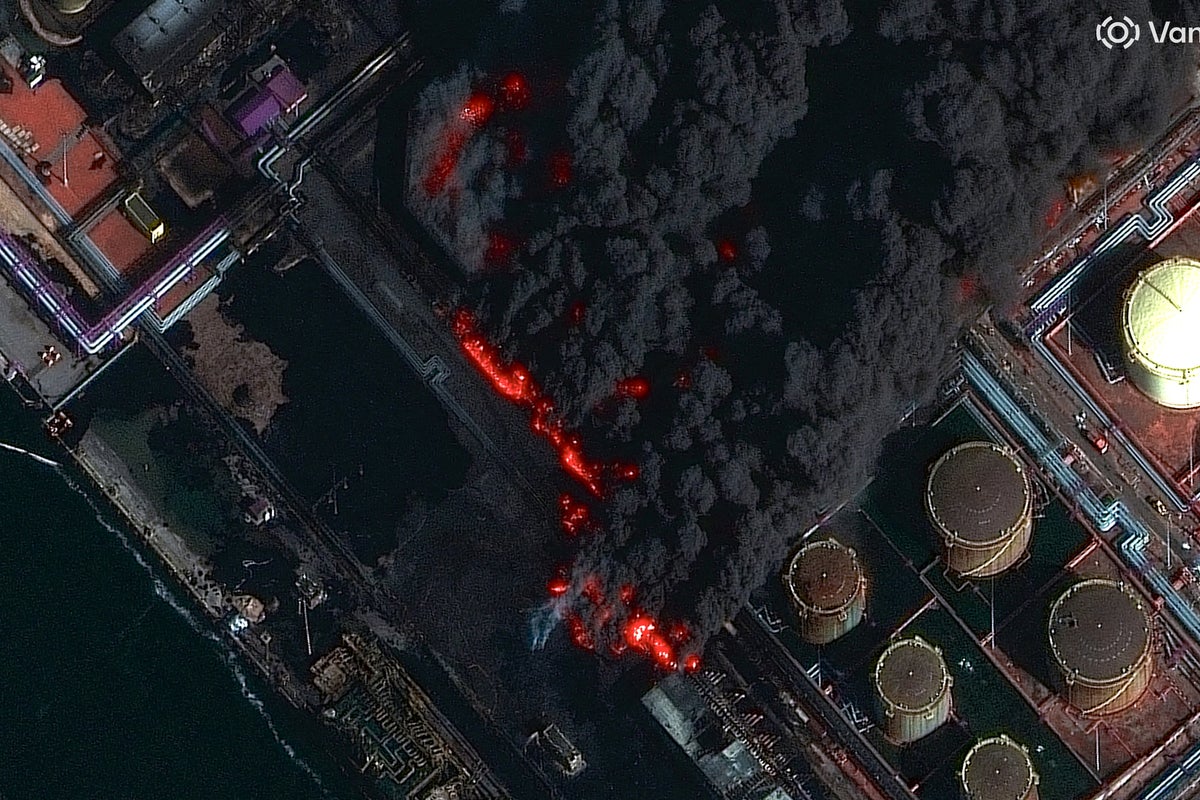
The Kremlin is scrambling to patch a gaping hole in its national security as Ukrainian long-range drones systematically dismantle Russian energy infrastructure. Facing a shortage of professional air defense units currently tied down at the front lines, Moscow has begun mobilizing reservists and private security forces to guard its most sensitive refineries and storage depots. This shift from high-tech military protection to improvised, localized defense squads signals a desperate attempt to insulate the Russian economy from a campaign that has already knocked out significant portions of its refining capacity.
While the Russian Ministry of Defense maintains a facade of total control, the reality on the ground is one of frantic adaptation. The strategy involves creating specialized "anti-drone groups" composed of older reservists and personnel from the Rosgvardia (National Guard). These units are being deployed not with sophisticated S-400 missile systems, but with heavy machine guns, electronic jamming kits, and thermal imaging gear. It is a low-tech solution to a high-precision problem.
The Attrition of the Russian Energy Fortress
For decades, the Russian oil sector was considered an untouchable pillar of the state. That illusion shattered in early 2024. Ukrainian "one-way" attack drones, often costing less than a used sedan, have successfully bypassed traditional radar nets to strike distillation towers thousands of miles from the border. These towers are the "brains" of a refinery. They are difficult to replace and even harder to repair under the weight of Western sanctions that restrict the flow of specialized engineering components.
When a drone hits a primary distillation unit (known as an CDU-6 or similar), the refinery doesn't just flicker; it goes dark for months. Industry data suggests that at various points this year, between 10% and 15% of Russia’s total refining capacity has been offline due to drone-inflicted damage. This isn't just a military headache. It is a direct threat to the Kremlin’s ability to fund its domestic budget and keep fuel prices stable for a population that expects cheap gasoline as a birthright.
The decision to pull reservists into this mix is a move of necessity. The regular army is stretched thin across a 600-mile front. Using a multi-million dollar Pantsir missile to down a $20,000 drone is a losing game of math. By standing up reservist units, Moscow is attempting to create a "human shield" of constant surveillance and manual fire around its industrial heartland.
Behind the Reservist Mobilization
The call-up for refinery defense isn't a traditional surge. It is a targeted recruitment of men with previous technical or security experience. These individuals are often lured with higher pay than standard domestic police work, funded partly by the energy giants themselves—companies like Rosneft and Lukoil. The state has essentially told these corporations that if they want protection, they must help man the battlements.
This "corporatization" of air defense creates a fragmented security environment. You have regular military units, private military contractors, and now these reservist "ad-hoc" squads all trying to coordinate. It rarely works smoothly.
- Communication Gaps: Reservist units often lack the encrypted radio links used by the Air Force, leading to potential friendly-fire incidents.
- Equipment Shortfalls: While the Kremlin promises thermal optics, many units are seen in field reports using Soviet-era ZU-23-2 anti-aircraft guns bolted to the back of civilian trucks.
- Response Time: Drones flying at low altitudes utilize terrain masking. By the time a reservist on a catwalk sees the silhouette, it is often too late to engage effectively.
The effectiveness of these units is further hampered by the sheer geography of Russia. There are over 30 major refineries and hundreds of smaller depots and pumping stations scattered across the European portion of the country. To protect them all with 24/7 manual watch requires a manpower pool that rivals the size of the actual invading army.
The Electronic Warfare Mirage
Moscow has long boasted about its electronic warfare (EW) capabilities, claiming the ability to "blind" any incoming threat. On paper, Russia should be able to jam the GPS signals of any drone approaching a facility. In practice, the Ukrainian side has adapted by using inertial navigation and "optical flow" technology—essentially teaching drones to recognize the ground and landmarks below them without needing a satellite signal.
When the signals go dead, the EW systems become expensive paperweights. This is where the reservists come in. Their job is to act as the last line of kinetic defense. If the jamming fails, they are expected to fill the sky with lead. However, hitting a small, fast-moving object at night with a machine gun is an exercise in futility for anyone without extensive, recent training.
The reservists are being asked to do a job that professional soldiers struggle with. They are stationed on top of highly flammable fuel tanks, staring into the dark, waiting for a buzz that might never come—or might be the last thing they hear.
Economic Blowback and Global Markets
The international community watches these strikes not for their tactical brilliance, but for their impact on the global barrel price. Washington has reportedly expressed concern over the strikes, fearing a spike in global energy costs. Yet, the strikes continue because they represent Ukraine’s most effective asymmetric lever.
Russia’s reliance on reservists highlights a critical weakness: the inability to protect the rear while sustaining the front. Every reservist pulled to guard a refinery in Samara is a man not available for the logistics hubs in Rostov or the trenches in Donetsk.
The financial burden is also mounting. Hiring thousands of guards, purchasing thousands of "drone nets"—massive steel meshes draped over towers—and installing localized jamming towers costs billions of rubles. These are costs the oil companies must eat, further squeezing the profit margins that the Russian state taxes to keep its war chest full.
Why Nets and Guns Aren't Enough
The most visible sign of the new defense reality is the "tsar-net." In several leaked photos from facilities in Ufa and Yaroslavl, massive steel cages have been erected around critical infrastructure. It looks like something out of a medieval siege. While these nets can stop a direct impact from a small drone, they do little against the fire that follows.
A drone doesn't need to destroy the entire refinery; it just needs to start a fire in the right place. The reservist units, tasked with firefighting as much as defense, are often ill-equipped for industrial infernos.
The fundamental flaw in the reservist strategy is that it is reactive. It assumes the threat will stay the same. But the drones are getting faster, quieter, and more autonomous. A man with a machine gun is a 20th-century solution to a 21st-century problem. If the drones start arriving in swarms—ten or twenty at a time—a handful of reservists on a rooftop will be overwhelmed in seconds.
The Shadow of Internal Stability
There is a deeper political risk here that the Kremlin is ignoring. By deploying reservists to protect "oligarch assets," the state risks breeding resentment among the ranks. A soldier in a cold, industrial zone guarding a billionaire’s refinery might start to wonder why he is there instead of at home, especially as the "special operation" drags into its third year.
Moscow is betting that the presence of these guards will act as a psychological deterrent. It wants the drone operators to think twice. It wants the refinery workers to feel safe enough to keep showing up for their shifts. But confidence is a fragile thing. When the next refinery goes up in a plume of black smoke, the sight of a few reservists with old rifles won't provide much comfort.
The military-industrial complex of Russia is currently a snake eating its own tail. It needs the oil to fuel the tanks, but it needs the tanks to protect the oil. By pulling men from the reserve pools to stand on rooftops, the Kremlin has admitted that its sophisticated air defense network is a sieve. This isn't a show of strength; it is a confession of vulnerability.
The "oil fortress" is being dismantled, one distillation tower at a time, and the men on the rooftops are simply witnesses to the decline. If the current rate of successful strikes continues, Russia will be forced to choose between exporting crude and fueling its own military. No amount of reservist mobilization can fix the structural reality of a high-tech war being fought against a low-tech defense.
The shift toward localized, manual defense is a pivot toward a permanent state of industrial siege. It confirms that the Russian heartland is no longer a safe harbor, and the energy sector—the very lifeblood of the regime—is now a front-line combat zone.
The next time a drone enters the airspace of an oblast like Lipetsk or Ryazan, the response won't be a sophisticated interceptor. It will be a middle-aged man with a heavy machine gun, squinting into the gray sky, hoping his aim is better than the software guiding the explosive toward his feet.