Russian Chief of the General Staff Valery Gerasimov announced this week that Moscow’s forces have seized 12 settlements across eastern and southern Ukraine in the first half of March. The declaration, delivered during an unannounced visit to frontline command posts, aims to project a narrative of unstoppable momentum ahead of rumored spring offensives. However, a granular look at the map reveals a different reality. Most of these "settlements" are tiny, depopulated rural hamlets measuring less than two square kilometers, and the cost of their acquisition has been staggering in both manpower and equipment.
While Gerasimov touts these gains as a "general advance," independent satellite imagery and geolocated footage tell a story of a meat-grinder offensive. The Russian military is currently trading thousands of lives for single-digit kilometers of scorched earth. This strategy is not about traditional territorial conquest; it is a psychological operation designed to fracture Western resolve and influence the nascent peace talks involving the Trump administration.
The Geography of Minimal Gains
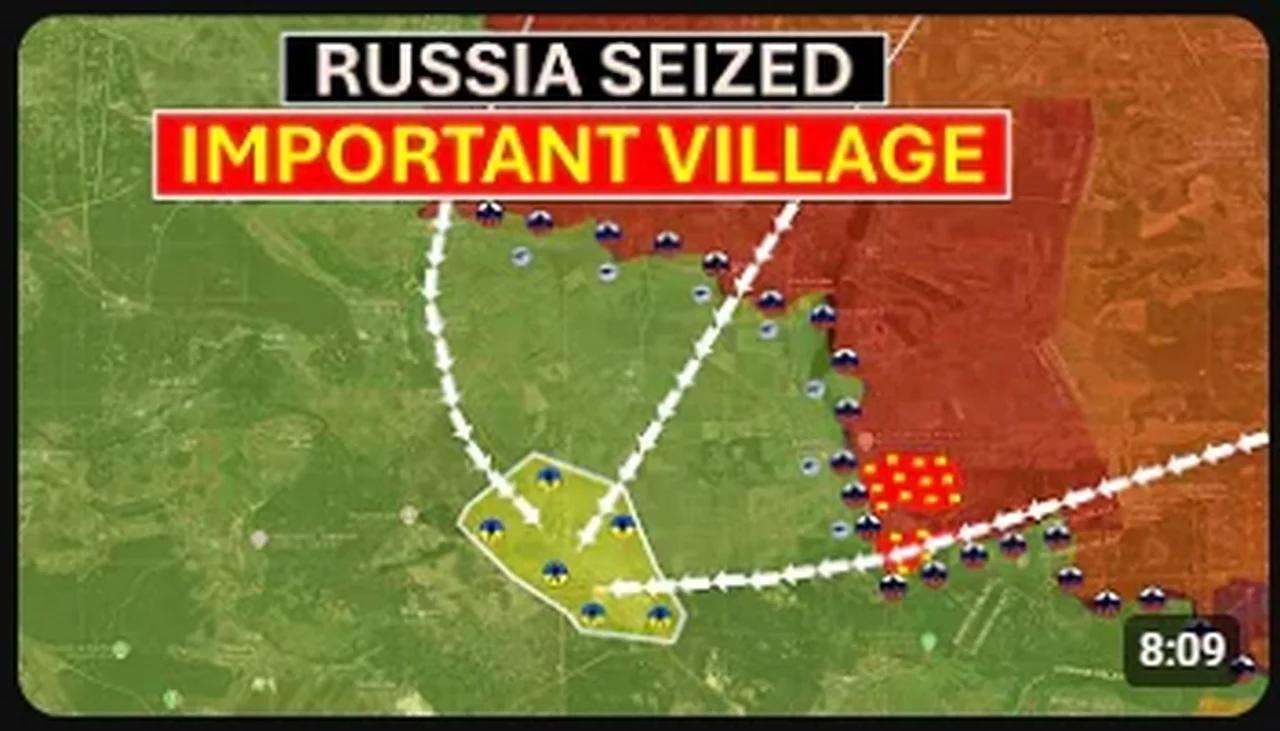
The settlements mentioned, including Popivka and Pokrovka near the Sumy border and Hryshyne in the Pokrovsk direction, do not represent a breakthrough of the Ukrainian main defensive lines. Instead, they are largely part of a "grey zone" where control shifts weekly. For instance, while Russian forces claimed Hryshyne, Ukrainian units continue to conduct "search and strike" operations within the central part of the village.
Moscow is currently focused on the "Fortress Belt" in Donetsk. This is a heavily fortified line of cities including Sloviansk, Kramatorsk, and Druzhkivka that Ukraine has spent over a decade reinforcing. Despite Gerasimov’s claim that troops are "actively moving towards Sloviansk," they remain stalled roughly 15 kilometers from the city outskirts.
The pace of the Russian advance remains glacial. Analysis of battlefield data shows Russian forces are moving at an average rate of 15 to 70 meters per day in their most active sectors. At this speed, seizing the remainder of the Donetsk Oblast—a stated Kremlin goal—would take until late 2027.
The Starlink Factor and the Tech Gap
One of the most significant, yet overlooked, factors in the current frontline stalemate is the recent shift in electronic warfare and communication. On February 1, 2026, a major disruption in Starlink satellite service significantly impacted Russian command and control (C2) in the southern sectors.
Russian units had increasingly relied on black-market Starlink terminals to coordinate drone strikes and real-time artillery adjustments. With that connection severed, Russian commanders have been forced to resort to desperate measures. In Myrnohrad, Russian units were spotted mounting makeshift antennas and communications repeaters on the roofs of high-rise buildings to compensate for the loss of satellite data.
This technological regression has made Russian "meat assaults" even more chaotic. Ukrainian drone operators in the Hulyaipole direction reported that Russian infantry often wander into kill zones without any real-time situational awareness, led by officers who are often 10 to 20 kilometers behind the actual line of contact.
The High Price of 500 Meters
The human toll of these minor territorial acquisitions is unprecedented in modern warfare. Estimates from Western intelligence and independent monitoring groups suggest Russian casualties reached nearly 400,000 in 2025 alone. To maintain the current "general advance," Moscow is funneling minimally trained recruits into the front lines.
The interval between a recruit signing a contract and participating in a ground assault has shrunk to less than four death-defying weeks. These soldiers are often sent in "disposable" strike groups to identify Ukrainian firing positions by drawing fire—essentially acting as human bait for artillery.
Captured Territory Statistics
| Metric | 2025 Total | March 2026 (First 2 Weeks) |
|---|---|---|
| Settlements Claimed | ~150 | 12 |
| Total Area Gained | 1,993 sq miles | ~30 sq miles |
| Average Daily Advance | 45 meters | 35 meters |
| Estimated Casualties | 400,000+ | 18,000 (est.) |
The Diplomacy of Attrition
Gerasimov’s timing is surgical. By announcing these 12 "captures" now, the Kremlin is attempting to build a foundation for its "theory of victory." This theory posits that Russia does not need a decisive military breakthrough; it only needs to outlast the West's patience.
During a March 9 call with Donald Trump, Vladimir Putin reportedly characterized these advances as proof that Ukraine should accept a negotiated settlement on Russian terms. These terms include the total cession of the Donetsk, Luhansk, Zaporizhzhia, and Kherson regions—territories Russia claims but does not fully control.
Ukraine, meanwhile, is shifting its strategy toward a "strike-and-hold" model. While Russia focuses on seizing small villages, Kyiv is prioritizing the destruction of Russian logistics and oil infrastructure. The fire at the Tikhoretsk oil pumping station in Krasnodar Krai this week is a prime example. By degrading the Russian economy and its ability to refine fuel, Ukraine aims to make the "general advance" logistically impossible to sustain through the summer of 2026.
Beyond the Headlines
The map of Ukraine has become a mosaic of bloody, incremental shifts. A settlement like Sopych might appear on a Russian MOD briefing as a victory, but to a military analyst, it represents a village of 19 civilians and a few ruined barns. The "12 settlements" narrative is a carefully constructed image of progress intended for a global audience that lacks the context of the geography involved.
The reality is a war of attrition where the frontline has barely moved 1% of the total country in the last twelve months. Russia is spending its future to buy a few more meters of dirt, betting that the world will tire of the cost before Moscow runs out of men to send into the fire.
Ukraine’s ability to hold the "Fortress Belt" remains the true barometer of the conflict. Until those cities fall, the seizure of a dozen rural hamlets is nothing more than a statistical footnote in a war that continues to defy the Kremlin’s expectations.
Would you like me to analyze the specific geolocated data for the settlements Gerasimov claimed to capture near Pokrovsk?