Vladimir Putin just raised the stakes in the freezing waters of the High North. It was not a routine patrol. A heavy Russian Tupolev Tu-142 Bear-F maritime spy plane buzzed low over the Norwegian Sea, screaming toward the UK Carrier Strike Group. Then things got weird. The massive aircraft began dropping tens of active sonar trackers directly into the path of Britain's flagship aircraft carrier, HMS Prince of Wales.
Think about that for a moment. This was not a simple flyby. It was a direct, aggressive act of maritime harassment.
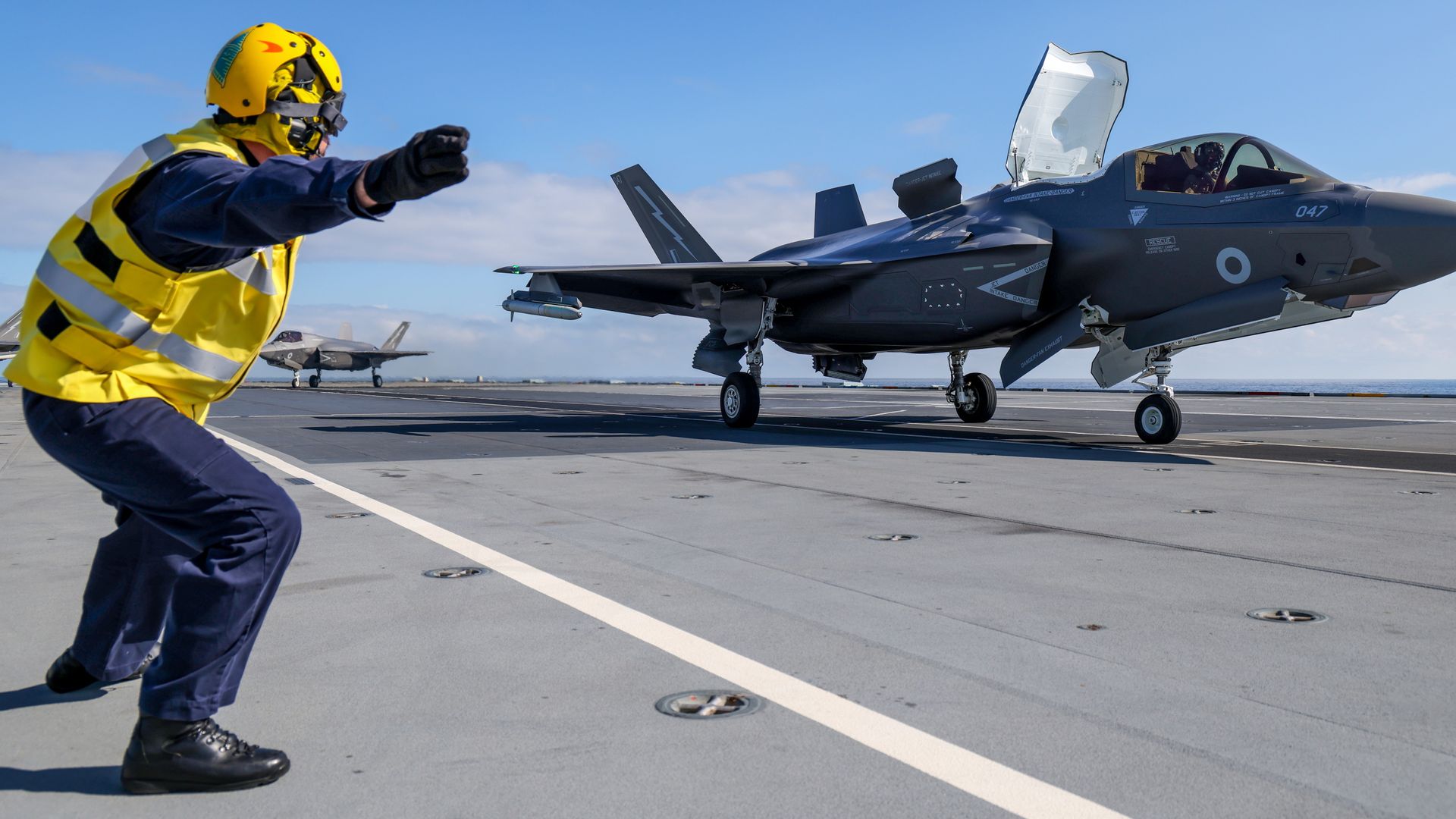
The Royal Navy had to act fast. Two British F-35B stealth fighters instantly scrambled from the flight deck of the carrier, roaring into the gray sky to intercept and escort the Russian intruder away. This tense aerial showdown occurred during Operation Firecrest, a major NATO air defense deployment designed to secure the strategic waters near Iceland and Norway.
The UK Ministry of Defence waited until Monday to drop the news. It has sent shockwaves through international defense circles. Defense Secretary Dan Jarvis did not mince words. He warned that these reckless overflights carry an immediate risk of catastrophic miscalculation and escalation. NATO Secretary General Mark Rutte backed him up, praising the British response while slamming the Kremlin for unsafe and unprofessional behavior.
This incident exposes the brutal reality of modern gray-zone warfare. Russia wants to know exactly how the Royal Navy operates, and they are willing to risk a major international incident to find out.
The High Stakes of Operation Firecrest
To understand why this happened, you have to look at where it happened. The Norwegian Sea is a critical gateway. Military strategists call this region part of the GIUK gap, the maritime choke point between Greenland, Iceland, and the United Kingdom. It is the ultimate playground for underwater hide-and-seek. If Russian submarines want to slip into the Atlantic to threaten Western supply lines or cut transoceanic data cables, they must pass through here.
HMS Prince of Wales was leading a powerful multinational force. The Carrier Strike Group included the Type 45 destroyer HMS Duncan and the support vessel RFA Tidespring, packed with 1,500 elite British personnel. Their mission was clear. They were showing Russia that NATO owns these waters.
Then the Bear-F arrived.
The Tu-142 Bear-F is a relic of the Cold War, but it remains a terrifyingly effective anti-submarine warfare platform. It is loud. It is huge. Its massive contra-rotating propellers can be heard from miles away. When a plane that size flies unnecessarily close at an incredibly low altitude over a multi-billion-pound warship, it is a deliberate provocation. The crew on the flight deck could see the aircraft clearly as it blanketed the ocean with tracking tech.
Why Russia Dropped Tens of Sonobuoys in the Carrier's Path
Why would a Russian plane drop a wall of sonar trackers right in front of an aircraft carrier? These devices are called sonobuoys. They are cylindrical tubes dropped by parachute that float on the surface, dangling sensitive hydrophones deep into the water to listen for acoustic signatures.
Russia was not trying to find HMS Prince of Wales. You do not need sonar to find a 65,000-ton aircraft carrier moving through open water. You can see it from space. You can track it with basic radar.
The Kremlin had a much deeper goal. They wanted to map the entire acoustic footprint of the British Carrier Strike Group. Every ship has a unique sound. The spin of the propellers, the hum of the internal generators, the thrash of the wake. If Russia captures those exact acoustic signatures, their attack submarines can identify, track, and target British warships from hundreds of miles away in a future conflict.
There is another dark possibility. HMS Prince of Wales does not travel alone. Hidden somewhere beneath the waves, a British nuclear-powered attack submarine was almost certainly escorting the carrier group. By dropping a massive grid of sonobuoys directly in the path of the fleet, the Russian pilot was trying to force that British submarine to make a sudden defensive maneuver. Moving quickly creates noise. Noise gives away your position. It was a giant acoustic trap.
British forces tried to contact the Russian plane on international emergency frequencies. The Russian crew went completely silent. They ignored the warnings and kept dropping their trackers.
How the Royal Navy Scrambled F-35B Jets to Fight Back
The response from the bridge of HMS Prince of Wales was immediate. The ship launched two F-35B Lightning fighter jets. These are fifth-generation stealth aircraft, the most capable warplanes on the planet.
The contrast in the sky must have been stunning. On one side, a giant, rumbling Soviet-era turboprop plane. On the other side, two sleek, pitch-black British stealth fighters packing advanced electronic warfare suites and air-to-air missiles.
The F-35B pilots closed the distance rapidly. They intercepted the Bear-F, flying close enough to photograph the sonobuoys dropping from the belly of the aircraft. This was a high-stakes game of chicken. The British pilots had to escort the heavy plane out of the area without firing a shot, while ensuring the Russian pilot knew that any further aggression would be met with lethal force.
The British jets stayed glued to the Russian plane until it turned back toward its bases in northern Russia. It was a textbook intercept. It proved that the Royal Navy can defend its airspace even when operating under extreme pressure in Arctic conditions.
The Dangerous Reality of Military Miscalculation
This reckless overflight is part of a broader, nastier pattern of Russian behavior across Europe. The Kremlin is pushing the envelope everywhere. Just a few months ago, two Russian jets dangerously intercepted a British surveillance aircraft over the Black Sea. In the English Channel, a Russian frigate went so far as to fire warning shots near a civilian yacht.
The timing of this latest stunt is not an accident. It happened right before a crucial NATO summit in Ankara, where Western allies are preparing to pledge an astonishing 70 billion euros in fresh military assistance to Ukraine. Putin wants to signal that he can strike back at NATO assets right on their doorstep.
The real danger here is miscalculation. When heavy military aircraft fly low and close to armed warships without communicating, things can go wrong in a heartbeat. A sudden mechanical failure, a pilot panic, or a misinterpreted radar signal could trigger an accidental exchange of fire. If a British F-35 had collided with that Bear-F, or if the carrier had fired its defensive weapons systems, we would be talking about a direct military conflict between nuclear-armed powers.
This tense encounter shows exactly why the UK is reassessing its defense priorities. Former Defence Secretary John Healey recently walked away from his post, blasting the government for failing to properly fund a massive modernization plan. The current Prime Minister has responded by pledging nearly 400 billion dollars over the next four years, adding an extra 20 billion dollars to shore up defenses by 2030. Intelligence reports suggest that is the exact year Russia might be capable of launching a direct attack on a NATO country.
For anyone sitting comfortably at home, this might feel like a distant geopolitical chess game. It is not. It is happening right now in the freezing waters just off the British coast. The Royal Navy proved it has the teeth to defend itself, but the Kremlin has made it clear that the High North is no longer a zone of peace.
If you want to keep track of how these maritime encounters are reshaping European security, you need to look past the political speeches. Watch the movements of the Carrier Strike Group. Keep an eye on the deployment schedules of the RAF. The next time you hear about an intercept in the Norwegian Sea, remember that it is not just a routine training exercise. It is a frontline defense against a very real, very persistent threat. You can expect to see more British warships heading north in the coming weeks to reinforce these exact waters. Stay informed, watch the news out of the Arctic, and don't take maritime security for granted.