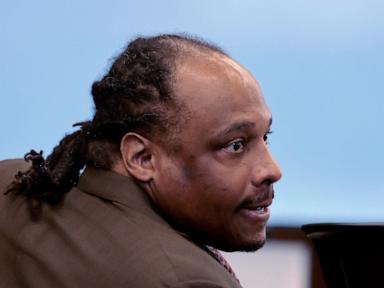
The media checklist for a high-profile rideshare assault case is entirely predictable.
A jury convicts the brother of a prominent politician—specifically, the brother of the Massachusetts Attorney General—for a string of horrific sexual assaults committed while driving for Uber and Lyft. The headlines immediately weaponize the political connection. The public expresses justifiable outrage. Activists demand "stricter vetting," and the tech giants issue a boilerplate press release detailing their "commitment to safety" and their "robust multi-layered screening processes."
It is a comfortable, familiar ritual. It is also entirely useless.
Focusing on the political proximity of the perpetrator or screaming for more stringent background checks misses the fundamental flaw of the gig economy. The institutional failure here is not a vetting glitch. It is a feature of a business model built entirely on plausible deniability, algorithmic isolation, and the systematic erosion of corporate liability.
We are asking the wrong questions because the rideshare platforms have conditioned us to treat systemic structural dangers as isolated HR problems.
The Mirage of the "Perfect" Background Check
When Roman Lubynsky was convicted of raping and assaulting multiple women in Massachusetts, the immediate narrative focused on how a predator managed to slip through the cracks. The lazy consensus insists that if we just dig deeper, run more fingerprints, or look further back into an applicant's history, we can build a fortress around the passenger seat.
This is a mathematical and psychological delusion.
I have spent years analyzing operational risk and corporate liability frameworks. The hard truth that nobody wants to admit is that background checks are a reactive, backward-looking tool. They only flag people who have already been caught.
A clean criminal record is not proof of innocence; it is merely a lack of documentation.
According to criminological data from organizations like the Rape, Abuse & Incest National Network (RAINN), the vast majority of sexual assaults go unreported to law enforcement. A predator operating without a prior record is entirely invisible to even the most rigorous government-standard background check. When gig platforms lean on the phrase "passed our background check" as a shield, they are utilizing a marketing tactic masquerading as a security feature. They are selling a false sense of security that actively lowers a passenger's situational awareness.
The Liability Loophole: The Real Corporate Shield
To understand why rideshare assaults keep happening, you have to look past the drivers and look directly at the terms of service.
Uber and Lyft do not view themselves as transportation companies. In the eyes of their legal teams, they are merely software platforms—digital matchmakers connecting independent third-party contractors with willing riders. This classification is not just about avoiding healthcare costs or payroll taxes; it is the ultimate shield against vicarious liability.
If an employee of a traditional taxi company or a corporate shuttle service assaults a passenger during a shift, the employer can be held directly liable under the legal doctrine of respondeat superior (let the master answer). The company faces devastating financial penalties, which forces them to invest heavily in physical infrastructure, localized supervision, and actual managerial oversight.
Rideshare companies successfully engineered their way out of this responsibility.
By classifying drivers as independent contractors, the platforms created a legal firebreak between their multi-billion-dollar valuations and the horrific actions occurring inside the vehicles. When a driver commits a crime, the platform's immediate legal posture is to isolate the driver as a "bad apple" who violated the terms of service, effectively severing the company from systemic blame.
The Danger of Algorithmic Management
In a traditional transit environment, human supervisors observe behavioral red flags. They notice if a driver shows up agitated, smells of alcohol, or exhibits erratic behavior.
The gig economy replaced human oversight with an algorithm.
An algorithm cannot read body language. It cannot smell a driver's breath. It cannot detect predatory intent. It monitors metrics: acceptance rates, completion times, and a fluctuating star rating. This digital isolation creates a environment where a driver can operate for hours in a state of psychological detachment or predatory escalation, completely unmonitored by any human being.
The platform's safety features are almost entirely shifted onto the victim. The "Share My Trip" button, the in-app emergency button, the GPS tracking—these are not preventative measures. They are digital breadcrumbs designed to be used while or after a crime occurs. The platform effectively forces the passenger to act as their own risk manager, supervisor, and emergency dispatcher, all while charging them a premium for the illusion of a safe ride home.
Dismantling the "People Also Ask" Delusions
When these tragedies hit the news cycle, the public consensus turns to a few specific, flawed premises. Let's dismantle them brutally.
"Why don't rideshare companies use fingerprint-based background checks everywhere?"
Because it wouldn't solve the problem, and it creates a false sense of absolute safety. While biometrics like the FBI's IAFIS database are more accurate at verifying identity than name-based checks, they still rely entirely on past convictions. A predator with no prior arrests will pass a fingerprint check just as easily as a name check. Championing fingerprints as a silver bullet is a distraction promoted by legacy taxi lobbies to stall tech platforms, not a comprehensive solution to real-time passenger vulnerability.
"Can't we just mandate continuous real-time monitoring of all rides?"
Imagine a scenario where an AI constantly monitors the audio and video of millions of rides simultaneously. Even if the massive privacy violations were ignored, the technical reality is that reactive monitoring does not stop a fast-moving physical assault. By the time an algorithm flags an anomaly in a voice inflection or a sudden route deviation, the damage is already done. Technology is an exceptional recording device, but a terrible physical guardian.
"Are traditional taxis inherently safer than Uber or Lyft?"
Not necessarily because of the individuals driving them, but because of the legal framework surrounding them. A taxi company is heavily incentivized to monitor its fleet because its corporate survival depends on avoiding massive liability lawsuits. The safety differential isn't about the moral superiority of cab drivers; it's about economics. When a company is legally exposed, it behaves differently than a software platform shielded by independent contractor loopholes.
Actionable Survival in an Unvetted World
If you want to stay safe, you must stop trusting the app's branding. You need to treat every rideshare vehicle exactly what it is: an unmonitored, private vehicle driven by a complete stranger who is managed by a piece of software in Silicon Valley.
- Override the App's Matching Logic: Never enter a vehicle until the driver verifies your name first. Do not ask, "Are you here for [Your Name]?" Force them to say, "I'm looking for [Your Name]." If they cannot give you your name, do not get in.
- Establish Physical Control: Before sitting down, check the child locks on the rear doors. Open the door and look at the edge of the inner door panel to ensure the mechanical switch hasn't been engaged to trap you inside. If you cannot verify that you can exit the vehicle at will from the back seat, sit in the front or cancel the ride.
- Create External Accountability: Do not rely on the in-app trip sharing feature, which keeps the data within the platform's ecosystem. Make a visible, audible phone call to a friend or family member the moment you enter the vehicle. State the driver's name, the license plate number, and your exact route out loud. Predators look for isolated, compliant targets; breaking that isolation immediately changes the risk profile.
Stop waiting for the tech sector to engineer a moral driver base, and stop believing that a politician's family tree has anything to do with structural corporate negligence. The platforms will continue to optimize for volume, speed, and liability insulation.
Your safety is entirely your own responsibility. Act like it.