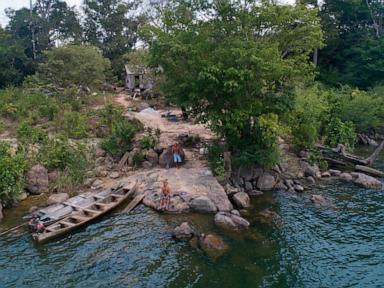
The operational viability of a Tier-1 asset in emerging markets is fundamentally determined by regulatory friction rather than resource grade or extraction mechanics. The ongoing multi-decade legal standoff over Belo Sun Mining Corporation's Volta Grande Gold Project in Pará, Brazil, serves as an empirical model for how sovereign regulatory frameworks, sub-national jurisdictional arbitrage, and international statutory compliance can permanently incapacitate a capital project. Boasting proven and probable mineral reserves of 3.8 million ounces of gold at an average reserve grade of 1.02 grams per metric ton ($g/t$), the Volta Grande project remains paralyzed despite its strong asset economics, including an estimated post-tax Internal Rate of Return ($IRR$) of 26% at a conservative baseline gold valuation.
This analytical breakdown dissects the structural friction points that have neutralized Volta Grande's $665 million net present value ($NPV$). The core failure lies in the miscalculation of the Regulatory Friction Cost Function, which dictates that structural delays scale exponentially when a project resides at the critical intersection of federal indigenous protections, regional environmental licensing, and cumulative macroeconomic disruption.
The Jurisdictional Arbitrage Conflict
The primary structural bottleneck impeding the Volta Grande project is the institutional conflict over licensing authority. The project’s licensing trajectory has historically relied on the Pará State Secretariat for Environment and Sustainability (SEMAS) rather than the Brazilian Institute of Environment and Renewable Natural Resources (IBAMA), which functions as the federal environmental regulator.
This structural path selection created an immediate systemic vulnerability, quantified through two distinct legal and geographic realities:
- The Proximity Metric: The planned open-pit mine sits approximately 10 kilometers from the Belo Monte hydroelectric dam facility, a federal mega-infrastructure asset that has already fundamentally altered the hydrological and social equilibrium of the Xingu River basin.
- Territorial Overlap: The planned operations of the mine encompass an extensive 1,735 square kilometers. The footprint of this perimeter directly influences federal land settlement projects and demarcated indigenous territories.
Under Brazilian environmental jurisprudence, when an enterprise's socio-environmental externalities compound existing impacts of a federal project or directly infringe upon federal lands, the administrative authority shifts upstream. The Federal Public Prosecutor's Office (MPF) leveraged this exact principle to launch multiple lawsuits challenging the legitimacy of SEMAS as the primary licensing body.
By executing a state-level strategy to secure an Installation License (Licença de Instalação), the enterprise exposed its capital expenditure to a systemic risk: any state-issued permit remains structurally unstable if federal oversight can successfully argue that its constitutional domain has been bypassed.
Quantifying the Consultation Deficit
The legal mechanics driving the recurring suspension and temporary reinstatement of the Volta Grande project operate as an alternating cycle of judicial actions. The core variable in this process is the execution of Free, Prior, and Informed Consent (FPIC), as codified under International Labour Organization (ILO) Convention No. 169.
[Lower Court: Altamira Federal Court] ──(Maintains Suspension)──> [Incomplete FPIC / Flawed ECI]
                                                                        │
                                                                 (Interim Appeal)
                                                                        ▼
[Appellate Court: TRF-1 Sixth Panel] ◄───(Grants Reinstatement)─────────┘
The Federal Court of Altamira upheld the suspension of the project's Installation License, ruling that the enterprise failed to demonstrate definitive compliance with the two mandatory legal prerequisites:
$$\text{Prerequisites} = {\text{Indigenous Component Study (ECI based on primary data)}, \text{Valid FPIC Consultation}}$$
The analytical breakdown of this deficit reveals a critical gap between administrative boxes checked and the legal durability of those actions.
The Spatial Exclusion Error
The enterprise localized its initial ECI and consultation protocols exclusively within the two closest demarcated indigenous territories. However, independent assessments produced for the Ministry of Indigenous Peoples identified that the socio-environmental impacts extend past these artificial boundaries.
The Xikrin of the Trincheira-Bacajá Indigenous Territory, for instance, were excluded from initial consultation protocols due to an arbitrary 10-kilometer buffer zone standard historically utilized in regional licensing. The MPF successfully argued that this spatial boundary failed to account for downstream fluvial realities, rendering the entire consultation data set legally non-compliant.
Regulatory Volatility and Agency Reversals
In early 2026, the TRF-1 (Federal Regional Court of the 1st Region) via its 6th Panel briefly reinstated the Installation License by granting interim relief. The appellate court ruled that the enterprise had operated in good faith, noting that the National Indigenous Peoples Foundation (FUNAI) had previously validated the administrative steps.
However, FUNAI's internal technical shifts and subsequent pushback demonstrate that administrative approvals are not static milestones. When a regulatory agency reverses its technical position without a formal, highly structured administrative process, it introduces a volatile legal variable that lower courts routinely weaponize to halt project momentum.
Tailings Engineering and Asset Vulnerability
The environmental risk profile of Volta Grande directly correlates with its engineering design. The project requires the construction and long-term maintenance of a massive tailings storage facility designed to hold 35 million cubic meters of mining waste.
The structural hazard of this design is amplified by the chemical profile of the underlying deposit. The extraction matrix contains high concentrations of toxic heavy metals and metalloids:
- Arsenic ($As$) and Antimony ($Sb$): Naturally occurring within the gold-bearing sulfide ore complexes, these elements become highly mobile if oxidized during processing or stored improperly.
- Lead ($Pb$) and Copper ($Cu$): Heavy industrial bioproducts that present long-term bioaccumulation risks within the aquatic trophic levels of the Xingu River.
- Cyanide ($CN^-$): Utilized as the primary lixiviant for gold recovery, requiring absolute containment and rapid destruction circuits prior to waste discharge.
Independent geophysical and environmental models submitted to the courts indicate that a catastrophic failure of the tailings dam would result in high-velocity contaminant transit. Estimates suggest that millions of cubic meters of toxic residue could breach the Xingu River ecosystem, traveling up to 40 kilometers within a two-hour window.
The proximity to the Belo Monte dam creates a compounding hydro-engineering risk. Belo Monte has already structurally altered the river's flow regime, reducing the water volume in the Volta Grande (Big Bend) stretch. Operating a high-volume chemical tailings facility adjacent to a river system that has lost its natural dilution capacity significantly increases the potential severity of any environmental accident. This specific ecological vulnerability elevates the project from a routine local mining dispute into a matter of high national priority.
Strategic Playbook for Sovereign Risk Mitigation
The Volta Grande impasse demonstrates that relying on a checklist-based approach to sovereign environmental compliance introduces structural vulnerabilities into complex asset development. For project developers, institutional funds, and sovereign entities managing high-stake resource plays, navigating this type of institutional landscape requires a proactive framework.
Strategic Action 1: Elevate Jurisdiction to the Highest Authority From Project Inception
Resource developers must avoid sub-national licensing paths when a project's physical footprint or environmental externalities sit within the geographic proximity of federal assets. Opting for state-level licensing to secure faster initial approvals creates a structural vulnerability that opposition litigants can later exploit.
Developers should proactively trigger federal jurisdiction (such as IBAMA in Brazil) at the beginning of the project lifecycle. This aligns the project's legal defense with the highest level of national administrative authority, ensuring that subsequent permits are resilient against jurisdictional challenges.
Strategic Action 2: Replace Geographic Buffers with Hydrological and Trophic Baselines
Relying on arbitrary regulatory distances (such as standard 10-kilometer cutoff zones) to define the scope of indigenous and stakeholder consultations creates a significant legal vulnerability.
The consultation boundary must match the maximum potential extent of a catastrophic event, including downstream contamination models. Baseline socio-environmental studies must evaluate the entire watershed and the migratory patterns of dependent populations. Including these extended communities in the initial FPIC protocols prevents late-stage legal challenges based on procedural exclusion.
Strategic Action 3: Build Dynamic Capital Allocation Models Tied to Compliance Milestones
Corporate valuation models often treat the acquisition of an Installation License as a permanent, binary success metric. In highly contested jurisdictions, an alternative financial approach is required.
[Phase 1 Capital Allocation] ──► [Continuous Legal/Technical Audit]
                                           │
                                  (Friction Detected)
                                           ▼
[De-risk Portfolio / Pause Capex] ◄─── [Adjust Capital Flow]
Capital expenditure schedules must be structured to match ongoing legal and technical audits. If an enterprise treats every regulatory permit as an unassailable asset, it risks stranded capital when lower courts issue unexpected injunctions.
Project financing must remain flexible, preserving capital until the supreme judicial bodies of the host nation have fully resolved all pending challenges to the underlying environmental studies. This protects shareholder equity from being eroded by prolonged legal battles.


