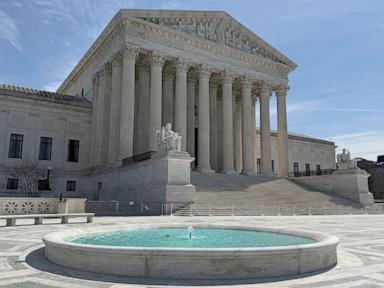
The United States Supreme Court ruling in Louisiana v. Callais (2026) has fundamentally altered the mechanics of congressional map-making by decoupling the historical mandate for majority-minority districts from the "results test" of the Voting Rights Act (VRA). This shift moves redistricting from a race-conscious corrective framework to a race-neutral partisan optimization model. By establishing that Section 2 of the VRA only imposes liability when a state intentionally draws districts to afford minority voters less opportunity—rather than simply failing to maximize their representation—the Court has authorized a new "Cost-Benefit Frontier" for state legislatures (Supreme Court, 2026).
The Three Pillars of the Post-Callais Era
The Callais decision replaces the presumption of racial proportionality with three structural constraints that legislatures will exploit to redraw maps in 2026 and 2028.
1. The Intentionality Threshold
Previously, the "Gingles" preconditions required states to create majority-minority districts if a community was sufficiently compact and numerous. Under the new standard, plaintiffs must prove "discriminatory purpose," a significantly higher evidentiary bar that mirrors the standard for 14th Amendment Equal Protection claims (Louisiana v. Callais, 2026). This shift creates a legal safe harbor for partisan gerrymandering: as long as a legislature can document a partisan objective—which the Court reaffirmed as non-justiciable in Alexander v. South Carolina NAACP—the incidental dilution of minority voting power is legally permissible (Alexander v. South Carolina State Conference of the NAACP, 2024).
2. The Neutrality Mandate for Illustrative Maps
The Court now mandates that plaintiffs challenging a map cannot use race as a criterion when drawing their "illustrative" alternative maps. These alternatives must also meet all of the state’s "legitimate districting objectives," including the protection of incumbents and the preservation of political subdivisions (Louisiana v. Callais, 2026). This creates a procedural bottleneck; it is mathematically difficult to create compact, race-neutral alternative districts that perform as well for minority groups as intentionally drawn majority-minority districts.
3. The Decoupling of Race and Partisanship
In jurisdictions where race and party affiliation are highly correlated (e.g., the American South), the Court has ruled that federal judges must "disentangle" the two. If a legislature claims it "cracked" a district to gain a Republican seat rather than to dilute the Black vote, the court must presume "legislative good faith" unless the plaintiffs rule out all possible political explanations (Alexander v. South Carolina State Conference of the NAACP, 2024).
The 2026-2028 Redistricting Target List
State legislatures are responding to these rulings with a "Dual-Track Strategy": immediate redrawing for 2026 in states with late primaries, and deferred redrawing for 2028 in states where filing deadlines have passed.
| State | Status | Primary Strategic Mechanism |
|---|---|---|
| Louisiana | Active (2026) | Redrawing SB8 to eliminate the second majority-Black district mandated by lower courts (Supreme Court, 2026). |
| Texas | Enacted (2026) | Implementation of 2021 maps after SCOTUS stayed a lower court order finding them to be racial gerrymanders (NCSL, 2026). |
| North Carolina | Enacted (2026) | New maps designed to net a +1 Republican seat survived legal challenges in early 2026 (MultiState, 2026). |
| Mississippi | Proposed (2026) | Special session called to "crack" the 2nd District, distributing Democratic voters into three surrounding Republican districts (Brookings, 2026). |
| Alabama | Under Review | Evaluating the elimination of the second majority-Black district created for the 2024 cycle (Sabato's Crystal Ball, 2026). |
| California | Enacted (2026) | Democratic-led legislature increased seat count to 47; SCOTUS denied a GOP challenge alleging racial gerrymandering (MultiState, 2026). |
The Efficiency Gap and the Competitive Churn
A critical byproduct of the Callais era is the decline of competitive seats. By allowing states to optimize for partisan outcomes without the "drag" of VRA-mandated minority districts, legislatures are maximizing their "Efficiency Gap"—the ratio of wasted votes between parties.
In Mississippi’s 2nd District, the proposed redistribution of 60,000 Democratic voters across the 1st, 3rd, and 4th districts would transform a reliably Democratic seat (60% Black population) into a competitive or "lean Republican" seat (Brookings, 2026). This "cracking" mechanism relies on the fact that minority voters, when dispersed, cannot form a cohesive bloc, while the surrounding Republican districts remain safe because they absorb only enough Democrats to maintain a comfortable margin.
Tactical Bottlenecks: The Purcell Principle and Election Logistics
While the Callais ruling provides the legal authority to redraw, the "Purcell Principle" provides the temporal constraint. This principle discourages federal courts from changing election rules—including maps—too close to an election to avoid voter confusion.
The second limitation is administrative. In Louisiana, Governor Jeff Landry has already delayed primaries to accommodate the 2026 redraw (Supreme Court, 2026). States with early May primaries, such as Ohio or Indiana, face a "Logistical Hard Stop." Redrawing maps at this stage requires re-indexing voter registration files and re-printing ballots, costs that many cash-strapped election boards cannot absorb mid-cycle. Consequently, the most aggressive map shifts are projected for the 2028 cycle, where states like Georgia, Tennessee, and South Carolina can execute "Total System Resets" without the pressure of immediate deadlines.
Strategic Forecast: The 12-Seat Southern Shift
The immediate consequence of the Callais precedent is a projected net shift of 8 to 12 House seats toward the Republican party by the 2028 general election. This is not due to a shift in voter preference, but rather a structural optimization of "cracking" and "packing" now shielded by the Callais intent standard.
The primary strategic recommendation for stakeholders is to pivot from "Results-Based" litigation to "Process-Based" challenges. Since the Supreme Court has effectively immunized partisan redistricting from federal review, future challenges will likely migrate to state courts under state-level Voting Rights Acts or "Free and Equal" election clauses, as seen in the ongoing litigation in Missouri and New York (NCSL, 2026). The era of federal racial proportionality in redistricting has ended; the era of state-level partisan optimization is now fully operational.
References
Alexander v. South Carolina State Conference of the NAACP, 602 U.S. ___ (2024). https://supreme.justia.com/cases/federal/us/602/22-807/
Cited by: 125
Brookings Institution. (2026). Supreme Court decision alters 2026 midterm election outlook. Brookings Articles. https://www.brookings.edu/articles/supreme-court-decision-alters-2026-midterm-election-outlook/
Louisiana v. Callais, No. 24–109 (2026). https://www.supremecourt.gov/opinions/25pdf/24-109_21o3.pdf
MultiState. (2026). State Redistricting Legal Challenges Intensify Ahead of 2026 Elections. MultiState Insider. https://www.multistate.us/insider/2026/3/9/state-redistricting-legal-challenges-intensify-ahead-of-2026-elections
National Conference of State Legislatures [NCSL]. (2026). Changing the Maps: Tracking Mid-Decade Redistricting. Redistricting and Census Resources. https://www.ncsl.org/redistricting-and-census/changing-the-maps-tracking-mid-decade-redistricting
Sabato's Crystal Ball. (2026). A Redistricting Check-in at the Dawn of the Callais Era. University of Virginia Center for Politics. https://centerforpolitics.org/crystalball/a-redistricting-check-in-at-the-dawn-of-the-callais-era/
US Supreme Court weighs decision on redistricting fight
This video provides immediate context on how the Supreme Court's decisions are being implemented in real-time, specifically focusing on the delays in Louisiana's primaries to accommodate the new maps.
http://googleusercontent.com/youtube_content/1