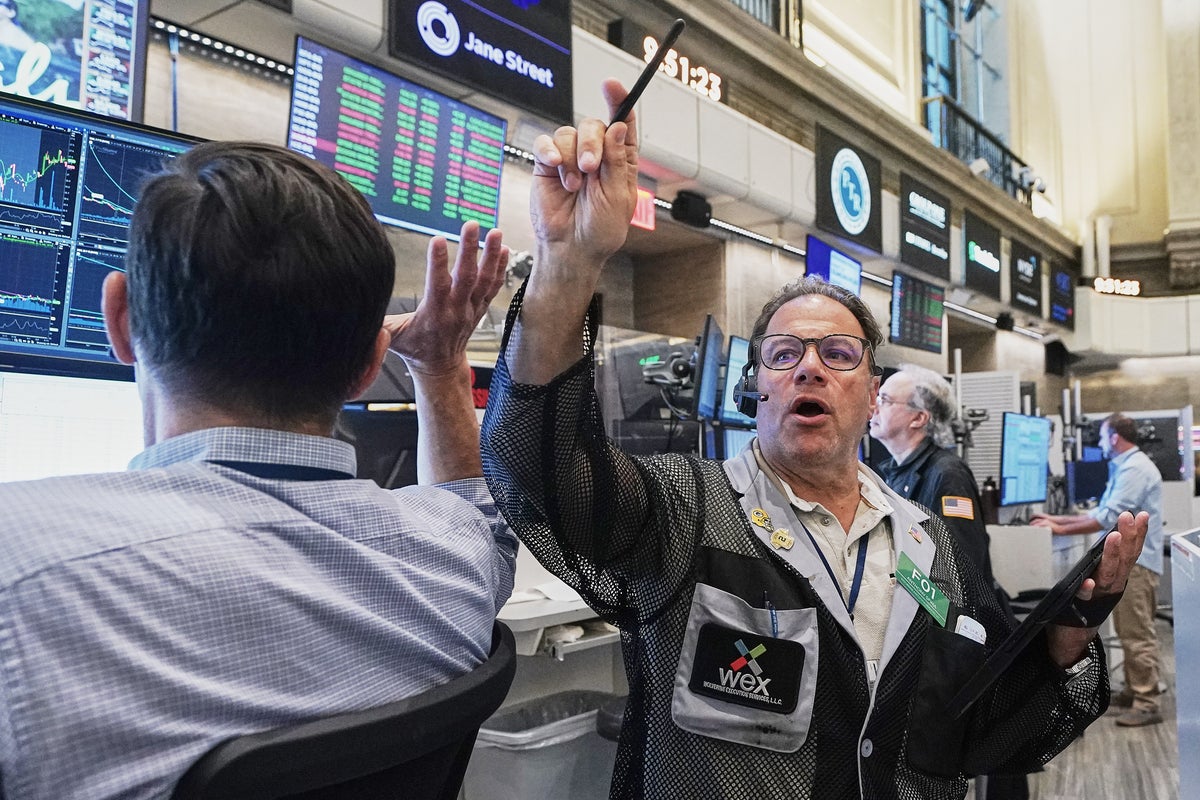
The air in a modern trading floor does not smell like paper or ink anymore. It smells like ozone, stale coffee, and the distinct, metallic tang of collective anxiety. On a normal day, the hum of a thousand servers and the low murmur of macroeconomists blending into phone lines creates a comforting white noise. It sounds like progress. It sounds like money.
But on that Monday, the hum died.
Instead, there was only the rhythmic, syncopated clicking of computer mice. Hundreds of them. It was the sound of people trying to escape a burning room through a single, narrow exit.
To the outside world, the headline was a clean, mathematical abstraction: the Dow Jones Industrial Average dropped 500 points. It was labeled the worst opening act for a new Federal Reserve chairman since 1994. But numbers on a screen do not capture the actual mechanics of a panic. They do not show the knuckles turning white on the edge of a mahogany desk. They do not capture the precise moment a pension fund manager realizes that a decade of carefully calculated projections has just been dismantled by a few sentences uttered at a press podium.
We have spent years treating the markets like a machine—a complex grid of inputs, algorithms, and predictable outputs. We forgot that the entire global financial architecture is built on something far more fragile: human psychology, and the desperate need to believe that someone in Washington has a plan.
The Ghost of 1994
To understand why a 500-point drop feels like an earthquake, you have to look at the architecture of the fear itself. The financial markets are essentially a giant machine designed to price the future. When a new Fed chair steps up to the microphone, the market is not listening to the words. It is listening for the cadence. It is looking for the tiny, almost imperceptible tells that signal whether the central bank will keep feeding the market cheap credit or if it is about to cut off the supply.
The historical reference point dropped by analysts—1994—was not chosen at random. That was the year the Federal Reserve, under Alan Greenspan, caught the entire world off guard by aggressively raising interest rates to head off inflation. It did not just slow the economy; it triggered a massive rout in the bond markets and sent orange county into bankruptcy. It was a year defined by the sudden realization that the safety net had been pulled away.
When the new chairman took the podium on this particular Monday, the ghost of 1994 was already in the room.
Consider a hypothetical investor named Elena. She does not trade tech stocks from her phone, nor does she understand the nuances of quantitative easing. She runs a mid-sized logistics company in Ohio. For Elena, the Fed chair’s words are not an academic exercise. If the Fed signals that it is worried about inflation and intends to hike rates faster than expected, Elena’s cost of borrowing to buy three new delivery trucks doubles by next quarter. Her margins shrink. Her plans to hire five more drivers vanish.
When the market saw the new chair lean into the microphone, it did not see a steady hand. It saw a question mark. And the market hates a question mark more than it hates bad news.
The Anatomy of the Five Hundred
The drop did not happen all at once. It happened in waves, like a tide going out so fast it leaves the ships stranded in the mud.
In the first hour, it was just a tremor. A few large institutional funds quietly trimmed their exposure to equities. They moved their cash into the boring, cold comfort of short-term government bonds. It was a defensive posture, the financial equivalent of checking the locks on the back door.
By noon, the algorithms took over. These are pieces of code programmed to look for momentum. They do not care about the chairman's philosophy, and they do not care about Elena’s logistics business. They only care about math. When the index crossed a specific technical threshold, thousands of automated sell orders triggered simultaneously.
The decline accelerated. The screen turned from a speckled pattern of green and red into a solid, bleeding wall of crimson.
- The First 150 Points: The realization that the era of easy money is ending.
- The Next 200 Points: The machine takes over; algorithmic selling feeds on itself.
- The Final 150 Points: Pure human capitulation. Retail investors log into their accounts, see the damage, and press the button just to make the bleeding stop.
The real tragedy of a market rout is that it forces people to make decisions when they are least equipped to do so. Panic is a terrible filter for data. When the Dow is down 500 points, nobody is thinking about five years from now. They are thinking about tonight. They are thinking about their 401k balances. They are thinking about whether they can afford to retire next year or if they are trapped at their desks for another half-decade.
The Illusion of Control
We love to profile the central bankers. We give them profiles in magazines, analyze their backgrounds, and treat them like high priests of a secular religion. We do this because the alternative is too terrifying to contemplate. The alternative is acknowledging that the global economy is a wild, untamed beast, and the people at the helm are essentially trying to steer a battleship with a broken rudder during a hurricane.
The Fed has two primary levers: interest rates and the money supply. That is it. It is an incredibly blunt instrument to manage an economy of hundreds of millions of people, each making independent decisions based on fear, greed, love, and survival.
When a new chair stumbles during their first major public test, the illusion of control cracks. The market looks behind the curtain and sees not a deity, but a human being trying to read data that is already six weeks out of date.
The 1994 parallel matters because it reminds us of how quickly a policy mistake can ripple through the real world. Back then, the sudden tightening of credit did not just affect Wall Street; it trickled down to every town that needed to issue a municipal bond to build a school or repair a sewer system. It made everything slightly more expensive, slightly harder, and significantly riskier.
The Monday rout was not just about the loss of valuation. It was a collective vote of no confidence in the narrative of a smooth transition. It was the market saying: We do not believe you can land this plane without clipping the trees.
The Echo in the Living Room
The lights stay on late in the office buildings of lower Manhattan on days like this. The janitors push their carts around desks where analysts sit with their heads in their hands, staring at spreadsheets that no longer make sense. The phones are quiet now, but the emails keep coming—automated alerts from clients asking what happened, what the plan is, and whether they should sell everything.
But the real impact of that 500-point drop will not be felt on Wall Street tonight. It will be felt over dinner tables weeks from now.
It will be felt when a small business owner decides not to sign the lease on a second location because the financial climate feels too volatile. It will be felt when a young couple decides to put off buying their first home because mortgage rates are ticking upward in anticipation of the Fed's next move. It will be felt in the quiet, unrecorded decisions to wait, to hold back, and to survive rather than expand.
The numbers will bounce back eventually. They always do. The market will find a bottom, the algorithms will re-calibrate, and the new chairman will learn how to speak in the vague, non-committal code that Wall Street prefers. The red screens will turn green again.
But the memory of the day the safety net frayed remains. You can see it in the way the traders walk out of the building into the gray evening air, pulling their coats tightly against the wind, looking at their phones one last time just to make sure nothing else has slipped while they were looking away.