The air in the Ottawa campaign office doesn't smell like history. It smells like cheap coffee, burnt toast, and the ozone of twenty industrial printers humming at once. Mark, a twenty-four-year-old volunteer with dark circles under his eyes, is currently taping a map of a rural Manitoba riding to a drywall partition. He isn't thinking about the macroeconomics of a G7 nation. He’s thinking about whether the three hundred phone calls he made yesterday will be the difference between a Prime Minister who has to ask for permission and one who can simply act.
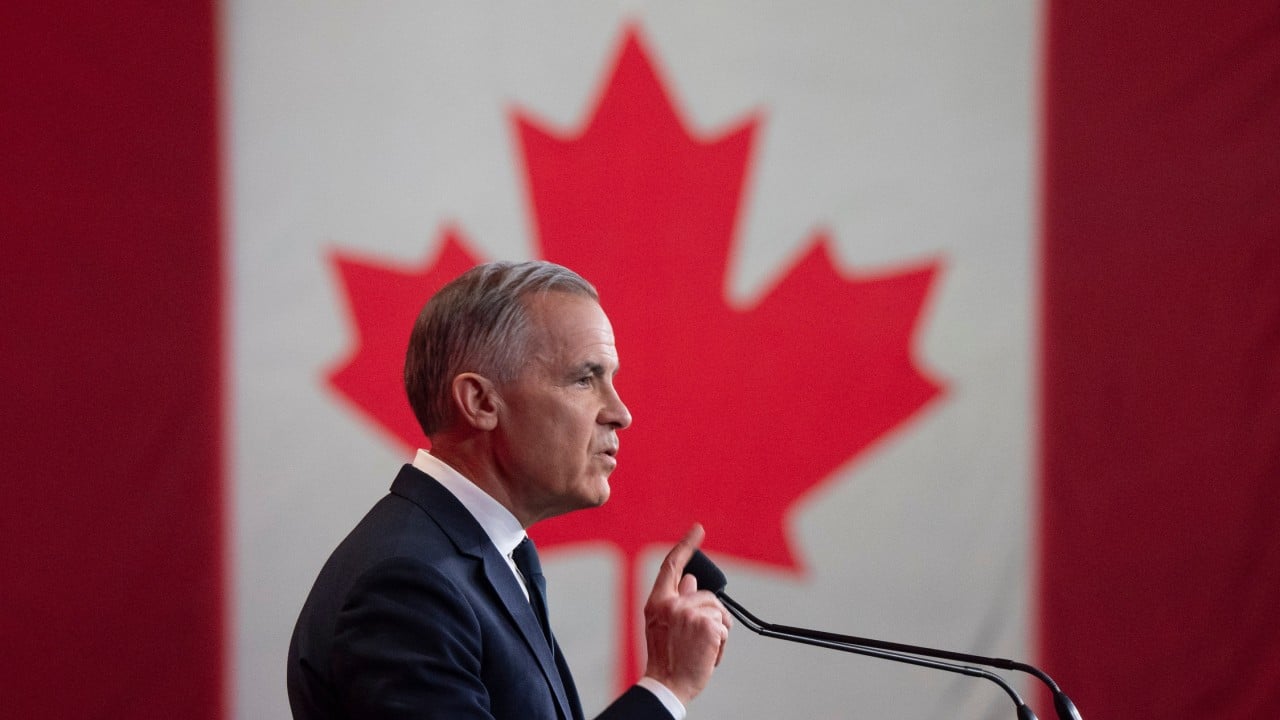
Mark represents the invisible machinery of a shift that is currently vibrating through the Canadian floorboards. For months, the headlines have whispered about Mark Carney’s "stability." They have analyzed his CV—Goldman Sachs, the Bank of Canada, the Bank of England—as if a resume could vote. But as the final tallies from a cluster of high-stakes special elections trickle in, the math has moved past theory.
Canada is standing on the jagged edge of a majority government.
For the uninitiated, a minority government is a slow-motion car crash of compromise. Every bill is a hostage negotiation. Every budget is a plea for relevance. But a majority? That is a different beast entirely. It is the closest thing a democracy has to a four-year elective monarchy. If the current trajectory holds, Carney will no longer be the man navigating the storm; he will be the man who decides where the wind blows.
The Ghost in the Machine
To understand why this matters, you have to look at the grocery store receipt of a woman named Elena in suburban Mississauga. Elena doesn't read the financial post. She does, however, know that the bag of pasta that cost two dollars in 2021 now costs four. She knows that her mortgage renewal feels like a court sentence.
The "Carney Surge" isn't happening because Canadians have suddenly developed a fetish for central banking expertise. It is happening because of a collective, exhausted desire for someone to just fix the plumbing.
When a government teeters on the edge of a majority, the psychology of the voter changes. It shifts from "Who do I like?" to "Who can actually do the job?" Carney has leveraged—if you'll excuse the technicality—a sense of inevitable competence. He is the man in the crisp suit who arrives at the house when the basement is flooding. You don't have to love him. You just need him to know where the shut-off valve is.
The special elections—often dismissed as local skirmishes—have become a national referendum on this very specific brand of technocratic hope. In ridings that were once strongholds of the opposition, the swing hasn't been a violent revolt. It’s been a quiet, resigned hand-off of power.
The Weight of 170 Seats
In the Canadian House of Commons, 170 is the magic number. It is the threshold of absolute power.
Consider the difference between 169 seats and 171. At 169, you are a solicitor. You spend your nights calling opposition leaders, offering bits of policy like treats to a nervous dog. You water down your climate goals to satisfy the left; you trim your spending to appease the right. You are a creature of the middle, gray and blurry.
At 171, the world changes.
The legislative floor becomes a rubber stamp. The "special elections" we are witnessing are the final pieces of a puzzle that, once completed, allows a Prime Minister to bypass the noise. For Carney, a man whose entire career has been defined by the clinical application of data, this is the ultimate laboratory.
But there is a human cost to this kind of efficiency. When a government doesn't have to listen, it often stops trying.
I remember talking to a veteran staffer on the Hill during the last majority era. He described it as a "fortress mentality." When you have the numbers, the windows get smaller. The doors get thicker. You start to believe that your mandate is a shield against criticism rather than a responsibility to the critics. Mark, our volunteer in the campaign office, doesn't see that yet. He just sees the win. He sees the "Majority" ticker on the news and feels a rush of adrenaline. He thinks the win is the end of the story.
It is actually just the prologue.
The Arithmetic of Anxiety
Why now? Why is a country known for its polite moderation suddenly handing the keys to a man who represents the global financial elite?
The answer lies in the sheer scale of the uncertainty. We are living through a period where the old rules of the economy seem to have been tossed into a woodchipper. Artificial intelligence is threatening the white-collar dream. Climate change is no longer a "future" problem; it’s a "my basement is underwater" problem.
In times of chaos, people look for an anchor.
Carney is that anchor. He is the human embodiment of a spreadsheet that actually balances. His rise through these special elections suggests that the Canadian electorate is willing to trade a bit of charismatic warmth for a lot of cold, hard predictability.
However, predictability has a shadow.
The tension in these special elections has been most palpable in the rural districts. These are places where the "Carney brand" feels like a foreign language. To a farmer in Saskatchewan or a logger in British Columbia, a former Governor of the Bank of England doesn't look like a savior. He looks like the man who raised their interest rates from a mahogany desk thousands of miles away.
The divide is no longer just left versus right. It is the "Somewheres" versus the "Anywheres." The people tied to the land versus the people tied to the global flow of capital. By moving toward a majority, Carney is effectively betting that he can manage this divide through growth and policy. He is betting that if he can make the numbers work, the resentment will vanish.
It's a gamble. A massive one.
The Final Count
The sun is setting over the Ottawa River, casting long, orange shadows across the Parliament buildings. Inside the campaign offices, the pizza boxes are empty. The screens are glowing with the final percentages.
If the needle moves just two centimeters to the right, the era of the minority is over.
We often talk about politics as a game of chess, but that’s too dignified. It’s more like a game of Jenga. You pull a piece from a special election in Toronto, you slide one into a suburb in Vancouver, and you pray the whole tower doesn't wobble.
As the results solidify, the reality of a Carney majority moves from a "what if" to a "what now."
The invisible stakes are not found in the legislation or the cabinet appointments. They are found in the trust of people like Elena and the idealism of kids like Mark. They are found in the silent contract between a leader and the led. A majority is a heavy thing to carry. It is a mandate that can either build a cathedral or crush the people beneath its weight.
The printers have finally stopped humming. The maps are fully marked. The math is settled.
Canada has decided that it is tired of the argument. It has chosen a path, for better or worse, and the man at the front of the line is already reaching for the pen. The only question left is what he intends to write with it, now that there is no one left to move his hand.
The silence that follows a victory is the loudest sound in politics. It is the sound of a country holding its breath, waiting to see if the stability they bought was worth the price they paid.