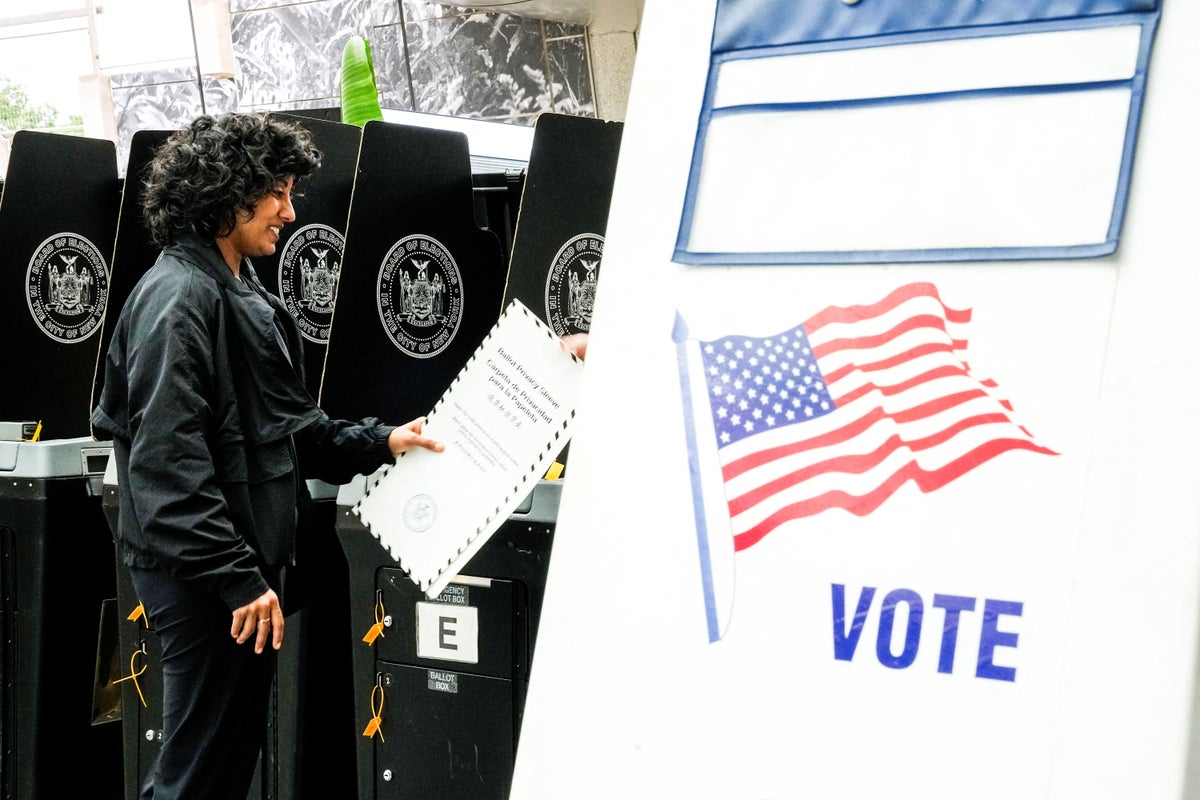
A federal judge permanently blocked the White House from forcing a documentary proof of citizenship requirement onto the American electorate on Wednesday. In a sweeping ruling that completely dismantles the administration's flagship executive action on voting, U.S. District Court Judge Denise Casper ruled that the executive branch has no constitutional authority to rewrite election rules from the Oval Office.
The decision firmly establishes that under Article I of the Constitution, the power to regulate elections belongs exclusively to the states and to Congress. By attempting to bypass the legislature to implement voter registration mandates, the administration committed a fatal separation-of-powers violation that federal courts refused to tolerate.
The White House immediate response exposed the real strategy behind the executive push. Hours after the ruling, the administration canceled the scheduled signing of a major, bipartisan housing affordability bill. It was a blunt political pivot. The executive branch declared it will refuse to sign any subsequent legislation until Congress passes the structural voter restrictions lawmakers have so far resisted.
This dramatic escalation moves the battlefield from federal courtrooms directly to the legislative floor, threatening to paralyze basic governance over a voting mandate that federal judges have repeatedly declared illegal.
The Separation of Powers Trap
The legal collapse of the executive order was entirely predictable to anyone who has tracked federal election law over the last half-century. The executive branch argued that the multi-state lawsuit, led by Democratic state attorneys general, was premature because the proposed citizenship verification mechanisms had not yet been fully implemented. Judge Casper rejected that argument out of hand.
The constitutional text is not ambiguous on this point. The president possesses no inherent authority to set voting qualifications or dictate the specific administrative procedures of state voter registration.
When the administration directed federal agencies to demand birth certificates, passports, or naturalization papers at the point of registration, it ignored the explicit boundaries of the National Voter Registration Act of 1993. That federal statute explicitly permits voters to register using a uniform federal form that relies on an attestation of citizenship signed under penalty of perjury.
To alter that mechanism requires an act of Congress. An executive order cannot override a statutory framework passed by the legislature, no matter how much administrative urgency the White House claims.
The Flawed Mechanics of Mass Databases
Beyond the constitutional overreach, the administration's plan relied on a highly problematic technological engine: the Systematic Alien Verification for Entitlements database. Known as SAVE, this federal immigration repository was originally built for a completely different purpose. It was designed to help local, state, and federal agencies verify that noncitizens are not accessing restricted government benefits. It was never intended to serve as a real-time, comprehensive ledger of the American electorate.
Repurposing this architecture for mass voter roll sweeps created a high margin of error that immediately drew the focus of civil rights litigants. Consider a typical operational failure under this system.
[Federal Immigration Record] -> [Naturalization Event] -> [Lag in SAVE Database Sync]
                                                                   │
[Clean State Voter Roll] <--- [Mismatched Deletion Notice] <───────┘
When a legal immigrant becomes a naturalized U.S. citizen, their status updates across various bureaucratic systems at a glacial pace. If a state runs its voter file against the SAVE database during that data lag, a fully legal, naturalized American citizen is flagged as a noncitizen.
This is not a hypothetical vulnerability. When Texas experimented with expanded database matching, thousands of legitimate, naturalized citizens were wrongly identified as ineligible, forcing eligible voters to scramble to protect their registration right before an election.
A naturalized citizen who took the oath of citizenship a decade ago can still show up as a permanent resident in legacy federal files if agency records fail to sync correctly. The administration’s directive essentially forced automated systems to treat data discrepancies as definitive proof of voter fraud, shifting the burden of proof entirely onto the citizen to clear their name.
The Impasse Over the SAVE Act
Recognizing that executive orders are fragile instruments in federal court, the administration has spent months attempting to force the same policy through the legislative branch via the Safeguard American Voter Eligibility Act. While the bill cleared the Republican-controlled House, it has stalled permanently in the Senate due to the 60-vote threshold required to break a filibuster.
The sudden decision to hold an unrelated, bipartisan housing bill hostage signals a chaotic new phase of the legislative session. By tying routine governance to a polarizing election mandate, the administration is attempting to create an artificial crisis to force Senate leadership to dismantle the legislative filibuster.
It is a high-stakes gamble that ignores reality. There is no indicating that moderate senators are willing to alter institutional rules for a voting mandate that civil rights organizations note would disproportionately disenfranchise low-income voters, military personnel stationed overseas, and married women whose names do not perfectly match their birth certificates.
The Rare Reality of Noncitizen Voting
The central narrative driving this entire political conflict is that noncitizen voting is an active, widespread crisis threatening the integrity of American elections. The actual data collected by nonpartisan audits, state election officials, and academic studies reveals a completely different reality. Voting by noncitizens is exceptionally rare.
| Study Source | Scope of Review | Confirmed Noncitizen Votes |
|---|---|---|
| Brennan Center for Justice | 23.5 million votes reviewed across 42 jurisdictions | 30 suspected cases referred for investigation |
| Georgia Secretary of State | 25-year audit of state voter rolls | 0 instances of a noncitizen successfully casting a ballot |
| Heritage Foundation Database | Decades of election fraud tracking nationwide | Tiny fraction of total registrations resulting in prosecution |
The structural barriers preventing noncitizens from attempting to vote are immense. Under federal law, registering to vote as a noncitizen is a felony conviction that carries severe penalties, including immediate deportation and a permanent lifetime ban from ever obtaining legal citizenship. For an undocumented immigrant or a legal visa holder, the risk-to-reward ratio is entirely lopsided. No rational person risks federal prison and permanent separation from their family to cast a single ballot in a local or federal election.
The current system already uses a highly effective deterrent. Every person who registers to vote using the federal form must sign a clear declaration confirming their citizenship under penalty of law. State agencies routinely cross-reference these registrations with local departments of motor vehicles and vital statistics. The existing guardrails work precisely because they are targeted, localized, and grounded in statutory law rather than sweeping automated mandates run out of Washington.
Wednesday's permanent injunction stops the immediate threat of federal database purges, but the broader political campaign against the administration of local elections remains very active. By pivoting to a legislative legislative blockade, the executive branch has made it clear that the ultimate goal was never just a policy shift. It is about locking the country into a permanent debate over who gets to participate in the democratic process.