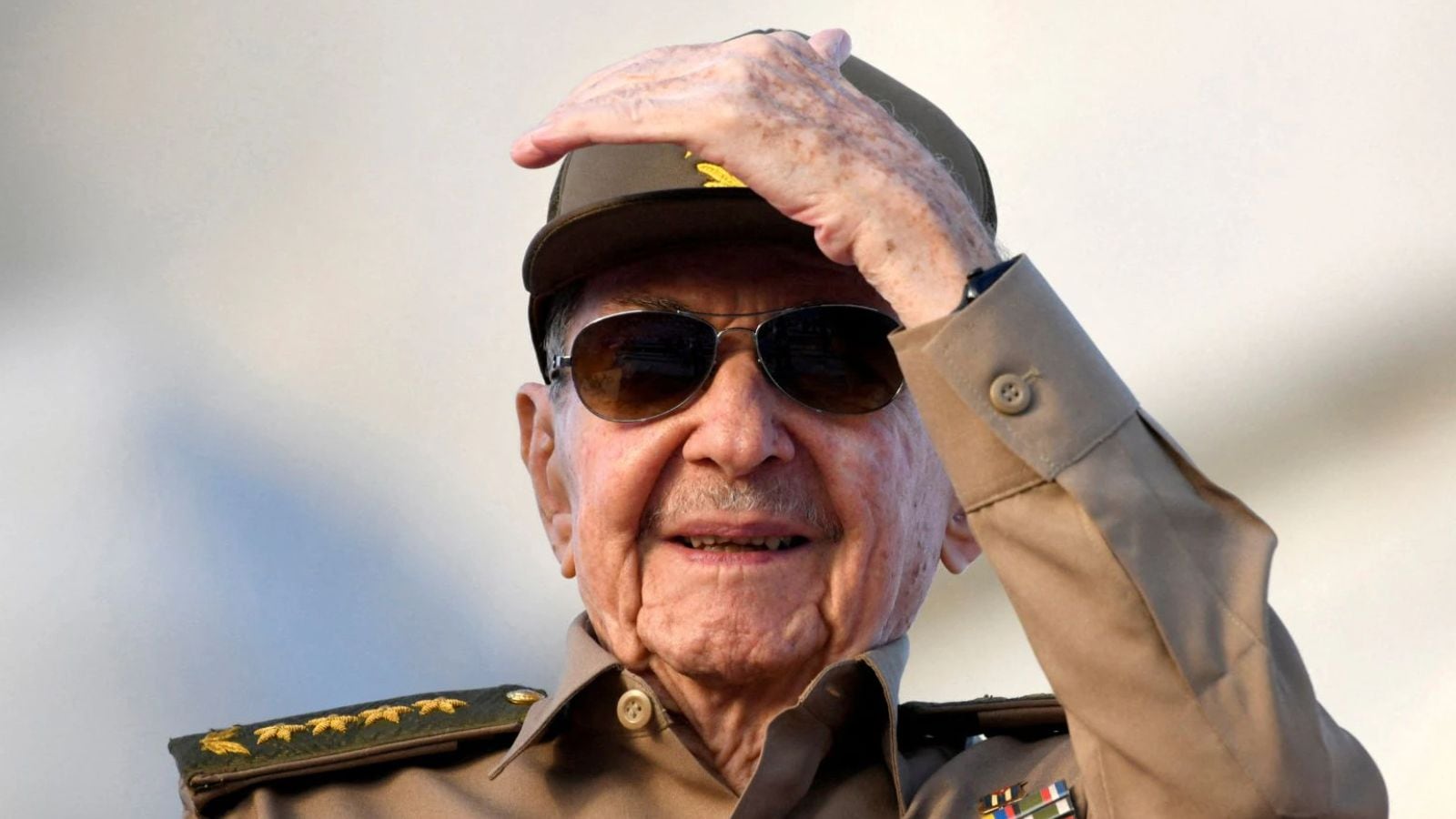
The federal criminal indictment of 94-year-old Raúl Castro by the United States government is not a standard exercise in judicial accountability. Filed in April and unsealed in Miami on May 20, 2026, the charges against the former Cuban president for the 1996 downing of two civilian planes operated by the exile group Brothers to the Rescue mark a sharp geopolitical shift. By charging the ultimate decision-maker of the Cuban regime with murder and conspiracy to kill US nationals, Washington has signaled that its long-standing policy of economic containment has transitioned into an active campaign for regime change.
This legal move does not exist in a vacuum. It follows the January 2026 capture of Venezuelan President Nicolás Maduro by US special forces, which utilized an identical playbook: a US federal indictment serving as the operational and legal justification for direct intervention. With Cuba currently crippled by a strict naval oil blockade that has collapsed its electrical grid and brought daily life to a standstill, the indictment of Castro is the opening salvo of a coordinated strategy to force the dissolution of the 67-year-old communist government.
The Precedent of Caracas
To understand the trajectory of the Cuban crisis, one must look at Venezuela. For years, Washington relied on economic sanctions and diplomatic isolation to weaken the Maduro government. That approach changed when federal prosecutors unsealed drug trafficking indictments against the Venezuelan leadership, creating the domestic and international legal framework required to authorize a high-stakes military extraction.
The indictment of Raúl Castro uses a parallel mechanism, substituting narcoterrorism charges with four counts of first-degree murder. Acting Attorney General Todd Blanche made the administration's stance clear, stating that the indictment is not symbolic and that Washington expects Castro to face trial. Because Cuba has no extradition treaty with the United States and will never voluntarily hand over the co-founder of its revolution, the indictment serves as a formal declaration that the US views the Cuban leadership as fugitives from justice.
This legal status changes how Washington can interact with Havana. It effectively closes the door on conventional diplomatic negotiations and provides a permanent justification for aggressive interdiction, up to and including targeted operations or a tightening naval blockade.
The Economic Stranglehold and GAESA
The timing of the indictment coincides with the worst economic and humanitarian crisis the island has faced since the collapse of the Soviet Union. The US naval oil blockade has successfully cut off petroleum shipments from Venezuela, Cuba’s primary energy supplier. On May 13, 2026, Havana formally acknowledged that its reserves of oil and diesel were entirely depleted.
The resulting rolling blackouts have paralyzed infrastructure, shuttered schools, and forced hospitals to suspend all non-emergency surgeries. Public protests have intensified across Havana and other major provinces. Washington is leveraging this internal instability to target the true center of power in Cuba: Grupo de Administración Empresarial S.A. (GAESA).
+--------------------------------------------------------------+
|                 CUBA'S DUAL POWER STRUCTURE                  |
+--------------------------------------------------------------+
|                                                              |
|   [ Political Front ]             [ Financial Core ]          |
|    President Díaz-Canel            GAESA (Military Conglomerate) |
|    • Public administration         • Controls 70% of economy  |
|    • Diplomatic responses          • Tourism, retail, ports   |
|    • Lacks financial leverage      • Funds security apparatus |
|                                                              |
+--------------------------------------------------------------+
GAESA, a massive military-run conglomerate, controls roughly 70 percent of the Cuban economy, including the lucrative tourism sector, retail networks, and shipping ports. While Miguel Díaz-Canel serves as the civilian president of Cuba, the military apparatus established under Raúl Castro holds the financial keys to the state. The US strategy is designed to isolate GAESA, forcing the military leadership to choose between defending an impoverished, non-viable political regime or cutting a deal to protect their corporate assets.
Recent sanctions imposed on Canadian mining giant Sherritt International, which forced the multinational to sever its long-standing joint ventures on the island, demonstrate that Washington is systematically dismantling Cuba's remaining lifelines to global capital.
The Three Scenarios for Havana
The pressure campaign leaves the Cuban regime with three distinct paths, each carrying severe risks for the stability of the region.
The Venezuelan Model
Havana may choose to emulate the defensive posture long maintained by Caracas prior to 2026. This strategy relies on an absolute refusal to negotiate, accompanied by an internal crackdown on dissidents and protesters. President Díaz-Canel has already labeled the US indictment a political maneuver devoid of legal foundation, signaling an intent to circle the wagons.
However, Cuba lacks the domestic resource base that Venezuela used to sustain itself for a decade. Without oil, domestic agricultural production, or access to foreign credit, an unyielding stance risks triggering a total societal collapse or an uncontrollable mass migration event toward the Florida straits.
The Military Palace Coup
A second path involves a fracturing within the Revolutionary Armed Forces (FAR). The indictment names five other military figures alongside Castro, emphasizing that the entire chain of command is vulnerable to future prosecution or asset seizures.
As the economic crisis deepens and the civilian population grows more desperate, younger, reform-minded elements within the officer corps may view the aging historic leadership as an existential liability. A controlled transition, where the military sidelining the hardliners in exchange for partial sanctions relief and a transition to a managed, market-oriented economy, remains a distinct possibility.
Direct Intervention
The most volatile scenario involves direct US military action. Following the announcement of the indictment, the US Navy confirmed that the USS Nimitz Carrier Strike Group had entered the southern Caribbean Sea. Concurrently, US intelligence officials leaked reports indicating that Cuba had recently acquired several hundred long-range drones, framing the island as an active national security threat to the American mainland.
If the naval blockade triggers widespread civil unrest and a violent crackdowns by Cuban state security, Washington has positioned the necessary assets to execute a rapid intervention under the guise of a humanitarian mission or a targeted arrest operation.
The Limits of Symbolic Justice
While the indictment satisfies a decades-long demand for justice within the Cuban-American exile community in South Florida, the geopolitical reality is fraught with complications. The 1996 shootdown of the Brothers to the Rescue aircraft was a watershed moment that solidified the Helms-Burton Act into law, but resurrecting it three decades later is a pragmatic political tool rather than a sudden breakthrough in investigative law enforcement.
The critical variable is whether the Cuban population, exhausted by chronic shortages of food, medicine, and power, will see the indictment as a catalyst for internal revolt or an act of foreign aggression that triggers a nationalist defense of the state. By deploying the indictment playbook a second time, Washington has staked its regional credibility on a rapid capitulation in Havana. If the regime holds, the administration faces the prospect of managing a collapsed state just 90 miles from the coast of Florida, with a population that has nothing left to lose.