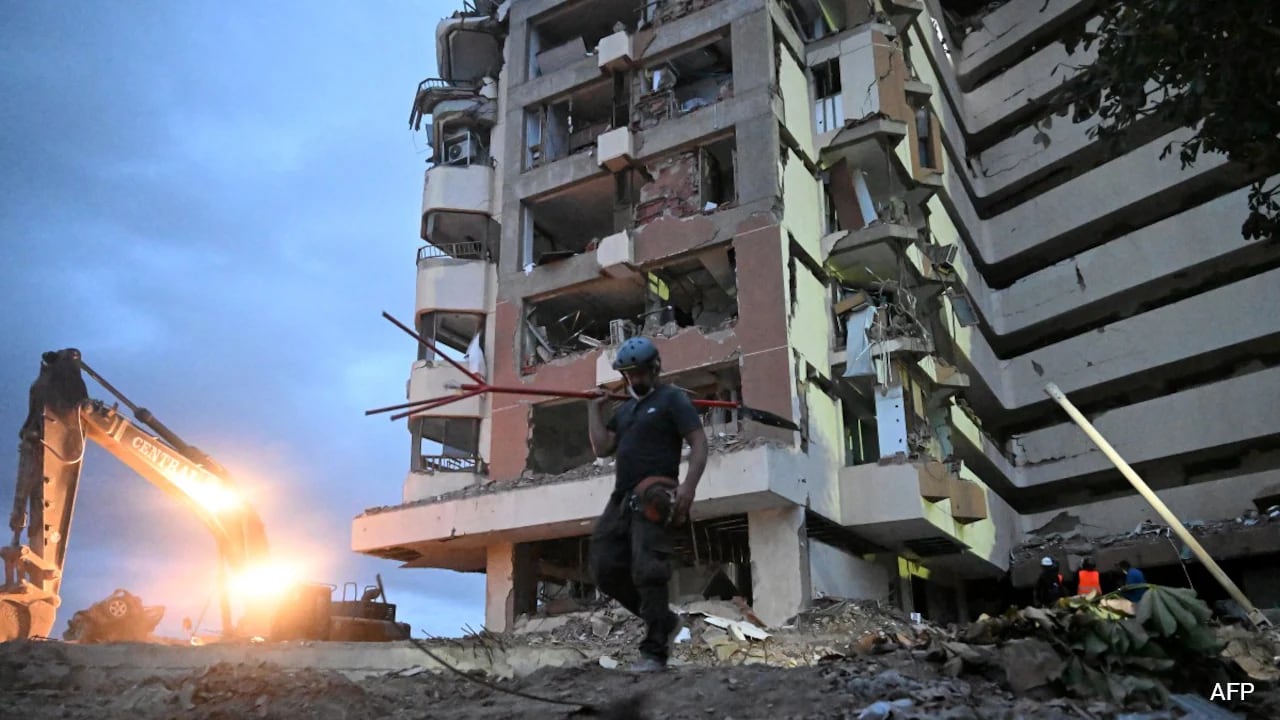
Two weeks after twin earthquakes tore through northwestern and central Venezuela, the official casualty count has climbed to 4,734 dead and 16,740 injured. These numbers, released by National Assembly President Jorge Rodríguez, represent more than just a tragic natural disaster. They are the direct consequence of decades of structural neglect, systemic corruption, and an administrative failure that left the nation's infrastructure defenseless against seismic activity.
Superficial news reports focus on the raw metrics of the June 24 tragedy, listing casualty counts and emergency aid shipments. But a deeper investigation reveals a far more damning reality. The disaster was not simply an act of God. It was a failure of state building, a collapse of basic enforcement, and the predictable result of a healthcare system that was already flatlining before the first shockwave struck.
The Thirty-Nine Seconds That Exposed a Nation
At exactly 6:04 PM local time on June 24, the San Sebastián fault system ruptured. The initial 7.2 magnitude shockwave, centered in the Veroes Municipality of Yaracuy, rattled the region. It was a severe warning. But the true catastrophe followed just 39 seconds later, when a massive 7.5 magnitude mainshock struck.
This double-tap strike-slip event did not just shake the earth; it flattened entire communities. The coastal state of La Guaira, historically vulnerable and densely packed, suffered the worst of the impact. Early assessments indicate that up to 80% of the buildings in some parts of La Guaira collapsed or were rendered completely uninhabitable.
The physical destruction is estimated by the United Nations to be around $37 billion. To put that number in perspective, it is a sum that exceeds Venezuela's entire current annual gross domestic product. The country was already grappling with hyperinflation, international sanctions, and a severe humanitarian crisis. This disaster has effectively wiped out what little economic stability remained.
The Myth of Natural Catastrophe and the Reality of Unregulated Concrete
Earthquakes are physical phenomena, but disasters are social and political creations. The sheer scale of destruction in Caracas and La Guaira was entirely preventable.
In theory, Venezuela has had seismic building codes on the books for decades, modeled after international standards. In practice, these regulations have been ignored with impunity. During the oil booms of the late 20th century and the subsequent years of rapid, unregulated urbanization, thousands of multi-story concrete structures were built on steep, unstable hillsides without proper reinforcing steel or foundational engineering.
These informal settlements, known as barrios, were a ticking time bomb. The concrete used in many of these structures was poor quality, mixed with too much sand and too little cement to save money. When the 7.5 mainshock hit, these buildings did not sway; they pancaked. They crumbled into heavy, suffocating piles of debris that instantly trapped thousands of residents.
Even in the formal sectors of Caracas, modern high-rises suffered catastrophic structural failures because municipal inspection offices had long been hollowed out by corruption. Permits were bought, not earned. The lack of independent oversight meant that property developers cut corners on expensive seismic dampening and flexible joint installations, leaving the middle-class population just as vulnerable as those living in the hillside slums.
A Healthcare System Too Broken to Heal
The 16,740 injured survivors face a secondary crisis that is proving almost as deadly as the earthquake itself. For years, Venezuelan hospitals have operated in a state of chronic deprivation, lacking basic medicine, clean running water, reliable electricity, and sterile surgical equipment.
When thousands of victims with severe trauma, crush injuries, and open fractures flooded into the emergency rooms of Caracas, they found facilities that were completely unprepared.
- No running water: Surgeons in major public hospitals had to wash their hands with bottled water provided by victims' families.
- Power failures: While backup generators operated in some facilities, others went dark during critical triage hours, forcing doctors to perform amputations by the light of smartphone screens.
- Anesthetic shortages: Multiple regional hospitals ran out of basic painkillers and anesthetics within the first 12 hours of the disaster, leaving victims to endure excruciating procedures fully conscious.
The government has deployed over 31,000 emergency personnel and volunteers to manage the crisis. But personnel alone cannot make up for a systemic lack of medical supplies. Non-governmental organizations on the ground report that many of the deaths recorded in the weeks following the earthquake were not caused by immediate trauma, but by preventable infections, delayed surgeries, and a lack of intensive care beds.
The Geopolitical Standoff Over Disaster Relief
As rescue workers transition from searching for survivors to recovering bodies, a familiar political theater has begun to play out on the international stage.
Vice President Delcy Rodríguez immediately called for the release of billions of dollars in frozen Venezuelan assets held in foreign banks, including gold reserves locked in the Bank of England. The administration argues that these blocked funds are desperately needed to rebuild homes, repair water systems, and restock hospitals.
Critics and opposition leaders view this plea with deep skepticism. They argue that releasing unrestricted funds directly to the current administration carries an incredibly high risk of embezzlement, pointing to past reconstruction funds that vanished into private bank accounts rather than building public works.
This leaves international donors and financial institutions in a difficult position. Direct financial aid to the state apparatus could be siphoned off, yet bypassing the government entirely makes large-scale reconstruction of roads, power grids, and municipal water lines nearly impossible. While this diplomatic deadlock continues, more than 20,900 displaced people are living in temporary, crowded camps where hygiene conditions are rapidly deteriorating, raising the immediate threat of waterborne disease outbreaks like cholera.
The Empty Promises of Reconstruction
The government has announced plans to construct 25,000 new housing units to accommodate the thousands of families left homeless by the quakes. History, however, suggests this promise should be taken with a heavy dose of skepticism.
Following minor natural disasters in the past, similar grand housing initiatives were announced with great fanfare, only to be abandoned halfway through due to mismanagement, bureaucratic delays, and a lack of materials. The domestic cement and steel industries, which were nationalized years ago, are producing at a fraction of their historical capacity. Importing the necessary raw materials to rebuild entire neighborhoods under the current economic restrictions will take years, not months.
The United Nations has appealed for emergency funding to support immediate humanitarian aid, but this is a temporary fix. It does not solve the long-term problem of how to safely house a population living on top of one of the most active fault systems in South America.
Unless there is a fundamental overhaul in how building codes are enforced, how municipal corruption is tackled, and how public infrastructure is funded, the reconstruction will simply create the foundations for the next disaster. The concrete poured to build new apartments today will become the rubble of tomorrow if the same corrupt regulatory shortcuts are allowed to stand.