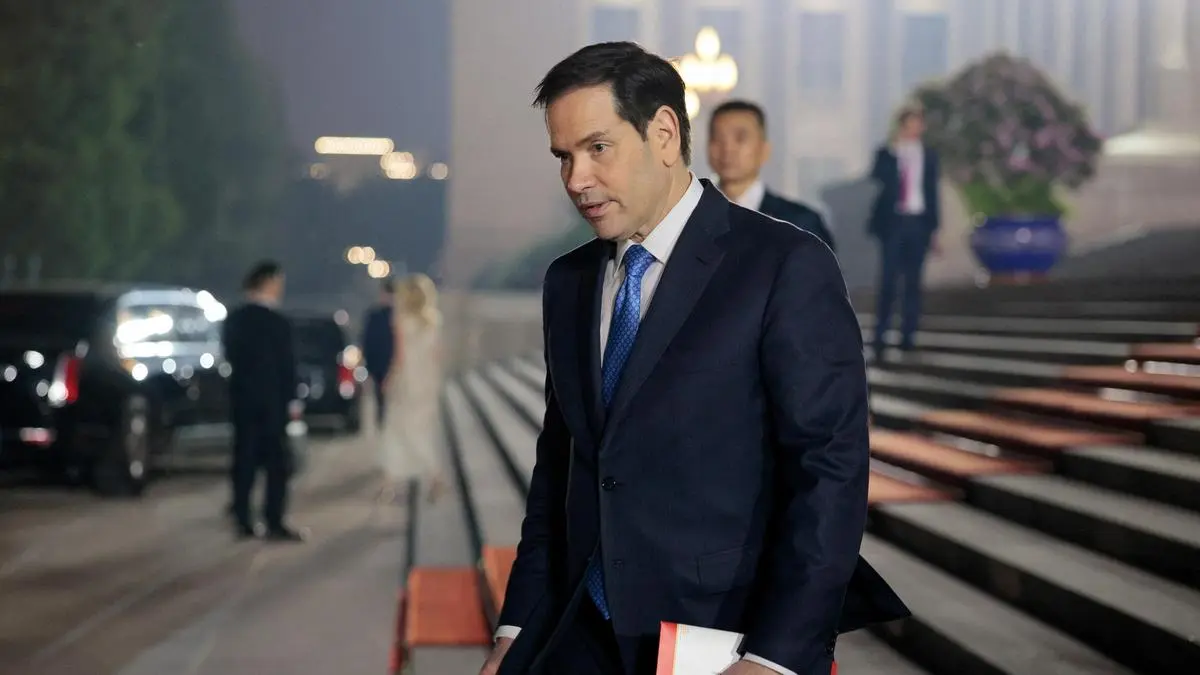
The arrival of US Secretary of State Marco Rubio in New Delhi on Saturday carries all the classic theatrical hallmarks of a major diplomatic rescue mission. His four-day itinerary began with a highly symbolic, visually deliberate stop at Mother Teresa’s Missionaries of Charity in Kolkata before he rushed to New Delhi to hold a private, hour-long session with Prime Minister Narendra Modi. On paper, the trip is framed around the upcoming Quad foreign ministers meeting and a shared desire to curb Beijing. The unvarnished reality on the ground is far less harmonious.
Washington is currently locked in an aggressive damage-control campaign to save a critical Asian partnership that has drifted into deep, transactional friction. The standard media narrative portrays US-India relations as a natural, unshakeable democratic bond anchored by mutual suspicion of China. This perspective is dangerously out of date.
The relationship has suffered serious structural damage over the past year. Punitive US tariffs, a steep hike in H1B visa fees, and unpredictable Washington immigration shifts have alienated New Delhi. More damaging still was a highly public spat following military skirmishes between India and Pakistan last May, where President Donald Trump repeatedly claimed credit for preventing a nuclear war—a narrative New Delhi fiercely rejected as an uninvited fabrication. To understand why Rubio is on an emergency tour of Kolkata, Jaipur, Agra, and New Delhi, one must look past the standard boilerplate talking points of Indo-Pacific security and look directly at the global energy crisis.
The Strait of Hormuz Shockwave
The primary catalyst forcing Washington back to the negotiating table is not a sudden burst of diplomatic goodwill. It is the immediate fallout of the US-Israeli military campaign against Iran. Tehran’s subsequent retaliation—the choking of the strategic Strait of Hormuz—has sent global crude oil prices into an absolute tailspin, threatening the stability of energy-dependent emerging economies.
India imports over 80 percent of its crude oil. When the primary shipping lanes of the Middle East closed, New Delhi did what any fiercely autonomous power would do. It bought massive amounts of heavily discounted Russian crude, ignoring Western pressure and actively hosting a BRICS foreign ministers meeting that featured Russian Foreign Minister Sergei Lavrov and Iranian officials.
Rubio’s trip is a blunt acknowledgment that Western sanctions and moral lecturing have failed to alter Indian procurement strategies. Rather than issuing threats of secondary sanctions that New Delhi would simply ignore, the Trump administration has pivotally shifted toward an aggressive sales pitch. Before departing for India, Rubio explicitly told reporters that the United States is pumping historic levels of domestic fossil fuels and wants to sell India "as much energy as they’ll buy."
Washington is even dangling access to Venezuelan crude via agreements with Caracas. This marks a desperate effort to diversify India’s energy portfolio away from Moscow. It is an economic transaction masquerading as a grand geopolitical alignment.
The Illusion of the Asian NATO
The crown jewel of Rubio's trip is the Quad foreign ministers meeting, where he will join counterparts from Japan, Australia, and India. While American defense planners frequently try to style the Quad as an Asian version of NATO designed to encircle and contain China, New Delhi views the arrangement through an entirely different lens.
For India, the Quad is a useful diplomatic forum for technological exchange, maritime awareness, and supply chain resilience, particularly via the Critical Minerals Initiative launched last year to break Beijing's monopoly on graphite and rare earths. It was never intended to be a mutual defense pact.
India shares a heavily militarized, disputed border with China. It has no intention of becoming a frontline proxy for American geopolitical ambitions, especially when Washington’s reliability fluctuates wildly with each domestic election cycle. The structural divergence is clear:
| Diplomatic Priority | Washington's Strategic Stance | New Delhi's Strategic Stance |
|---|---|---|
| The Quad Alliance | A hard security alignment to actively contain Beijing | A flexible partnership focused on supply chain security |
| Global Conflict | Aggressive intervention and mandatory economic isolation of adversaries | Strict non-alignment, strategic autonomy, and open trade with all powers |
| Bilateral Trade | America First tariffs and highly restricted intellectual property transfer | Domestic manufacturing expansion via tech transfer and tariff reduction |
The Corporate Push and the Adani Shadow
While diplomats exchange pleasantries, the true weight of the relationship is being carried by American corporate self-interest. US Ambassador Sergio Gor recently noted an ambitious bilateral trade target of $500 billion by 2030, up from the current $220 billion. Titans like Boeing, Lockheed Martin, Uber, and GE Aerospace are pouring money into the subcontinent, viewing India's massive market and growing defense requirements as irreplaceable revenue drivers.
India already operates an array of American military hardware, including P-8 Poseidon aircraft, MQ-9B drones, and C-17 transport planes. Rubio’s objective is to secure lucrative co-production agreements that lock New Delhi into the US defense ecosystem for the next generation.
Yet, a dark legal cloud hangs over these negotiations. Rubio’s arrival comes just days after the Trump administration’s Justice Department moved to dismiss high-profile criminal fraud charges against Indian billionaire Gautam Adani. The case, which centered on allegations of a massive $265 million bribery scheme to secure lucrative solar contracts, had caused immense political headaches for Modi’s government.
The sudden dismissal of the case by the US government sends a clear signal to New Delhi. In the current Washington calculus, securing major defense contracts and forcing India away from Russian oil takes absolute precedence over corporate governance or anti-corruption initiatives.
Radical Autonomy Meets Transactional Diplomacy
The ultimate limitation of Rubio's repair mission lies in a fundamental misunderstanding of modern Indian foreign policy. Washington is accustomed to dealing with allies that fit neatly into its security umbrella. India refuses to fit that mold.
External Affairs Minister S. Jaishankar has consistently practiced a doctrine of multi-alignment. New Delhi will happily sign defense tech deals with Washington, buy oil from Moscow, hold high-level trade dialogues with the European Union, and host BRICS conferences simultaneously.
Rubio’s lavish praise of India as a "great partner" cannot obscure the profound systemic distrust built up over the past year. Indian policy makers remember the sudden punitive tariffs and the volatile rhetoric regarding Pakistan. They know that a partnership built entirely on transactional convenience can fall apart the moment Washington's political winds shift. Rubio may leave New Delhi with commitments for increased American energy purchases and updated defense cooperation frameworks, but the underlying plateau in the relationship remains unaddressed. Washington needs New Delhi far more than New Delhi is willing to subordinate its own national interests to Washington.