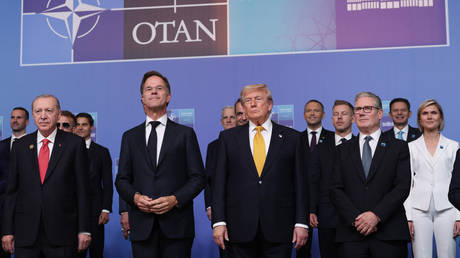
Ankara just raised the stakes in the regional arms race by committing an additional $24 billion to its domestic air defense initiative, known as the Steel Dome (Çelik Kubbe). Turkish President Recep Tayyip Erdoğan made the announcement during the July 2026 NATO summit, pitching the massive capital injection as a solution to Western security gaps. However, the true motivation extends far beyond alliance solidarity. This aggressive spending spree is a calculated bid for total military autonomy, triggered by years of Western arms embargoes, and a structural push to turn domestic contractors into global export powerhouses. Türkiye is building a fortress, and it is paying for it with cash that used to go to Washington and Paris.
The Cost of Western Rejection
For decades, Türkiye relied on foreign hardware to watch its skies. That dependency fell apart when Ankara purchased Russian S-400 missile systems, a move that prompted the United States to eject Türkiye from the F-35 fighter jet program and impose sanctions. European partners followed suit, stalling joint development agreements with missile consortiums like Eurosam.
Ankara learned a harsh lesson about supply chain vulnerability. The Steel Dome is the direct result of that isolation. Instead of buying off-the-shelf foreign interceptors, the $24 billion budget anchors a localized defense industry. The Turkish leadership realized that true sovereignty cannot be borrowed or bought on credit from allies who can turn off the spare-parts tap at a moment's notice.
The new funding significantly escalates previous outlays. In late 2025, the Turkish Defense Agency signed a $6.5 billion expansion contract with local defense giants Aselsan, Havelsan, and Roketsan. This newer $24 billion injection dwarfs those early phases. It signals a complete shift in national priorities, pushing Turkish defense spending toward 3.5% of its gross domestic product.
A Network of Systems Without a Common Source
Building an integrated air defense system from scratch is an engineering nightmare. Unlike Israel's Iron Dome, which relies heavily on American funding and streamlined component integration, the Steel Dome is a patchwork of indigenous projects forced to speak the same language.
The system relies on an artificial intelligence-driven command and control infrastructure called HAKİM. This software must stitch together sensors, radars, and firing units operating at wildly different altitudes.
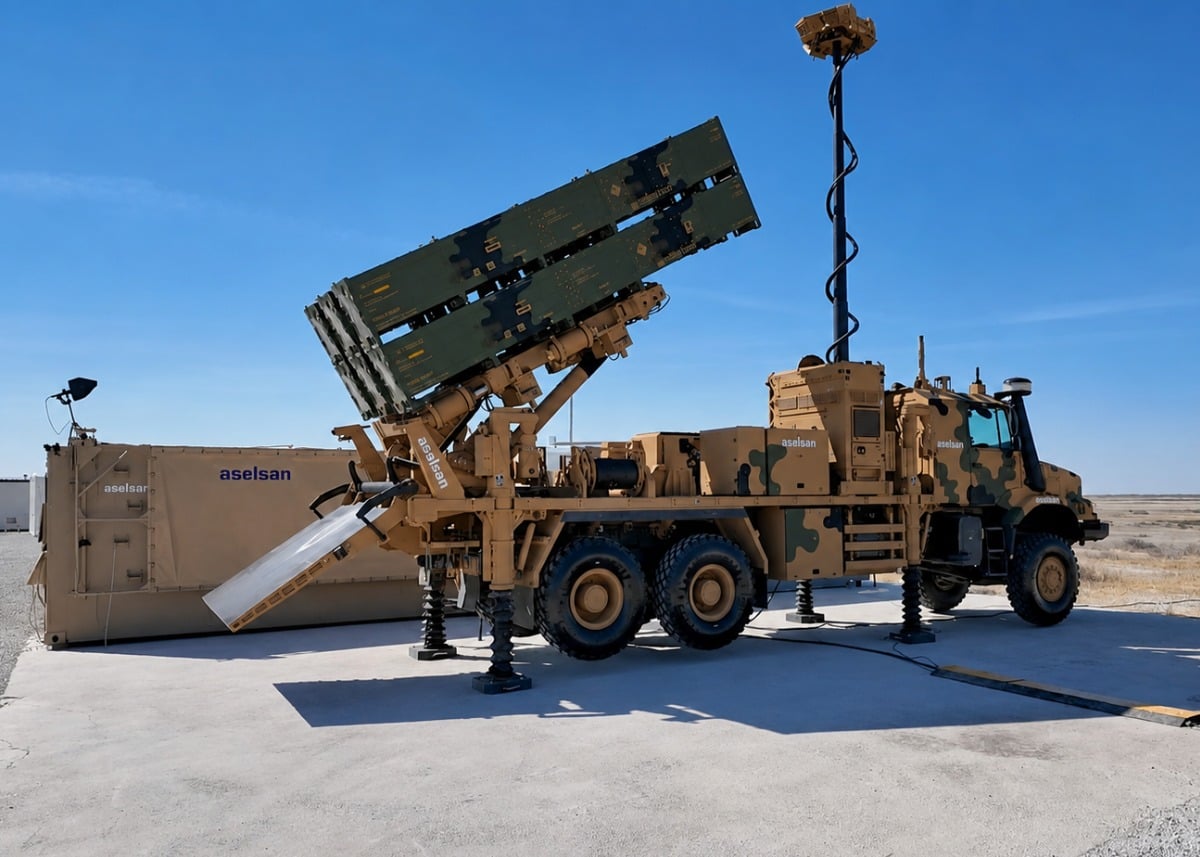
At the base level, the system deploys anti-drone hardware. Vehicles carry Roketsan's Pusu system, which mounts low-cost drone interceptors onto light tactical trucks. Alongside them sit the Korkut anti-aircraft gun and directed-energy weapons like the Gökberk laser, designed to melt incoming micro-UAVs.
Further up the altitude ladder, the complexity deepens. Low and medium-altitude threats fall to the Hisar missile family, covering ranges up to 40 kilometers. For long-range, high-altitude ballistic threats, Türkiye relies on the Siper system, with newer variants under development aiming to strike targets 200 kilometers away.
[Siper Long-Range System]  --> Up to 200km (Ballistic/Aircraft)
[Hisar Missile Family]     --> Up to 40km (Medium-Altitude Threats)
[Gürz & Korkut Platforms]  --> Close-In Weapon Systems (Low-Altitude)
[Pusu & Gökberk Systems]   --> Anti-Drone / Laser / Kinetic Countermeasures
Getting these independent platforms to share a single, real-time aerial picture requires immense processing power. If the software lags by even a few seconds, interceptors will target the same threat or miss entirely.
The Geopolitical Sales Pitch
Erdoğan's timing at the NATO summit was deliberate. By framing the Steel Dome as an asset for the alliance, Ankara wants to shame Western partners into lifting remaining export controls. Türkiye has the second-largest land army in NATO, yet it remains excluded from major European Union defense procurement initiatives and joint financing structures.
The $24 billion commitment is a financial cudgel. Ankara is telling Brussels and Washington that it no longer needs their permission to secure its borders, but it remains willing to integrate its shield into the broader NATO network if the West plays fair.
There is a lucrative commercial angle here as well. By field-testing these technologies in real-world regional friction zones, Turkish defense firms are writing a powerful resume for international buyers. Countries across the Middle East, Africa, and Central Asia that cannot afford Western systems, or do not qualify for them due to political restrictions, represent a massive eager market. Aselsan already secured an early phase $900 million hardware delivery contract, establishing a template for the industrial scale-up.
Interoperability and Proven Performance Gaps
The primary risk for Türkiye is that the Steel Dome remains unproven at a macro scale. While individual components like the Hisar missiles have passed firing tests, the overarching network-centric architecture has not faced a saturation attack. Israel's layered defense network works because it has been refined over decades of active combat testing. Türkiye is trying to leapfrog that timeline through simulation and rapid deployment.
Furthermore, a gap remains at the highest altitude tier. While the upcoming Siper variants aim for 200 kilometers, they still lack the extreme high-altitude interception capabilities of an American THAAD or an Arrow system. Until local developers master hyper-velocity ballistic missile defense, the dome has a ceiling.
Ankara is betting that massive domestic funding can break the laws of industrial timelines. By pumping $24 billion directly into its own factories, Türkiye is permanently shifting its position from an arms importer to a self-sufficient military exporter, altering the security dynamics of Europe and the Middle East.