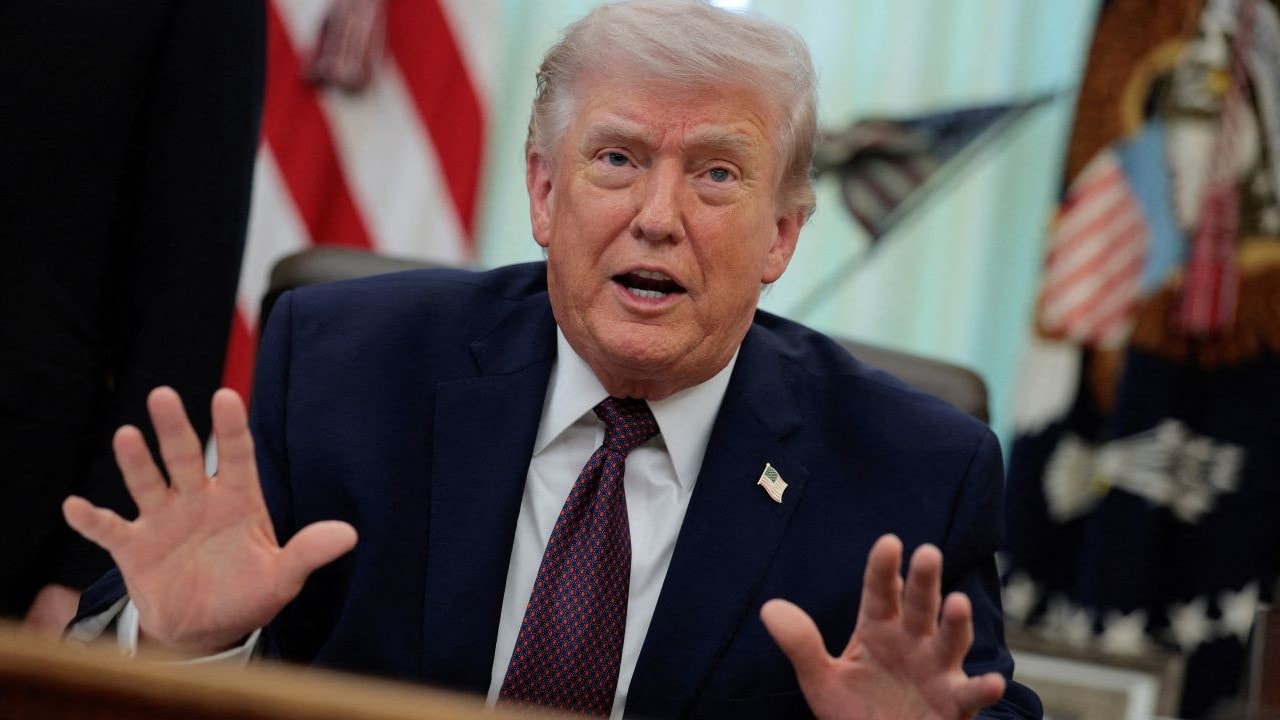
The White House narrative suggests a masterclass in brinkmanship. On Sunday morning, President Donald Trump publicly instructed American negotiators to slow down talks over a comprehensive peace agreement with Tehran, declaring on social media that "time is on our side" and that the sweeping U.S. naval blockade of Iranian ports will remain "in full force and effect."
On the surface, it looks like a textbook application of maximum pressure to squeeze a wounded adversary. In reality, this manufactured delay masks a fragile, high-stakes gamble that could backfire across global energy markets and domestic gas pumps just as millions of Americans hit the road for the Memorial Day weekend.
The Illusion of Time
Despite the administration's confident rhetoric, time is an expensive luxury in a conflict that has already derailed global shipping and sent shockwaves through the American economy. A closer look at the diplomatic theater reveals that the U.S. and Iran are operating on two entirely different clocks, and the gap between them is widening.
The administration’s public posture of calm indifference contrasts sharply with the frantic, closed-door diplomacy brokered by Pakistan and regional allies over the weekend. On Saturday, Trump boasted that a "Memorandum of Understanding pertaining to PEACE" was "largely negotiated" after consultations with Israel, Saudi Arabia, and the United Arab Emirates. Yet less than twenty-four hours later, the messaging pivoted to intentional delay.
This shift is not a sign of strength, but a reflection of deep structural fractures in the emerging framework. By instructing envoys not to rush, Washington is attempting to paper over a fundamental disagreement regarding what this deal actually achieves.
- The Nuclear Stumbling Block: The U.S. demand remains absolute. White House officials insist that Iran must surrender its entire stockpile of highly enriched uranium and dismantle its nuclear infrastructure before receiving permanent sanctions relief.
- The Iranian Counter-Offer: Tehran, represented by Foreign Ministry spokesperson Esmail Baghaei, views the current draft strictly as a 60-day temporary truce designed to lift the naval blockade and stop the war. Iranian officials maintain that nuclear concessions are off the table for this initial phase, preferring to defer those explosive debates to separate, long-term talks.
By declaring that time favors the U.S., the administration is attempting to project leverage it may not actually possess. The underlying economic and military realities suggest the pressure is mounting on both sides of the table.
The True Cost of the Hormuz Chokepoint
The linchpin of Trump's strategy is the ongoing naval blockade, implemented on April 13 under U.S. Central Command following the collapse of initial talks in Islamabad. While Washington claims the blockade costs Iran $500 million daily by choking off its port infrastructure, the retaliatory closing of the Strait of Hormuz by the Islamic Revolutionary Guard Corps (IRGC) has exacted a severe toll on the rest of the world.
Before the outbreak of hostilities earlier this year, roughly 25% of the world’s seaborne oil trade and 20% of global liquefied natural gas (LNG) traversed this narrow waterway. The effective closure of the strait has forced hundreds of commercial vessels to drop anchor or reroute entirely, sending global energy markets into a volatile tailspin.
The domestic fallout is arriving at the worst possible political moment. American consumers are facing a sharp spike in fuel prices precisely as the summer driving season begins. For an administration hyper-focused on domestic economic indicators, a prolonged shipping freeze in the Persian Gulf is an unsustainable long-term position.
Furthermore, the mechanics of the blockade itself are proving messy and dangerous. While U.S. forces have intercepted dozens of vessels bound for Iranian ports, Iran has retaliated by mining the strait, seizing foreign cargo ships, and demanding steep tolls of up to $2 million per vessel from non-aligned nations attempting to pass. The risk of a tactical miscalculation, an accidental sinking, or a direct exchange of fire remains critical, threatening to shatter the fragile ceasefire that has held since April 7.
Regional Resistance and the Threat of Escalation
The administration's desire to stretch out negotiations also runs directly into fierce resistance from its closest regional ally. Israel has repeatedly voiced opposition to any interim framework that grants economic relief to Tehran without completely neutralising its regional proxy network and missile capabilities.
Senior Israeli officials have privately warned that the emerging 60-day truce proposal is a dangerous compromise. Their argument is straightforward: allowing Iran to trade oil and regain access to frozen foreign bank assets in exchange for a temporary reopening of the Strait of Hormuz rewards aggression. It signals to Tehran that its control over global shipping chokepoints is an effective geopolitical weapon, one that can be used to repeatedly force concessions from Western powers.
Meanwhile, Iran is using the lull in fighting to project defiance rather than desperation. Parliament Speaker Mohammad Bagher Qalibaf warned over the weekend that Iran has successfully reconstituted its disrupted military assets. He cautioned that if the United States resumes active airstrikes after the ceasefire expires, the response will be significantly more severe than the opening rounds of the conflict.
The Logistics of a Broken Status Quo
Even if a temporary 60-day agreement is signed, returning to the pre-war status quo will not be a seamless transition. The draft agreement under discussion requires Iran to clear the extensive naval mines it has deployed throughout the Strait of Hormuz and guarantee toll-free passage for all international commercial shipping. In return, the United States would dismantle its port blockade and issue targeted sanctions waivers to allow the resumption of Iranian oil exports.
However, Iranian state media and hardline factions within Tehran are already pushing back against the notion that they will surrender administrative control of the waterway. Tasnim news agency reported that the Strait of Hormuz will not return to its pre-war operational status, insisting that Tehran will maintain a permanent, heightened regulatory role over which vessels are permitted to transit.
This unresolved structural dispute highlights the core flaw in the administration’s strategy of intentional delay. Squeezing an adversary through a naval blockade works only if you can outlast their economic pain without breaking your own economy or dragging allies into a broader conflict. With domestic energy prices climbing, regional allies demanding an outright military victory, and an adversary dug into its positions, the belief that time is on America's side looks less like a calculated strategy and more like a dangerous misdiagnosis of a volatile crisis.


