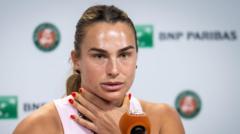
On the surface, the media day at Roland Garros looked entirely normal. The clay was swept, the sponsors were prominent, and the sport’s biggest stars filed into the press rooms to discuss their baseline games. Then Aryna Sabalenka walked out. The women's world number one spent exactly five minutes with the host broadcaster and ten minutes with written reporters before abruptly ending the English-speaking portion of her news conference.
She was not running late, nor was she avoiding difficult questions about her draw. She was striking.
A coordinated group of 20 elite players, including Sabalenka, men's world number one Jannik Sinner, and four-time French Open champion Iga Swiatek, implemented a strict 15-minute "work-to-rule" limit on all media duties. The 15-minute cap was entirely deliberate. It represents the approximate 15% of total revenue that the French Open currently returns to players via prize money. The players want 22%. By walking away from microphones, the sport's highest earners are staging a high-profile labor dispute, signaling that the uneasy peace between the four Grand Slams and the athletes who fill their stadiums is fracturing.
The Math Behind the Fifteen Minute Rule
Tennis operates under a unique economic structure where the independent contractors on court bear all the financial risk while the tournaments reap the long-term rewards. For decades, the four Grand Slams have functioned as sovereign fiefdoms. They control their own television rights, ticketing, and sponsorship deals, operating independently of the ATP and WTA tours.
Standard tour events generally return over 20% of their gross revenue to the player pool. The Grand Slams have historically kept their percentages far lower, hiding behind massive total financial figures. This year, the French Open proudly announced a record €61.7 million prize pool, a 9.5% increase from last year. The singles champions will each take home €2.8 million.
The players are looking past those numbers to the underlying percentages. Total revenue for these two-week tournaments has soared due to broadcast deals and premium hospitality expansion. The players argue that their compensation has shrunk relative to the total wealth generated.
A collective letter was sent to the four major tournaments last spring demanding a 22% revenue share, expanded pension contributions, and structural representation at the executive level. The response from tournament organizers was months of silence.
The 15-minute protest is a direct consequence of that indifference. The players timed the action to disrupt the pre-tournament media blitz, refusing to film promotional content or social media clips for the tournament.
Why the Top Seeds are Fighting for the Lower Ranks
The elite players are using their substantial leverage on behalf of the broader locker room. Sabalenka, Sinner, and Swiatek do not need the money. Between endorsements and tournament victories, their financial security is absolute.
The financial reality is different for players ranked 80th to 150th in the world. They pay for their own coaches, physiotherapists, travel, and hotels without the safety net of a team salary or guaranteed contracts. A few early-round losses can turn a season into a financial loss.
"It’s not about me," Sabalenka noted during her brief appearance. "It’s about the players who are lower in the ranking, who are suffering."
The cost of touring has risen sharply, yet the bottom tier of professional tennis remains financially precarious. Novak Djokovic, who has long advocated for lower-ranked players through the Professional Tennis Players Association, did not participate in this specific media strike but voiced his clear support. He noted that the public consistently forgets how few people actually make a viable living from professional tennis.
By framing the issue around systemic player welfare rather than personal enrichment, the top players have established a unified front that tournament executives cannot easily dismiss as greed.
The Fractured Front and the Threat of a Boycott
Maintaining solidarity in an individual sport is notoriously difficult. Unlike a traditional sports league with a unified union, tennis players are fragmented across different management agencies, countries, and financial tiers.
Cracks in the collective front are already visible. While the European core of the tour held the line on Friday, others expressed hesitation about escalating the conflict. American world number eight Taylor Fritz acknowledged the frustration but cautioned against extreme measures. He noted that players should not make empty threats about boycotting tournaments unless they are genuinely prepared to follow through.
A full-scale boycott remains the ultimate weapon. Sabalenka previously indicated that a strike during a Grand Slam might be necessary if negotiations remain stalled. Missing a major tournament would cost the players millions in the short term, but it would completely collapse the broadcast value of the event for organizers.
The French Open organizers expressed formal regret over the media restriction but confirmed they have agreed to a meeting with player representatives. Executives at Wimbledon are also monitoring the situation closely.
The media strike has proven that the players can organize effectively when pushed. If the upcoming meetings do not yield concrete adjustments to revenue sharing and pension structures, the 15-minute protest will look like a mild opening salvo. The next step will not be short press conferences. It will be empty courts.