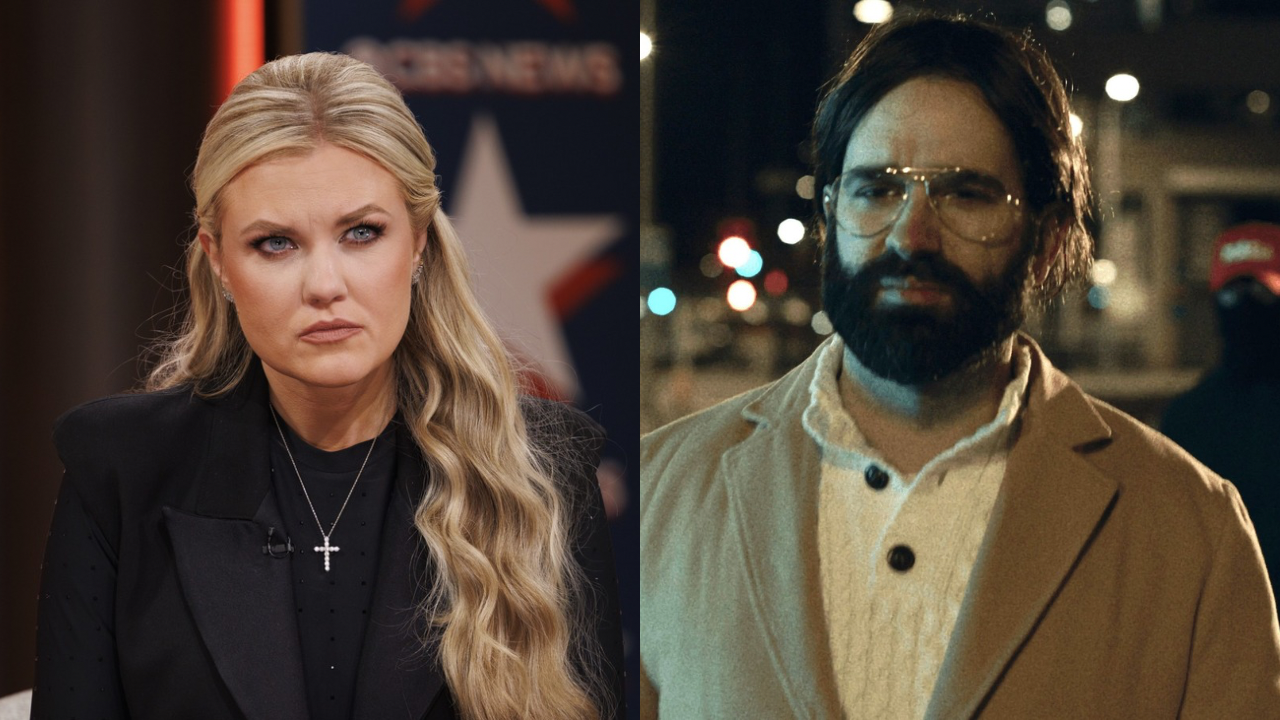
The recent explosion of hostile rumors targeting Erika Kirk, the widow of Turning Point USA founder Charlie Kirk, reveals a fracturing conservative media ecosystem turning on its own. While a viral social media allegation claimed Kirk had secretly entered a relationship with family friend Blake Wynn, the immediate, aggressive defense mounted by commentator Matt Walsh and the subsequent public broadsides from figures like Candace Owens point to a much deeper crisis. This is not a simple case of internet gossip. It is an ideological and commercial civil war fought over the lucrative control of a legacy, millions of dollars in grassroots fundraising, and the right to define the narrative of the modern American right.
To understand how a fabricated story about a Beverly Hills hotel sighting became a flashpoint for conservative media heavyweight infighting, one must look past the initial clickbait. The rumor, engineered by a known fringe operator, acted as a catalyst. It exposed the deep-seated vulnerabilities of an industry built entirely on continuous outrage, where the line between genuine mourning and monetization has blurred beyond recognition.
Anatomy of a Modern Disinformation Operation
The rumor surfaced through an X account operating under the name Project Constitution, linked by reporters to online conspiracy theorist Collin Scott Campbell. The post alleged that on May 14, Erika Kirk was spotted displaying public affection at a California hotel bar with Blake Wynn, a close family friend and nephew of casino mogul Steve Wynn. The account aggressively insinuated that the relationship predated the death of Charlie Kirk, framing the widow's public grief as a calculated performance.
The timeline collapsed under basic journalistic scrutiny. On the exact date of the alleged rendezvous, Erika Kirk was in Arizona celebrating her son’s second birthday, backed by digital footprints and personal records. Furthermore, Wynn was already preparing an engagement to his long-term girlfriend. Both individuals issued flat, unambiguous denials.
The mechanics of the smear were deliberate. It targeted a figure whose public identity is inherently tied to a multi-million-dollar political machine. By striking at the widow, the operation aimed to destabilize the broader institutional trust of the movement her late husband helped build.
The Financial Stakes of Grieving in Public
The narrative shifted from a defensive perimeter to an open internal conflict when Candace Owens entered the fray. Rather than addressing the false dating rumors, Owens launched a severe public critique of Erika Kirk's recent social media activity. Kirk had begun sharing deeply personal, handwritten notes and letters left by her late husband. Crucially, these intimate tributes were paired with active fundraising appeals for conservative causes.
Owens labeled the strategy as tasteless, classless emotional manipulation for money, noting that the content itself wasn't even authored by the widow.
This public fracture highlights the uncomfortable financial reality of modern political organizations. Legacy preservation in the digital space requires constant capital. When an influential figure passes, their brand identity often transitions to their family or foundation. If that transition relies on leveraging private grief for public donations, it creates an inevitable ethical paradox.
Supporters argue that sharing these letters humanizes a political icon and preserves his legacy for the grassroots donors who funded his rise. Critics see it as the weaponization of tragedy to keep a donor pipeline flowing. The truth sits in a grey area where sentimentality and institutional survival intersect.
Why Matt Walsh Intervened So Aggressively
The intensity of Matt Walsh’s defense offers a window into the institutional panic behind the scenes. Walsh lashed out at the source of the rumors, calling him a slanderous liar who deserved to be sued into oblivion, lamenting only that the individual was likely too broke to face meaningful financial consequences.
Walsh’s intervention was not merely an act of chivalry. It was a strategic defense of the conservative media perimeter. For years, the political right has successfully unified its audience by pointing outward at external adversaries. However, the rise of independent, hyper-factional influencers has disrupted this dynamic.
When independent actors realize they can generate immense traffic by attacking the untouchable figures within their own movement, the collective defense shield shatters. Walsh recognized that if a widow of a movement leader can be thoroughly delegitimized by fringe online actors without institutional pushback, no one in the ecosystem is safe.
The Structural Fragility of the Outrage Economy
The underlying issue plaguing this media sector is the unsustainable demand of the audience it created. For a decade, conservative digital media incentivized high-stakes emotional engagement. Audiences were conditioned to expect constant betrayal, hidden plots, and absolute moral clarity.
Now, that same audience applies those exact metrics to the creators themselves. When there are no external targets left to satisfy the demand for conflict, the machinery naturally turns inward. The Erika Kirk controversy proves that the tools once used exclusively against political opponents—selective editing, timeline manipulation, and moral shaming—are now being deployed internally for market share.
This internal predatory behavior creates a volatile environment for political non-profits and media companies. It shows that institutional loyalty means very little when an individual influencer can achieve massive engagement by breaking ranks. The conflict between Owens, Walsh, and the legacy of Turning Point USA is a structural preview of a media landscape that has run out of external targets and has begun devouring itself from the top down.