The fragile two-week ceasefire between the United States and Iran has essentially evaporated less than twenty-four hours after it was signed. While Western diplomats scrambled to celebrate a "step back from the brink," Tehran has slammed the gates of the Strait of Hormuz shut once again. This was not a random act of aggression or a simple failure of communication. Iran is responding directly to a massive Israeli aerial campaign across Lebanon that saw over 100 targets struck in a ten-minute blitz. By choking the world’s most vital energy artery, Iran is proving that a deal with Washington is worthless if Jerusalem remains on the offensive.
A Diplomatic Illusion
The ceasefire agreement announced by President Trump was built on a fundamental misalignment of expectations. Washington viewed the deal as a way to prevent the "destruction of an entire civilization"—a phrase used repeatedly by the administration—while securing the removal of Iranian nuclear material. Tehran, however, viewed it as a regional package deal. When Israel launched "Operation Eternal Darkness" against Hezbollah assets in Beirut and the Bekaa Valley, the Iranian leadership saw the agreement as null and void. For a different view, see: this related article.
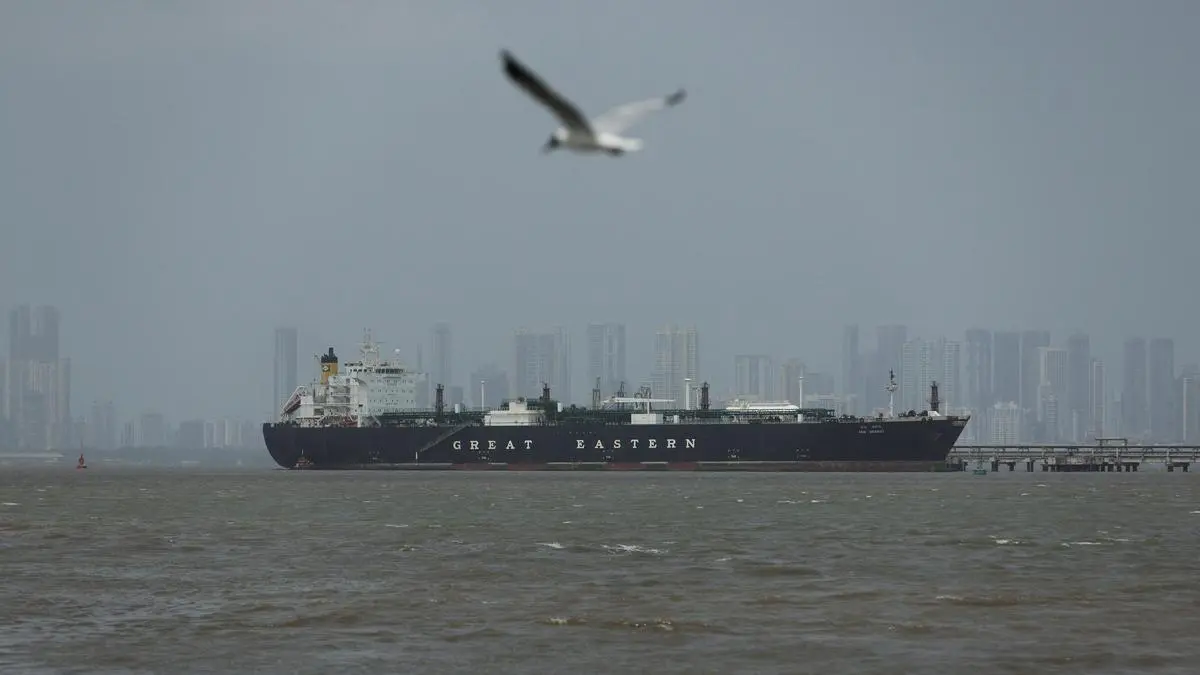
Shipping data confirms the suddenness of the reversal. Early Wednesday, two tankers were granted safe passage under the new "permission-based" model. By the afternoon, the Islamic Revolutionary Guard Corps (IRGC) issued fresh warnings via VHF radio: any vessel attempting the transit without specific Iranian approval would be "targeted and destroyed." The 20% of global oil supply that flows through this narrow passage is once again a hostage to the kinetic reality on the ground in Lebanon.
The Cost of Operation Eternal Darkness
Israel’s strikes on Lebanon were not just tactical; they were designed to be overwhelming. Reports from Beirut describe the heaviest coordinated strikes since the war began, hitting central districts without the usual evacuation warnings. This intensification placed Tehran in a corner. If Iran allowed the Strait of Hormuz to remain open while its primary regional proxy was being dismantled, it would signal a total collapse of its "Axis of Resistance" strategy. Related coverage on this matter has been shared by The Guardian.
Instead, they chose to exert the only leverage that makes the global community flinch. The closure has already sent shockwaves through energy markets that were just beginning to price in a de-escalation. Oil prices, which dipped momentarily on the ceasefire news, are climbing as tankers once again drop anchor outside the Persian Gulf or turn back toward safe harbors in the Gulf of Oman.
The Toll on Global Energy
The economic fallout of this specific choke point is difficult to overstate. We aren't just talking about a delay in shipping. We are looking at a total breakdown of the energy supply chain for several major nations.
- Iraq has previously been forced to shut down operations at the Rumaila oil field because it simply has no place to store the oil that cannot be shipped out.
- Qatar has already declared force majeure on liquefied natural gas (LNG) contracts, a move that threatens to leave European and Asian utilities in the dark.
- Kuwait and the UAE are facing the reality of Iranian drones and missiles targeting their own desalination and power infrastructure in retaliation for perceived cooperation with the West.
This isn't just a maritime blockade. It is an industrial siege.
The Myth of the Open Sea
There is a dangerous misconception that the U.S. Navy can simply "keep the lanes open" through sheer presence. The Strait of Hormuz is roughly 21 miles wide at its narrowest point, but the actual shipping lanes are only two miles wide in each direction. Iran does not need a massive fleet to close this gap. They use a combination of shore-based anti-ship missiles, swarms of fast-attack boats, and sophisticated sea mines.
Furthermore, the IRGC has become adept at satellite spoofing and GNSS jamming. This makes navigation for 300,000-ton supertankers a nightmare even without the threat of a direct hit. A single sunk vessel in the channel would create a physical and environmental barrier that could take months to clear. The "permission-based" system Iran briefly entertained was an exercise in sovereignty—a way to show the world that they, not the U.S. Fifth Fleet, hold the keys to the engine room of the global economy.
Trump and the Art of the Failed Deal
The administration's focus on a 10-point plan for nuclear removal ignored the reality that Iran views its regional influence and its nuclear program as a single, inseparable shield. President Trump's suggestion of "charging tolls" for passage through the Strait—an idea floated by the White House just hours before the current collapse—showed a fundamental misunderstanding of the stakes. This isn't a real estate negotiation or a trade dispute. It is a regional war where the battlefield extends from the streets of Beirut to the underwater pipelines of the Persian Gulf.
The White House has called the renewed closure "completely unacceptable," but they have few cards left to play. Short of a full-scale invasion and occupation of the Iranian coastline—a move that would involve catastrophic casualties and a global economic depression—there is no military solution to a blocked Strait.
The Logistics of a Locked Gate
For the shipping companies, the math is brutal. Major players like Maersk and CMA CGM are already rerouting vessels. Taking the long way around Africa’s Cape of Good Hope adds weeks to transit times and millions of dollars in fuel and insurance costs. This is not a sustainable model for global trade.
The current situation is a stalemate of the highest order. Israel will not stop its campaign against Hezbollah as long as it perceives a threat on its northern border. Iran will not open the Strait as long as Israel is striking its allies. And the United States cannot force the gate open without risking the very "destruction" it claims it wants to avoid.
The ceasefire was a ghost. It existed on paper in Washington and Islamabad, but it never arrived in the waters of the Persian Gulf. As long as Beirut is burning, the Strait of Hormuz will remain a no-go zone. The world is now watching to see if the two-week pause was the beginning of a peace process or merely the final breath before a much larger conflagration.