Municipal budgets operate on a razor-thin margin of public trust and accounting illusions. When a local government claims that fixing a deteriorating park pond will inevitably impact other vital services, elected officials are rarely just talking about dollars and cents. They are managing a calculated political panic.
Every city hall across the country maintains an invisible ledger of deferred maintenance. Bridges rust quietly, water mains age past their expiration dates, and retention basins silt up with organic debris until they become stagnant breeding grounds for mosquitoes and algae blooms. Yet when citizens demand the restoration of a cherished neighborhood water feature, the response is swift and uniform: repairing the pond means sacrificing something else.
This framing presents a false binary designed to shut down public scrutiny. It treats municipal spending as a zero-sum game where every dollar spent on muck removal or fountain repair is a dollar directly ripped from public safety or social programs. But the mechanics of municipal finance are far more complex, revealing a structural unwillingness to prioritize ecological infrastructure over short-term political expediency.
The Anatomy of a Manufactured Fiscal Crisis
To understand why a simple park pond rehabilitation triggers warnings of impending doom for essential community services, one must look at how municipal operating budgets are siloed from capital improvement funds. Operating budgets pay for police officers, library staff, and daily trash collection. Capital improvement plans fund long-term physical assets like roads, bridges, and major park overhauls.
When a city official warns that pond maintenance threatens other services, they are usually blurring these lines intentionally. They are robbing Peter to pay Paul because the general fund has been drained by administrative bloat, escalating pension obligations, or poorly structured bond debt.
Take a typical mid-sized municipality facing a million-dollar dredging project for a recreational water body. The city council looks at its general fund balance, sees a deficit, and immediately points to the park pond as an unaffordable luxury. They do not mention that the city spent twice that amount last year on redundant consulting fees or mismanaged public works equipment procurement.
By framing the issue as an existential choice between a clean pond and functioning community services, leadership avoids auditing their own systemic inefficiencies. They weaponize the community's empathy for essential workers against its desire for a livable urban environment.
The Hidden Costs of Ignoring Ecological Decay
Deferring maintenance on municipal water features does not save money. It merely shifts the expense from a predictable capital outlay to a catastrophic emergency response down the road.
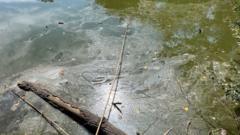
When a park pond silts in and loses its depth, water temperature rises, dissolved oxygen plummets, and fish die-offs become regular occurrences. The aesthetic value drops, drawing complaints from residents and business owners alike. Eventually, the pond transitions from an asset into a public health hazard and a liability nightmare.
At that stage, standard dredging or biological remediation is no longer sufficient. The city must secure permits for hazardous waste disposal, manage contaminated sediment runoff, and potentially rebuild failing retaining walls. What could have been handled proactively for a modest sum now demands a massive emergency bond issuance.
Communities that neglect their parks pay a heavy psychological toll as well. Public green spaces with functional water features act as natural cooling islands in an era of rising urban temperatures. They reduce stress, encourage physical activity, and foster neighborhood cohesion. When local governments treat these spaces as expendable, they signal to residents that civic decline is the new normal.
Challenging the Zero-Sum Narrative
Breaking this cycle requires a fundamental shift in how residents scrutinize municipal balance sheets. Citizens must demand transparent cost-accounting that separates routine asset management from emergency crisis response.
If fixing a park pond truly impacts other services, the burden of proof rests on city administrators to show why alternative revenue streams or budget reallocations were never explored. Were grants from state and federal environmental agencies applied for? Has the city leveraged public-private partnerships with local watershed protection groups? Or is it simply easier to let the pond rot while blaming budget constraints?
Municipalities often sit on unallocated contingency funds or discretionary spending line items that could cover minor infrastructure restoration without touching a single police salary or library hour. The absence of political will masquerades as an absence of capital.
Until neighborhoods refuse to accept the premise that they must choose between a functional ecosystem and basic civic services, local governments will continue to use public parks as economic shock absorbers. A city that cannot maintain its green spaces is a city in systemic retreat, managing decline rather than engineering a sustainable future.